Interconnected regions

Caucasus Concise Editorial

Not so long ago the countries of the Caucasus and those of the Gulf region, despite their geographic proximity, were worlds apart - the first isolated, even if colourful part,on the fringe of the Soviet Union, the other a resource-rich back water under the firm grip of the British. They seemed to have nothing at all in common, and independence achieved in most cases in the last quarter of the 20th century, seemed to take them even further apart. Yet all this is changing, and we are seeing an upsurge in relations, and an increased awareness of interconnectivity which brings prospects of huge potential for business, economic relations and people-to-people contacts, and some considerable risks.

Direct air links between Gulf cities and the Caucasus has already resulted in an influx of tourists both ways. It started with people from the Caucasus shopping in Dubai. but is now more significant in terms of the number of Gulf tourists visiting Armenia, Azerbaijan and Georgia. There is huge potential for relations to develop in the areas of health tourism and education, which remain largely untapped.

Airlinks are only a small part of ambitious plans to develop trade routes, energy pipelines and transport corridors from the Gulf to the Caucasus, and onwards to Russia and Europe, bypassing the volatile sea routes through the straits of Hormuz, the Gulf of Aden and Suez. The Caucasus countries have also seen in recent years modest but not insignificant investment from the Gulf, with potential for substantial increase.

Yet trade, tourism and business is not the whole story. There is in the mix also a geo-political agenda as countries in both regions eye each other, hoping to increase their influence but aware also of the perils of getting embroiled in each other's regional issues for which they have no appetite.

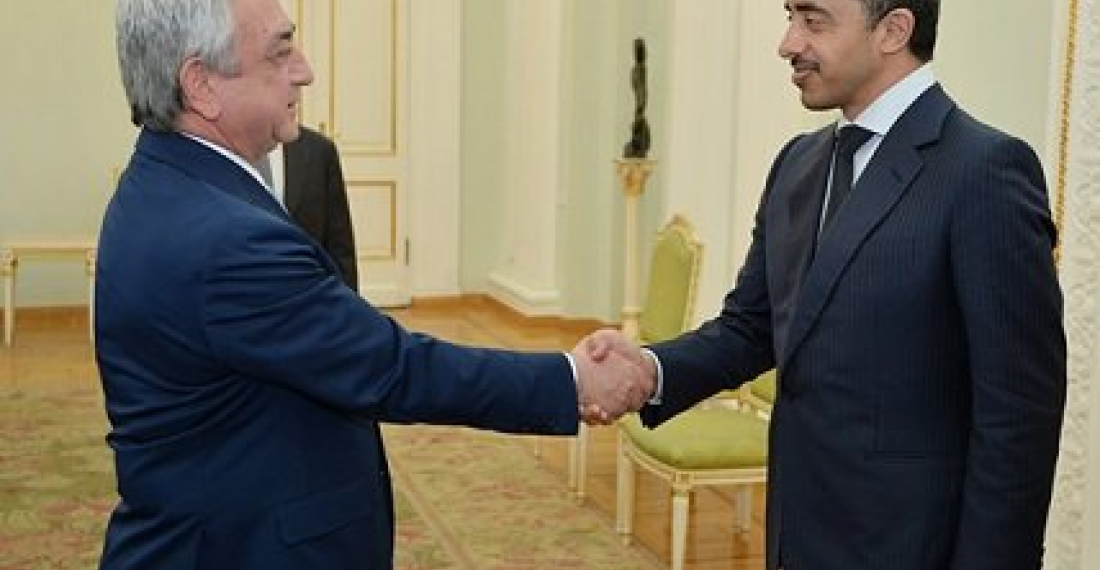
Over the last days the Foreign Minister of the United Arab Emirates (UAE), Sheikh Abdulla bin Zayed al Nahyan,paid an official visit to Armenia and Georgia.

There are small but well-established Armenian communities in the Gulf that are helping to build contacts between the region and Yerevan. There are also already good examples of positive business to business relations between Georgia and the UAE and Kuwait.

That the UAE foreign minister would prioritise a visit to the South Caucasus, at a time of high tension in the Gulf due to the ongoing standoff between some GCC states and Qatar, is significant. No doubt, during his trip Sheikh Abdullah would have been well briefed by his Armenian and Georgian hosts on their own existential disputes - the Armenians with the Azerbaijanis, and the Georgians with the Russians. He on his part would surely have gone to great lengths to explain the reasons behind the current dispute his country, together with Saudi Arabia, Bahrain and others, has with Qatar. Very little was said on any of these issues after the visit, indicating perhaps that all sides preferred to be in listening mode. Azerbaijan was not on the itinerary of the UAE Foreign Minister this time round. This is possibly because of the country's good relations with Qatar. There are some suggestions that Azerbaijan prefers to play the role of honest broker in that dispute, but may have been snubbed. Regardless, its interest in the Gulf region is long standing.

One further common denominator is the significant role played by Turkey and Iran in both regions. Turkey has a strategic relationship with Azerbaijan, and close relations with Georgia. It does not have even diplomatic relations with Armenia, and relations between the two are increasingly tense. Turkey has supported Qatar in its dispute with its neighbours, and has started deploying troops there as a part of a previously agreed base deployment, yet it still has extensive relations with Saudi Arabia, UAE and others. Iran sees both the Gulf region and the Caucasus as vulnerable neighbourhoods that can be turned into launching pads against it. Iran has invested considerably in good relations with the South Caucasus, with only modest success. In the Gulf, it maintains good relations with Qatar and Oman, but has strained and difficult relations with the others.

In this complicated state of play there is a danger that some will adopt the posture that the enemy of my enemy is my friend, or worse, the friend of my enemy is my enemy. There are some signs of this happening, but overall it has so far been avoided. However politics and geo strategic considerations continue to hamper what potentially can be a significant and mutually beneficial relationship between the countries stretching from the Red Sea to the Black Sea.

For the first time however, good people-to-people contacts are emerging, and this can become a game changer in the medium to long term. on both sides proper management, sensitivity to cultural sensibilities and mutual respect is necessary. Connectivity can have both positive and negative impacts, and neither region can afford that. Religious radicalism in the Gulf, organised crime in the South Caucasus and risk from intollerance in both are some of the potential problems that immediately come to mind. Yet neither these risks, nor the geo-political framework should be allowed to come in the way from what can become a very beneficial relationship for both regions.

This editorial comment was prepared by the editorial team of Caucasus Concise, a weekly electronic newsletter compiled and edited in association with commonspace.eu.

Photo: President Serzh Sargsyan of Armenia, greeting Sheikh Abdullah bin Zayed al Nahyan, Foreign Minister of the United Arab Emirates, in Yerevan on 17 July 2017 (picture courtesy of the press office of the President of Armenia).
Related articles

Editor's choice
News
Council of Europe launches new International Claims Commission for Ukraine

Council of Europe launches new International Claims Commission for Ukraine

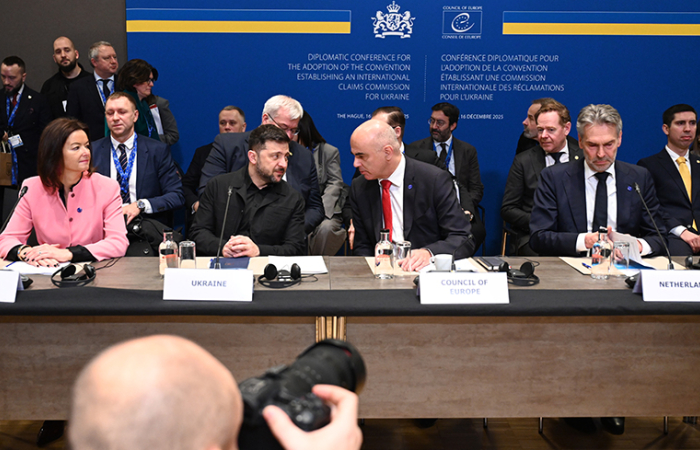
Thirty-four countries and the European Union have signed a new convention establishing an International Claims Commission for Ukraine at a diplomatic conference co-hosted by the 46-nation Council of Europe and the Netherlands in the Hague. The diplomatic conference was attended by leaders and high-level representatives from over 50 states, including the President of Ukraine, Volodymyr Zelenskyy, the President of the Republic of Moldova, Maia Sandu, and the Prime Minister of the Netherlands, Dick Schoof.  “Today marks a major step forward in ensuring accountability for Ukraine. The International Claims Commission represents justice and hope for tens of thousands of victims—our determination that those who have suffered will not be forgotten. I call for quick ratifications so we can get the commission rapidly up and running for the people of Ukraine,” said Council of Europe Secretary General Alain Berset. Ukrainian President Volodymyr Zelenskyy said: “We expect that every mechanism for compensation from the Register of Damage and Claims Commission to the actual payments – will start working and receive strong and sufficient international support, so that people can truly feel that any kind of damage caused by the war can be compensated. This war, and Russia’s responsibility for it, MUST become a clear example – so that others learn not to choose aggression.” “Accountability is about creating the conditions for peace that endures. And therefore, accountability is a condition of security – today and for the future. But accountability is not only about Ukraine. And it is not only about one aggressor and one victim. Accountability is about Europe. About every country in Europe. It is about whether Europe, as a whole, is willing to defend its peace,” said Maia Sandu, President of the Republic of Moldova, which currently holds the Presidency of the Council of Europe’s Committee of Ministers. The Prime Minister of the Netherlands, Dick Schoof, said: “Every day Russia is deliberately bombarding homes, destroying businesses and damaging infrastructure in Ukraine. Russia must compensate Ukraine for the damage caused. That is why we have launched the International Claims Commission for Ukraine and we are honoured to host it.” The International Claims Commission will be the second part of a comprehensive compensation mechanism related to Russia’s war of aggression, building on the existing Register of Damage for Ukraine. The claims commission will be established within the framework of the Council of Europe and will also be open to other countries. The Register of Damage for Ukraine, created in 2023, collects and records compensation claims submitted by individuals, organisations and public bodies in Ukraine. Forty-four states and the European Union have so far joined the Register, which has already received 86,000 claims. The International Claims Commission will review, assess and decide upon claims submitted to the Register of Damage for Ukraine and determine the amount of compensation, if any, which is due in each case. The convention establishing the commission will enter into force once it has been ratified by 25 signatories, as long as sufficient funds have been secured to support its initial work.

Popular

Editor's choice
News
Council of Europe launches new International Claims Commission for Ukraine

Council of Europe launches new International Claims Commission for Ukraine

Thirty-four countries and the European Union have signed a new convention establishing an International Claims Commission for Ukraine at a diplomatic conference co-hosted by the 46-nation Council of Europe and the Netherlands in the Hague. The diplomatic conference was attended by leaders and high-level representatives from over 50 states, including the President of Ukraine, Volodymyr Zelenskyy, the President of the Republic of Moldova, Maia Sandu, and the Prime Minister of the Netherlands, Dick Schoof.  “Today marks a major step forward in ensuring accountability for Ukraine. The International Claims Commission represents justice and hope for tens of thousands of victims—our determination that those who have suffered will not be forgotten. I call for quick ratifications so we can get the commission rapidly up and running for the people of Ukraine,” said Council of Europe Secretary General Alain Berset. Ukrainian President Volodymyr Zelenskyy said: “We expect that every mechanism for compensation from the Register of Damage and Claims Commission to the actual payments – will start working and receive strong and sufficient international support, so that people can truly feel that any kind of damage caused by the war can be compensated. This war, and Russia’s responsibility for it, MUST become a clear example – so that others learn not to choose aggression.” “Accountability is about creating the conditions for peace that endures. And therefore, accountability is a condition of security – today and for the future. But accountability is not only about Ukraine. And it is not only about one aggressor and one victim. Accountability is about Europe. About every country in Europe. It is about whether Europe, as a whole, is willing to defend its peace,” said Maia Sandu, President of the Republic of Moldova, which currently holds the Presidency of the Council of Europe’s Committee of Ministers. The Prime Minister of the Netherlands, Dick Schoof, said: “Every day Russia is deliberately bombarding homes, destroying businesses and damaging infrastructure in Ukraine. Russia must compensate Ukraine for the damage caused. That is why we have launched the International Claims Commission for Ukraine and we are honoured to host it.” The International Claims Commission will be the second part of a comprehensive compensation mechanism related to Russia’s war of aggression, building on the existing Register of Damage for Ukraine. The claims commission will be established within the framework of the Council of Europe and will also be open to other countries. The Register of Damage for Ukraine, created in 2023, collects and records compensation claims submitted by individuals, organisations and public bodies in Ukraine. Forty-four states and the European Union have so far joined the Register, which has already received 86,000 claims. The International Claims Commission will review, assess and decide upon claims submitted to the Register of Damage for Ukraine and determine the amount of compensation, if any, which is due in each case. The convention establishing the commission will enter into force once it has been ratified by 25 signatories, as long as sufficient funds have been secured to support its initial work.