


An insurgent attack in Grozny kills five policemen and injures many more.

A young man connected with the Islamist insurgency in the Russian North Caucasus blew himself up in Grozny, the capital of Chechnya on Sunday afternoon killing five policemen and injuring many others.The suicide bomber has been identified as a local resident, Opti Mudarov, 19.

"The man has been identified as a resident of the Staropromyslovsky district who has been missing since he left home two months ago," a spokesman for the Investigative Committee of the Russian Federation told Itar-Tass.
 
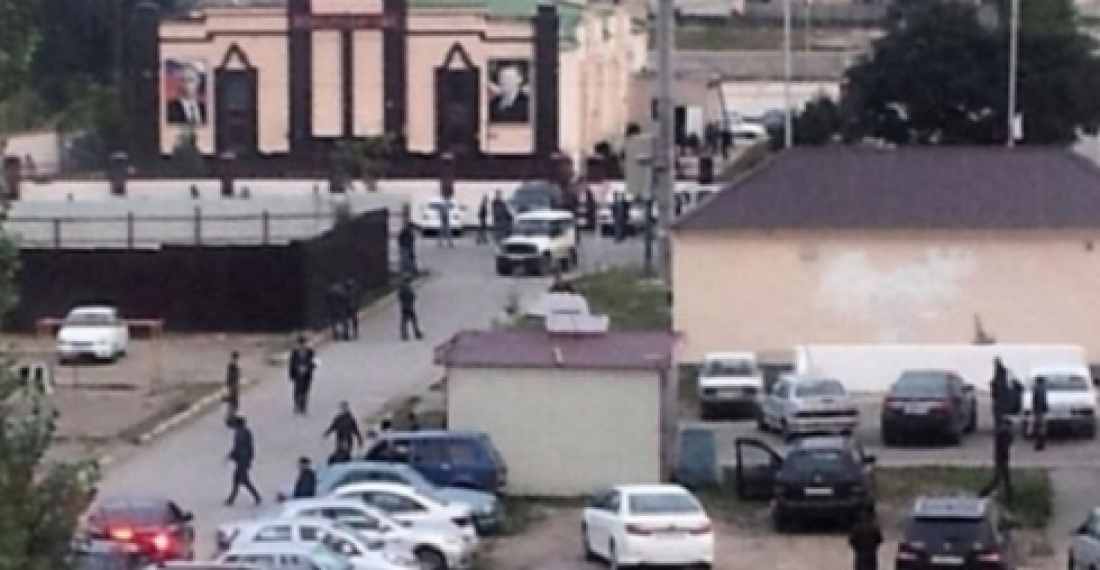
The incident took place at about 17:00 Moscow time near a concert hall in central Grozny. "Police officers who were on duty at walk-through metal detectors saw a suspicious-looking young man, who activated an unidentified explosive device when police stopped him to check his documents," the spokesman said.

The incident has been condemned by the Chechen President Ramazan Kadyrov. Kadyrov told journalists on Sunday that police officers have lost their lives to prevent a terrorist attack that could lead to dozens of casualties among the civilians celebrating the City Day in Grozny, the republic's capital. Kadyrov insisted that the incident was an isolated event. "There is peace, stability and prosperity in the republic. We are confident about the future," Kadyrov stressed. He said "terrorists and Wahhabis understand only the language of force and are to be eliminated, wherever they try to lift up their heads.

In a separate incident, two gunmen connected with the Islamist group, "Caucasus Emirate" were killed by security forces in another North Caucasus Republic, Kabadino-Balkaria.  The incident happened near the village of Psykhurei in the Baksan district of Kabardino-Balkaria. A spokesman for the security forces said that when challenged the gunmen refused to surrender arms and opened gunfire at the police and security officers and used grenades. "The two were killed in an exchange of fire," the spokesman said.
According to the spokesman, one of the gunmen was identified as Zaurbek Orshokdugov, born in 1984, who was a leader of an illegal armed group on the federal wanted list.

Commonspace.eu political editor said in a comment "the incidents are a sign of the continued volatility of the situation in the North Caucasus where Russia has been battling with Islamist inspired insurgents for more than two decades. Despite all attempts to use both incentive4s and repression to eliminate the threat a constant flow of young people depart every month from their villages and families into the forests and mountains of the North Caucasus to join the jihadist cause. On many occasions Russian federal leaders, and their counterparts in the North caucasus Republics, have claimed that they have wiped out the insurgency, only to be proven wrong shortly after. Many consider the situation impossible to resolve as long as the region remains impoverished, and offering few opportunities for young people. Many also consider that the heavy handed methods of the security forces are counter-productive, creating a constant wave of marthyrs and cause for revenge. The incidents on Sunday break the uneasy peace that had lasted throughout the summer. Whilst the Chechen President calls it an isolated incident, it may also be the begining of a new wave of violence in this troubled region of Russia."

source commonspace.eu with reporting from Itar-Tass News Agency.

Photo: The Concert Hall in the Chechen capital Grozny shortly after a sucide bomber blew himself up on Sunday, 5 October 2014.
Related articles

Editor's choice
News
Borrell tells the European Parliament that the situation in Afghanistan was critical, but the EU will remain engaged

Borrell tells the European Parliament that the situation in Afghanistan was critical, but the EU will remain engaged

Borrell underlined that the European Union will make every effort to support the peace process and to remain a committed partner to the Afghan people. "Of course, we will have to take into account the evolving situation, but disengagement is not an option.  We are clear on that: there is no alternative to a negotiated political settlement, through inclusive peace talks.
Editor's choice
News
Germany accuses Russia of cyberattacks and disinformation campaign

Germany accuses Russia of cyberattacks and disinformation campaign

The German government holds Russia responsible for a cyberattack on German air traffic control, and for targeted disinformation campaigns before the last federal election. According to the German Foreign Office in Berlin, the incidents could be clearly attributed to the Russian military intelligence service, the GRU. In response, the Russian ambassador to Berlin was summoned to the Foreign Ministry. "We have been observing a massive increase in threatening hybrid activities by Russia for some time now," a spokesperson for the Foreign Ministry stated. These range from disinformation campaigns and espionage to cyberattacks and sabotage attempts. The aim is to divide society, sow distrust, and undermine confidence in democratic institutions. The spokesperson added that with these actions, Russia is "very concretely threatening our security, not only through its war of aggression against Ukraine, but also here in Germany."  The Foreign Ministry spokesperson explained that the cyberattack on air traffic control in August 2024 was clearly attributed to the hacker collective "APT28," known as "Fancy Bear," and to the responsibility of the Russian military intelligence service, the GRU. Furthermore, it could now be "conclusively stated" that Russia had attempted "to influence and destabilize both the last Federal election and the ongoing internal affairs of the Federal Republic of Germany." There was "absolutely irrefutable evidence" for this". The so-called "Storm 1516" campaign, which has been running since 2024, is allegedly backed by "reliable information" that the Moscow-based think tank "Center for Geopolitical Expertise" is behind it. The Center is also said to be supported by Russian military intelligence. Its primary aim is to influence democratic elections in the West. (Click the image to read more).

Popular

Editor's choice
News
Germany accuses Russia of cyberattacks and disinformation campaign

Germany accuses Russia of cyberattacks and disinformation campaign

The German government holds Russia responsible for a cyberattack on German air traffic control, and for targeted disinformation campaigns before the last federal election. According to the German Foreign Office in Berlin, the incidents could be clearly attributed to the Russian military intelligence service, the GRU. In response, the Russian ambassador to Berlin was summoned to the Foreign Ministry. "We have been observing a massive increase in threatening hybrid activities by Russia for some time now," a spokesperson for the Foreign Ministry stated. These range from disinformation campaigns and espionage to cyberattacks and sabotage attempts. The aim is to divide society, sow distrust, and undermine confidence in democratic institutions. The spokesperson added that with these actions, Russia is "very concretely threatening our security, not only through its war of aggression against Ukraine, but also here in Germany."  The Foreign Ministry spokesperson explained that the cyberattack on air traffic control in August 2024 was clearly attributed to the hacker collective "APT28," known as "Fancy Bear," and to the responsibility of the Russian military intelligence service, the GRU. Furthermore, it could now be "conclusively stated" that Russia had attempted "to influence and destabilize both the last Federal election and the ongoing internal affairs of the Federal Republic of Germany." There was "absolutely irrefutable evidence" for this". The so-called "Storm 1516" campaign, which has been running since 2024, is allegedly backed by "reliable information" that the Moscow-based think tank "Center for Geopolitical Expertise" is behind it. The Center is also said to be supported by Russian military intelligence. Its primary aim is to influence democratic elections in the West. (Click the image to read more).

