Georgian elections must be held to "highest standards" - PM

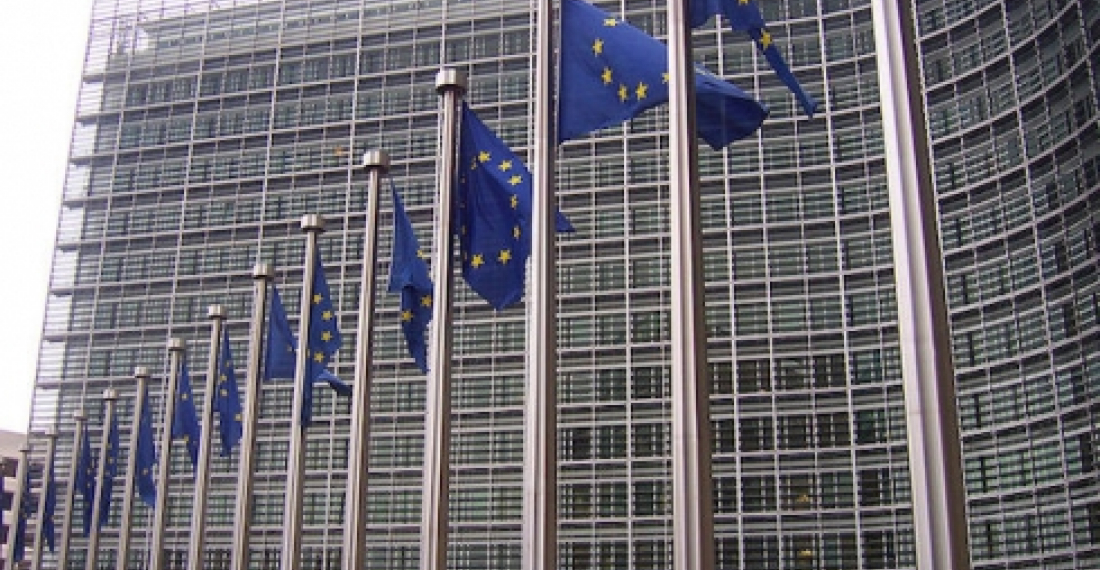
Georgian parliamentary elections scheduled for October should be held to the “highest standards,” Prime Minister Giorgi Kvirikashvili told politicians on Thursday, following meetings with European officials in Brussels.

“We have guaranteed that Georgia will hold the 2016 parliamentary elections at the highest standards. This is vitally important for us that all the components of democratic elections be observed by us,” he told a government meeting.

“Our European partners are expecting from us to meet high standards – bar is set high.”

Kvirikashvili met Donald Tusk, president of the European Council, and Jean-Claude Juncker, president of the European Commission.

He also met with European Commissioner for Neighbourhood Policy Johannes Hahn, with whom he discussed plans for short-term visa-free travel for Georgians in the EU.

Asked if the new system will be in place this summer, commissioner Dimitris Avramopoulos said “maybe earlier, maybe around summer.”

Georgia’s parliament is currently discussing a range of constitutional amendments. Because the governing Georgian Dream coalition does not have a majority, passing changes will require opposition support.

Sources: commonspace.eu and civil.ge
Related articles

Popular

Editor's choice
Interview
Thursday Interview: Murad Muradov

Thursday Interview: Murad Muradov

Today, commonspace.eu starts a new regular weekly series. THURSDAY INTERVIEW, conducted by Lauri Nikulainen, will host  persons who are thinkers, opinion shapers, and implementors in their countries and spheres. We start the series with an interview with Murad Muradov, a leading person in Azerbaijan's think tank community. He is also the first co-chair of the Action Committee for a new Armenian-Azerbaijani Dialogue. Last September he made history by being the first Azerbaijani civil society activist to visit Armenia after the 44 day war, and the start of the peace process. Speaking about this visit Murad Muradov said: "My experience was largely positive. My negative expectations luckily didn’t play out. The discussions were respectful, the panel format bringing together experts from Armenia, Azerbaijan, and Turkey was particularly valuable during the NATO Rose-Roth Seminar in Yerevan, and media coverage, while varied in tone, remained largely constructive. Some media outlets though attempted to represent me as more of a government mouthpiece than an independent expert, which was totally misleading.  Overall, I see these initiatives as important steps in rebuilding trust and normalising professional engagement. The fact that soon a larger Azerbaijani civil society visits to Armenia followed, reinforces the sense that this process is moving in the right direction." (click the image to read the interview in full)