Francisco Arroyo Vieyra: Chamber of Mexican Parliament supports the right to self-determination of peoples and any attempts to refer some positions to the Mexican Parliament do not correspond to reality

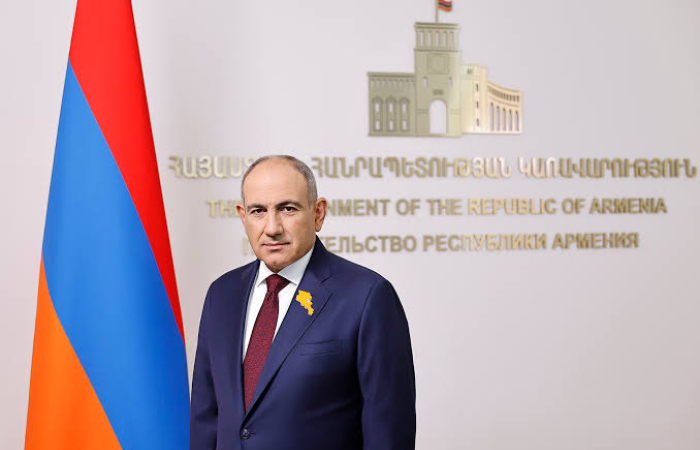
On October 24, Foreign Minister Edward Nalbandian, who is in Mexico on an official visit, met with Francisco Arroyo Vieyra, the Deputy Chairman of the Lower Chamber of the Mexico's Senate, Armenian Foreign Ministry reports.

Welcoming the Armenian Minister of Foreign Affairs, Mr. Vieyra mentioned that Mexico's Parliament would like to bring its contribution to the development and strengthening of the Armenian-Mexican relations.

Edward Nalbandian stressed that the resolutions adopted during the previous year's sitting of the Chamber of the Mexican Parliament which distort the facts about Nagorno-Karabakh not only harmed bilateral relations, but also flagrantly contradict to the position of the international community repeatedly stated by the heads of the OSCE Minsk Group Co-Chair countries. In the words of the Armenian Minister of Foreign Affairs, such activities are harming the steps undertaken by the international community towards the settlement of the issue and are threatening regional stability.

The high-ranking official of the Mexican Parliament said that he is aware of the negative consequences of the above-mentioned statements and provided explanations about that, underlining that the Chamber of the Mexican Parliament unequivocally supports the right to self-determination of peoples and any attempts to refer some positions to the Mexican Parliament do not correspond to reality.

Edward Nalbandian expressed satisfaction with the unequivocal support provided by the Mexican Parliament to the right to self-determination of peoples, as well as with the assurances presented by the Mexican Secretariat of Foreign Affairs that Mexico officially supports the proposals made by the Minsk Group on the settlement of the Nagorno-Karabakh issue, and the efforts undertaken in that direction.

Minister Nalbandian expressed hope that the newly elected Mexican Parliament would undertake efficient steps to develop relations with Armenia. Edward Nalbandian informed as well about the creation of a friendship group with the Chamber of the Mexican Parliament in the Armenian Parliament, and conveyed greetings of the Speaker of the Armenian National Assembly Hovik Abrahamyan to the heads of the Senate and Chamber of Parliament.

Francisco Arroyo Vieyra said that the Chamber of Parliament would undertake the steps towards the creation of a friendship group with the Armenian National Assembly which would definitely become an important format of interaction.

The Nagorno-Karabakh conflict broke out on February 28 1988 in the Azerbaijani Sumgait with massacre of Armenians as a peculiar response of Azerbaijanis to the peaceful demand of the Nagorno-Karabakh autonomous Region, part of the Azerbaijani SSR, to unite with the Armenian SSR. This resulted in other pogroms of Armenians in Baku, Kirovabad and other regions of Azerbaijan populated with Armenians.  In 1991  Azerbaijan unleashed war against peaceful populations of Nagorno-Karabakh, expulsing ethnic Armenians from the territory of Azerbaijan. Dozens of thousands of peaceful residents on both parties were killed in the military actions, and hundreds of thousands were left homeless and have become refugees. In 1994 in Bishkek in mediation of the OSCE MG, the NKR, Azerbaijan and Armenia signed a Protocol on Ceasefire that is observed more or less so far. Since
1992 the OSCE Minsk Group represented by co- chairs from Russia, U.S.  and France has been mediating in resolution of the conflict unleashed by Azerbaijan in 1988. At present the peace process is based on the Madrid Principles suggested by the OSCE MG in 2007 in Madrid and renovated in 2009.

Related articles

Editor's choice
News
Borrell tells the European Parliament that the situation in Afghanistan was critical, but the EU will remain engaged

Borrell tells the European Parliament that the situation in Afghanistan was critical, but the EU will remain engaged

Borrell underlined that the European Union will make every effort to support the peace process and to remain a committed partner to the Afghan people. "Of course, we will have to take into account the evolving situation, but disengagement is not an option.  We are clear on that: there is no alternative to a negotiated political settlement, through inclusive peace talks.
Editor's choice
News
Germany accuses Russia of cyberattacks and disinformation campaign

Germany accuses Russia of cyberattacks and disinformation campaign

The German government holds Russia responsible for a cyberattack on German air traffic control, and for targeted disinformation campaigns before the last federal election. According to the German Foreign Office in Berlin, the incidents could be clearly attributed to the Russian military intelligence service, the GRU. In response, the Russian ambassador to Berlin was summoned to the Foreign Ministry. "We have been observing a massive increase in threatening hybrid activities by Russia for some time now," a spokesperson for the Foreign Ministry stated. These range from disinformation campaigns and espionage to cyberattacks and sabotage attempts. The aim is to divide society, sow distrust, and undermine confidence in democratic institutions. The spokesperson added that with these actions, Russia is "very concretely threatening our security, not only through its war of aggression against Ukraine, but also here in Germany."  The Foreign Ministry spokesperson explained that the cyberattack on air traffic control in August 2024 was clearly attributed to the hacker collective "APT28," known as "Fancy Bear," and to the responsibility of the Russian military intelligence service, the GRU. Furthermore, it could now be "conclusively stated" that Russia had attempted "to influence and destabilize both the last Federal election and the ongoing internal affairs of the Federal Republic of Germany." There was "absolutely irrefutable evidence" for this". The so-called "Storm 1516" campaign, which has been running since 2024, is allegedly backed by "reliable information" that the Moscow-based think tank "Center for Geopolitical Expertise" is behind it. The Center is also said to be supported by Russian military intelligence. Its primary aim is to influence democratic elections in the West. (Click the image to read more).

Popular

Editor's choice
News
Germany accuses Russia of cyberattacks and disinformation campaign

Germany accuses Russia of cyberattacks and disinformation campaign

The German government holds Russia responsible for a cyberattack on German air traffic control, and for targeted disinformation campaigns before the last federal election. According to the German Foreign Office in Berlin, the incidents could be clearly attributed to the Russian military intelligence service, the GRU. In response, the Russian ambassador to Berlin was summoned to the Foreign Ministry. "We have been observing a massive increase in threatening hybrid activities by Russia for some time now," a spokesperson for the Foreign Ministry stated. These range from disinformation campaigns and espionage to cyberattacks and sabotage attempts. The aim is to divide society, sow distrust, and undermine confidence in democratic institutions. The spokesperson added that with these actions, Russia is "very concretely threatening our security, not only through its war of aggression against Ukraine, but also here in Germany."  The Foreign Ministry spokesperson explained that the cyberattack on air traffic control in August 2024 was clearly attributed to the hacker collective "APT28," known as "Fancy Bear," and to the responsibility of the Russian military intelligence service, the GRU. Furthermore, it could now be "conclusively stated" that Russia had attempted "to influence and destabilize both the last Federal election and the ongoing internal affairs of the Federal Republic of Germany." There was "absolutely irrefutable evidence" for this". The so-called "Storm 1516" campaign, which has been running since 2024, is allegedly backed by "reliable information" that the Moscow-based think tank "Center for Geopolitical Expertise" is behind it. The Center is also said to be supported by Russian military intelligence. Its primary aim is to influence democratic elections in the West. (Click the image to read more).