The Eastern Partnership summit

This is editorial comment prepared by the editorial team of commonspace.eu

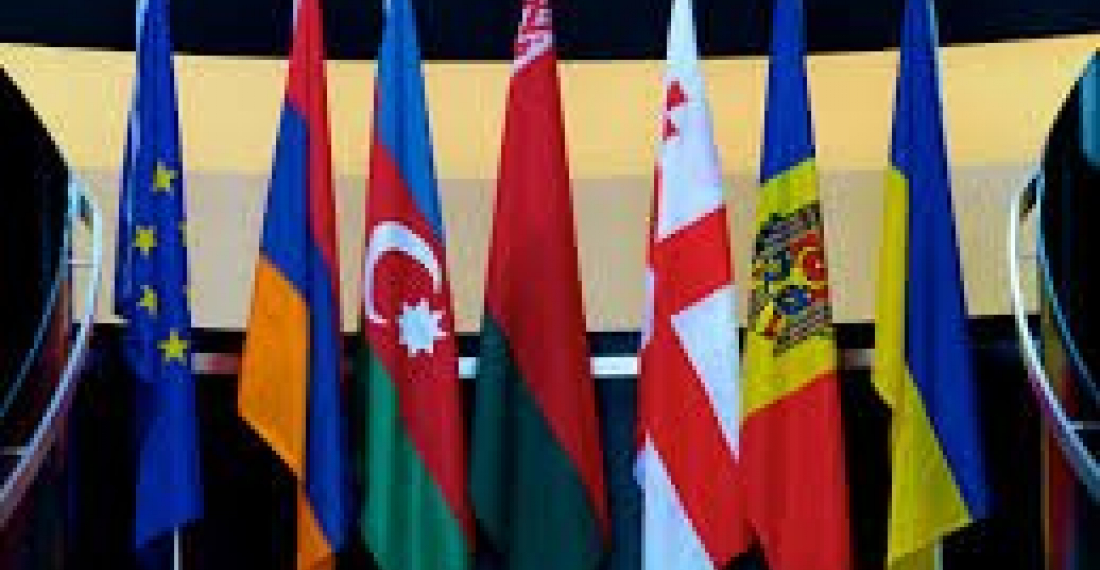
The Eastern Partnership summit will take place in Brussels on Friday (24 November). The leaders of the EU 28 member states will meet with those of the six partner countries: Armenia, Azerbaijan, Belarus, Georgia, Moldova and Ukraine. A lot of work has gone into preparing for the summit, in order to avoid the problems seen in the previous summit in Riga in 2015, and also to address a number of issues that are likely to be divisive.

read more about the Riga Summit in 2015

There remains however one big question that overshadows the meeting - the extent to which the European Union is open for closer relations with those Eastern Partnership countries that want this.

Much has happened since the Riga summit thirty months ago. The European Union is still reeling from Brexit, and from a wave of populism that has swept across the continent threatening decades of painstakingly achieved gains for an open and liberal society.

On Europe's Eastern flank is an increasingly assertive Russia, occasionally belligerent, and these days, rarely friendly.

Caught in the middle, the six Eastern partners have chosen different ways to deal with this reality. Some are closely entangled with Russia - Belarus is part of a Union state with it; Armenia is closely aligned politically, militarily and economically. Azerbaijan has opted for non-alignment, whilst Georgia, Ukraine and Moldova, already connected with the EU through the recently signed association agreements, want even closer integration and have made this their long-term objective.

It is not a black and white situation by any means. Armenia has tried to carve a space for itself, negotiating a new Enhanced partnership agreement with the EU which should be signed imminently. Azerbaijan is negotiating a "strategic partnership" arrangement with the EU, likely to be concluded next year. And even Belarus has been much more open for contacts with the EU in the last two years than before. Regardless of their foreign policy orientation all six countries still have huge challenges in their efforts to modernise, reform and develop.

What began in Riga, will continue in Brussels. The Eastern Partnership will continue to mellow, and its future as a grouping is only symbolic. The EU is going to have to accept that the agendas of the six countries is very different and find ways of dealing with this.

A sense of what is ahead came in the form of a resolution by the European Parliament adopted last week as a recommendation prior to Friday's summit.

read more about the European Parliament resolution here

It is a wish list. Some issues were lobbied for by some of the Eastern Partners themselves, others reflect the views of groups of MPs. The resolution put emphasis on differentiation, and particularly on the importance that the EU responds to the aspirations of Georgia, Moldova and Ukraine for more integration, leading some time in the distant future to membership - the so-called membership perspective.

This EP resolution whilst only a recommendation can in the future transform into a rallying call.

At the moment no one in the European Commission wants any mention of a membership perspective. That will likely also be the message from the summit. Member states simply have too much on their plate to start considering what after all would be a very ambitious step, and one not without its risks.

Yet not responding at all to the aspirations of the three countries also has huge implications, and in the long-term costs. Within Georgia, Moldova and Ukraine the political debate on the future is ongoing. Realists in the three countries do not expect EU membership anytime soon, but neither are they ready to accept that this should not be possible sometime in the future. Pro Russian elements use the lack of membership perspective as an example of European hypocrisy.

It is true, that the first duty of all concerned is to make the Association Agreements signed in the last years work successfully in order that all sides may reap the benefit from them. Nothing should distract attention from achieving this immediate primary goal.

But with Russia still trying to promote mischief in the region, including through multiple pressures that threaten the very existence and territorial integrity of Georgia, Moldova and Ukraine, the European Union needs to be generous and flexible.

As far as the other three countries are concerned, the summit should offer a clear message that even if from a political distance, the EU is committed to good neighbourly policies, and indeed to working with them to increase prosperity and peace.

Getting the Eastern Neighbourhood right is a key necessity for the future security and prosperity of Europe. The issues should be neither marginalised nor trivialised.  The Brussels summit offers an opportunity for important steps on this matter in the right direction - not as an end in themselves but rather as a part of a longer term and more ambitious vision.


Related articles

Editor's choice
News
Council of Europe launches new International Claims Commission for Ukraine

Council of Europe launches new International Claims Commission for Ukraine

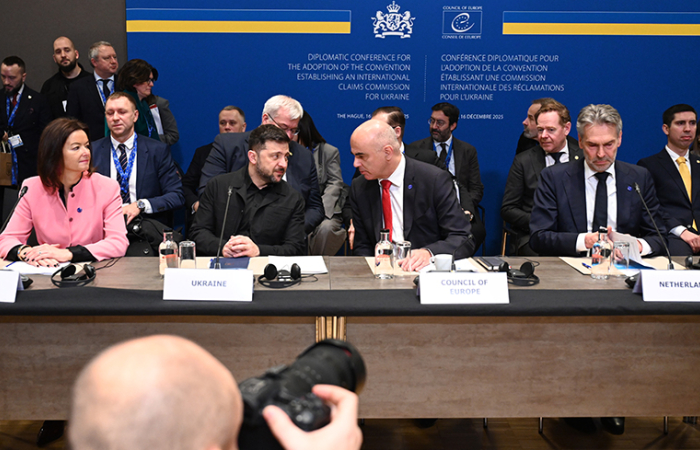
Thirty-four countries and the European Union have signed a new convention establishing an International Claims Commission for Ukraine at a diplomatic conference co-hosted by the 46-nation Council of Europe and the Netherlands in the Hague. The diplomatic conference was attended by leaders and high-level representatives from over 50 states, including the President of Ukraine, Volodymyr Zelenskyy, the President of the Republic of Moldova, Maia Sandu, and the Prime Minister of the Netherlands, Dick Schoof.  “Today marks a major step forward in ensuring accountability for Ukraine. The International Claims Commission represents justice and hope for tens of thousands of victims—our determination that those who have suffered will not be forgotten. I call for quick ratifications so we can get the commission rapidly up and running for the people of Ukraine,” said Council of Europe Secretary General Alain Berset. Ukrainian President Volodymyr Zelenskyy said: “We expect that every mechanism for compensation from the Register of Damage and Claims Commission to the actual payments – will start working and receive strong and sufficient international support, so that people can truly feel that any kind of damage caused by the war can be compensated. This war, and Russia’s responsibility for it, MUST become a clear example – so that others learn not to choose aggression.” “Accountability is about creating the conditions for peace that endures. And therefore, accountability is a condition of security – today and for the future. But accountability is not only about Ukraine. And it is not only about one aggressor and one victim. Accountability is about Europe. About every country in Europe. It is about whether Europe, as a whole, is willing to defend its peace,” said Maia Sandu, President of the Republic of Moldova, which currently holds the Presidency of the Council of Europe’s Committee of Ministers. The Prime Minister of the Netherlands, Dick Schoof, said: “Every day Russia is deliberately bombarding homes, destroying businesses and damaging infrastructure in Ukraine. Russia must compensate Ukraine for the damage caused. That is why we have launched the International Claims Commission for Ukraine and we are honoured to host it.” The International Claims Commission will be the second part of a comprehensive compensation mechanism related to Russia’s war of aggression, building on the existing Register of Damage for Ukraine. The claims commission will be established within the framework of the Council of Europe and will also be open to other countries. The Register of Damage for Ukraine, created in 2023, collects and records compensation claims submitted by individuals, organisations and public bodies in Ukraine. Forty-four states and the European Union have so far joined the Register, which has already received 86,000 claims. The International Claims Commission will review, assess and decide upon claims submitted to the Register of Damage for Ukraine and determine the amount of compensation, if any, which is due in each case. The convention establishing the commission will enter into force once it has been ratified by 25 signatories, as long as sufficient funds have been secured to support its initial work.

Popular

Editor's choice
News
Council of Europe launches new International Claims Commission for Ukraine

Council of Europe launches new International Claims Commission for Ukraine

Thirty-four countries and the European Union have signed a new convention establishing an International Claims Commission for Ukraine at a diplomatic conference co-hosted by the 46-nation Council of Europe and the Netherlands in the Hague. The diplomatic conference was attended by leaders and high-level representatives from over 50 states, including the President of Ukraine, Volodymyr Zelenskyy, the President of the Republic of Moldova, Maia Sandu, and the Prime Minister of the Netherlands, Dick Schoof.  “Today marks a major step forward in ensuring accountability for Ukraine. The International Claims Commission represents justice and hope for tens of thousands of victims—our determination that those who have suffered will not be forgotten. I call for quick ratifications so we can get the commission rapidly up and running for the people of Ukraine,” said Council of Europe Secretary General Alain Berset. Ukrainian President Volodymyr Zelenskyy said: “We expect that every mechanism for compensation from the Register of Damage and Claims Commission to the actual payments – will start working and receive strong and sufficient international support, so that people can truly feel that any kind of damage caused by the war can be compensated. This war, and Russia’s responsibility for it, MUST become a clear example – so that others learn not to choose aggression.” “Accountability is about creating the conditions for peace that endures. And therefore, accountability is a condition of security – today and for the future. But accountability is not only about Ukraine. And it is not only about one aggressor and one victim. Accountability is about Europe. About every country in Europe. It is about whether Europe, as a whole, is willing to defend its peace,” said Maia Sandu, President of the Republic of Moldova, which currently holds the Presidency of the Council of Europe’s Committee of Ministers. The Prime Minister of the Netherlands, Dick Schoof, said: “Every day Russia is deliberately bombarding homes, destroying businesses and damaging infrastructure in Ukraine. Russia must compensate Ukraine for the damage caused. That is why we have launched the International Claims Commission for Ukraine and we are honoured to host it.” The International Claims Commission will be the second part of a comprehensive compensation mechanism related to Russia’s war of aggression, building on the existing Register of Damage for Ukraine. The claims commission will be established within the framework of the Council of Europe and will also be open to other countries. The Register of Damage for Ukraine, created in 2023, collects and records compensation claims submitted by individuals, organisations and public bodies in Ukraine. Forty-four states and the European Union have so far joined the Register, which has already received 86,000 claims. The International Claims Commission will review, assess and decide upon claims submitted to the Register of Damage for Ukraine and determine the amount of compensation, if any, which is due in each case. The convention establishing the commission will enter into force once it has been ratified by 25 signatories, as long as sufficient funds have been secured to support its initial work.