Monday Commentary: The thin line between stability and stagnation

"There is only a thin line between stability and stagnation, but governments in the Caucasus and elsewhere who promise stability and deliver stagnation do so at their own risk" says Dennis Sammut in this week's Monday Commentary.

Ever since the collapse of the Soviet Union in 1991 there has been one word in the political discourse of the South Caucasus that has been much used and abused - Stability.

This is not a coincidence. Anyone who remembers the chaos that ensued in the region in the early 1990s quickly understands why. After independence was regained people soon got fed with the adventurism wrapped in nationalism that marked the time and wanted certainty. Politicians of the old school saw their chance and sold themselves as the one that could guarantee stability. For a while they were successful.

There is a danger however if you base your whole political credibility on stability that your strategy quickly becomes stagnation. Stagnation stinks, and the people who smell the stench most are the young people who are trying to breathe a new life. Governments who stagnate are doomed. They may hold on to power for a while, through sheer force, or through patronage, but sooner rather than later a wind will blow them away.

That is pretty much what happened to the Shevardnadze government in Georgia in 2003. I have more time for Shevardnadze than most do these days, because I think the stability he brought back in 1992 saved Georgia from itself, but by 2003 the country needed something different and he failed to understand this until it was too late. Something similar happened in Armenia last month. True the packaging was different, yet the core issue was the stagnation that had crept in at all levels of Armenian society that was stifling all initiative. The attempts to repackage the political process, simply exposed how deep the problem had become.

It is spring time in the Caucasus, and in different places the people are restless.

From Tbilisi to Stepanakert in the last days events and incidents turned quickly into political crisis. The rule of law being the weakest link in the processes on going in the region, usually it is issues related with this that provide the cause around which the malcontents gather - but deeper down the core problem is more elementary: people, especially young people, get fed up with being patronised. They yearn for change. They hate stagnation.

The current Georgian government, despite its wide popular appeal, confirmed in elections in 2012 and 2016, has managed to tie itself in knots. It's public relations depicting Georgia as some kind of modern day Caucasian "Shangri La" has left many bewildered and wondering what it is they are missing on. Bidhzina Ivanishvili had to come back and introduce some doze of realism in his speech assuming the chairmanship of Georgian Dream on 11 May, but the damage may have been done. In Baku the government keeps hammering stability as its most important achievement, whilst society in general, and young people in particular, think stagnation is the most serious problem.

All over the region stability risks becoming a dirty word. It should not. Constant turmoil is not good for any society. Well-functioning societies need to have mechanisms where opposition is voiced, the rule of law upheld, and the government held to account. These should be properly functioning parliament, law courts, civil society, free media, etc. Street protests can happen if people feel the need to add strength to their arguments - a secondary means not a primary one. Unless, that is, they have been denied all the other options, in which case street protests remain the only way short of violence.

Many people in the Caucasus no longer accept stability is worth having at any cost. Not because they want turmoil in their countries but because they do not want stagnation, and they suspect that stability is being used as an excuse to stop change. There is in effect only a thin line between stability and stagnation, but governments in the Caucasus and elsewhere who promise stability and deliver stagnation do so at their own risk.

source: Dennis Sammut is the Director of LINKS (Dialogue, Analysis and Research). His Monday Commentary is published weekly on commonspace.eu. dennis@links-dar.org


The views expressed in opinion pieces and commentaries do not necessarily reflect the position of commonspace.eu or its partners

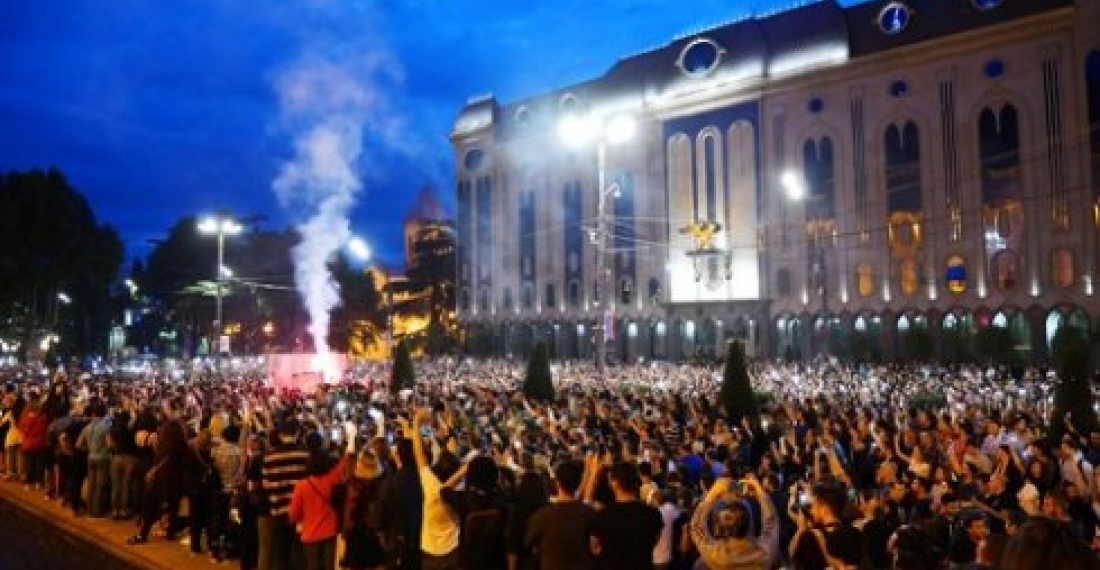
photo: Protestors in front of the Georgian Parliament on 31 May (picture courtesy of Radio Free Europe/Radio Liberty)
Related articles

Editor's choice
News
Council of Europe launches new International Claims Commission for Ukraine

Council of Europe launches new International Claims Commission for Ukraine

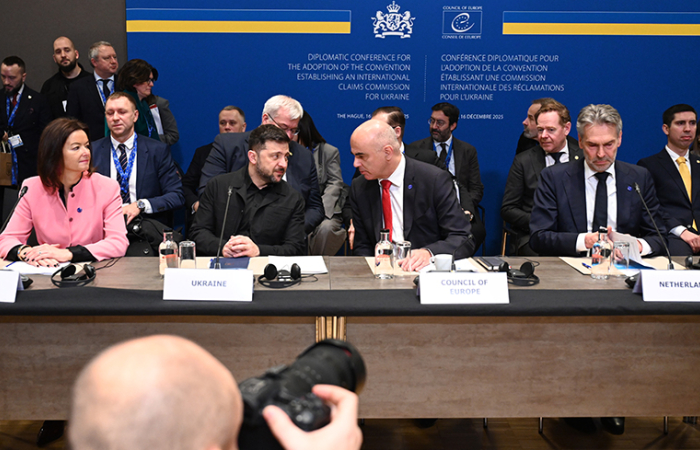
Thirty-four countries and the European Union have signed a new convention establishing an International Claims Commission for Ukraine at a diplomatic conference co-hosted by the 46-nation Council of Europe and the Netherlands in the Hague. The diplomatic conference was attended by leaders and high-level representatives from over 50 states, including the President of Ukraine, Volodymyr Zelenskyy, the President of the Republic of Moldova, Maia Sandu, and the Prime Minister of the Netherlands, Dick Schoof.  “Today marks a major step forward in ensuring accountability for Ukraine. The International Claims Commission represents justice and hope for tens of thousands of victims—our determination that those who have suffered will not be forgotten. I call for quick ratifications so we can get the commission rapidly up and running for the people of Ukraine,” said Council of Europe Secretary General Alain Berset. Ukrainian President Volodymyr Zelenskyy said: “We expect that every mechanism for compensation from the Register of Damage and Claims Commission to the actual payments – will start working and receive strong and sufficient international support, so that people can truly feel that any kind of damage caused by the war can be compensated. This war, and Russia’s responsibility for it, MUST become a clear example – so that others learn not to choose aggression.” “Accountability is about creating the conditions for peace that endures. And therefore, accountability is a condition of security – today and for the future. But accountability is not only about Ukraine. And it is not only about one aggressor and one victim. Accountability is about Europe. About every country in Europe. It is about whether Europe, as a whole, is willing to defend its peace,” said Maia Sandu, President of the Republic of Moldova, which currently holds the Presidency of the Council of Europe’s Committee of Ministers. The Prime Minister of the Netherlands, Dick Schoof, said: “Every day Russia is deliberately bombarding homes, destroying businesses and damaging infrastructure in Ukraine. Russia must compensate Ukraine for the damage caused. That is why we have launched the International Claims Commission for Ukraine and we are honoured to host it.” The International Claims Commission will be the second part of a comprehensive compensation mechanism related to Russia’s war of aggression, building on the existing Register of Damage for Ukraine. The claims commission will be established within the framework of the Council of Europe and will also be open to other countries. The Register of Damage for Ukraine, created in 2023, collects and records compensation claims submitted by individuals, organisations and public bodies in Ukraine. Forty-four states and the European Union have so far joined the Register, which has already received 86,000 claims. The International Claims Commission will review, assess and decide upon claims submitted to the Register of Damage for Ukraine and determine the amount of compensation, if any, which is due in each case. The convention establishing the commission will enter into force once it has been ratified by 25 signatories, as long as sufficient funds have been secured to support its initial work.

Popular

Editor's choice
News
Council of Europe launches new International Claims Commission for Ukraine

Council of Europe launches new International Claims Commission for Ukraine

Thirty-four countries and the European Union have signed a new convention establishing an International Claims Commission for Ukraine at a diplomatic conference co-hosted by the 46-nation Council of Europe and the Netherlands in the Hague. The diplomatic conference was attended by leaders and high-level representatives from over 50 states, including the President of Ukraine, Volodymyr Zelenskyy, the President of the Republic of Moldova, Maia Sandu, and the Prime Minister of the Netherlands, Dick Schoof.  “Today marks a major step forward in ensuring accountability for Ukraine. The International Claims Commission represents justice and hope for tens of thousands of victims—our determination that those who have suffered will not be forgotten. I call for quick ratifications so we can get the commission rapidly up and running for the people of Ukraine,” said Council of Europe Secretary General Alain Berset. Ukrainian President Volodymyr Zelenskyy said: “We expect that every mechanism for compensation from the Register of Damage and Claims Commission to the actual payments – will start working and receive strong and sufficient international support, so that people can truly feel that any kind of damage caused by the war can be compensated. This war, and Russia’s responsibility for it, MUST become a clear example – so that others learn not to choose aggression.” “Accountability is about creating the conditions for peace that endures. And therefore, accountability is a condition of security – today and for the future. But accountability is not only about Ukraine. And it is not only about one aggressor and one victim. Accountability is about Europe. About every country in Europe. It is about whether Europe, as a whole, is willing to defend its peace,” said Maia Sandu, President of the Republic of Moldova, which currently holds the Presidency of the Council of Europe’s Committee of Ministers. The Prime Minister of the Netherlands, Dick Schoof, said: “Every day Russia is deliberately bombarding homes, destroying businesses and damaging infrastructure in Ukraine. Russia must compensate Ukraine for the damage caused. That is why we have launched the International Claims Commission for Ukraine and we are honoured to host it.” The International Claims Commission will be the second part of a comprehensive compensation mechanism related to Russia’s war of aggression, building on the existing Register of Damage for Ukraine. The claims commission will be established within the framework of the Council of Europe and will also be open to other countries. The Register of Damage for Ukraine, created in 2023, collects and records compensation claims submitted by individuals, organisations and public bodies in Ukraine. Forty-four states and the European Union have so far joined the Register, which has already received 86,000 claims. The International Claims Commission will review, assess and decide upon claims submitted to the Register of Damage for Ukraine and determine the amount of compensation, if any, which is due in each case. The convention establishing the commission will enter into force once it has been ratified by 25 signatories, as long as sufficient funds have been secured to support its initial work.