Commentary: For the CIS, Ukraine is an existential crisis.

This commentary was prepared by the political editor of commonspace.eu:

When the USSR dissolved in 1991 there were hasty efforts to try to keep the fifteen constituent republics into some kind of united framework. The Commonwealth of Independent States was hastily created a few months later. The three Baltic republics opted out immediately. Georgia did not join until several years later, and subsequently left in 2008 after Russia recognised Abkhazia and South Ossetia in the aftermath of the Georgia-Russia War. Turkmenistan and Uzbekistan have been semi detached from it, participating in its meetings selectively.

All the others have tried to make the best out of the loose framework.

However as Russian statesman Evgeniy Primakov wrote in 1994, once the process of separation started "the knife of disintegration could not help cutting the living organism". The CIS never fully took off as a regional organisation and its agenda has been increasingly diluted. Even though hundreds of treaties have been signed few have actually been put into practise, and more serious co-operation on say security and defence matters have been taken over by other organisations where some of the CIS members are also active, for example the CSTO.

The problem with the CIS has always been that it was perceived by its members, and by everybody else, as a "Russian" project. It became a forum where some of the post Soviet republics occasionally challenged Russia, or, more often, where they massaged Russian ego through vague expressions of support and solidarity. Talk of co-ordinating the foreign policy of its member states remained just talk. Its inability to mediate during the 2008 Georgia-Russia War only confirmed what many had suspected all along.

The crisis in Ukraine, and particularly Crimea, however poses to the CIS a much bigger, even existential challenge. It is difficult to envisage the CIS without Ukraine, and the Ukrainians have always payed at least lip-service to the organisation. Indeed at the moment Ukraine has the Chairmanship of the CIS. As the Ukrainian crisis gathered momentum over the last days Ukraine tried to use its prerogative as Chairman to call for an urgent meeting of CIS Foreign Ministers in Kiev. In normal circumstances this would have been a welcome procedure and would have offered an opportunity to get the sides in the crisis talking together. Other countries could have helped facilitate a dialogue.

Russia however, because it has decided not to deal with the government in Kiev as the legitimate government of Ukraine, would have none of it, and the Russian controlled secretariat of the CIS in Minsk informed the Ukrainians that the Russian Minister, and "other" ministers were busy. They offered instead a meeting in April. Some compromise seems to have been reached on Monday to convene a meeting of Deputy Foreign Ministers in Minsk on Friday (14 March), but this meeting has now been cancelled.  The CIS Secretariat said that "this decision is a result of lengthy discussions by the permanent representatives of the Ukrainian side's initiative to hold an emergency session of the CIS Foreign Ministers' Council in Kyiv."

It is not clear where the CIS will go from here. If Russia goes ahead with plans to annexe Crimea after Sunday's referendum it is unlikely that Ukraine will remain a member of the organisation. Without Ukraine the CIS will become a completely obsolete organisation. It may struggle on for another year or two, but it will clearly have no long term future.

The Executive Secretary of the CIS, Sergei Lebedev, said that he hoped that the political situation in Ukraine would not affect the relationship of Ukraine with the organisation. It is however difficult to see how this could not happen.

It would be very ironic if one of the first casualties of the crisis in Ukraine, a crisis that many consider a result of Russia's ambitions to re-construct a new framework and order in the post soviet space, would be the institution that was created to keep the post-Soviet countries together.

This commentary was prepared by the political editor of commonspace.eu

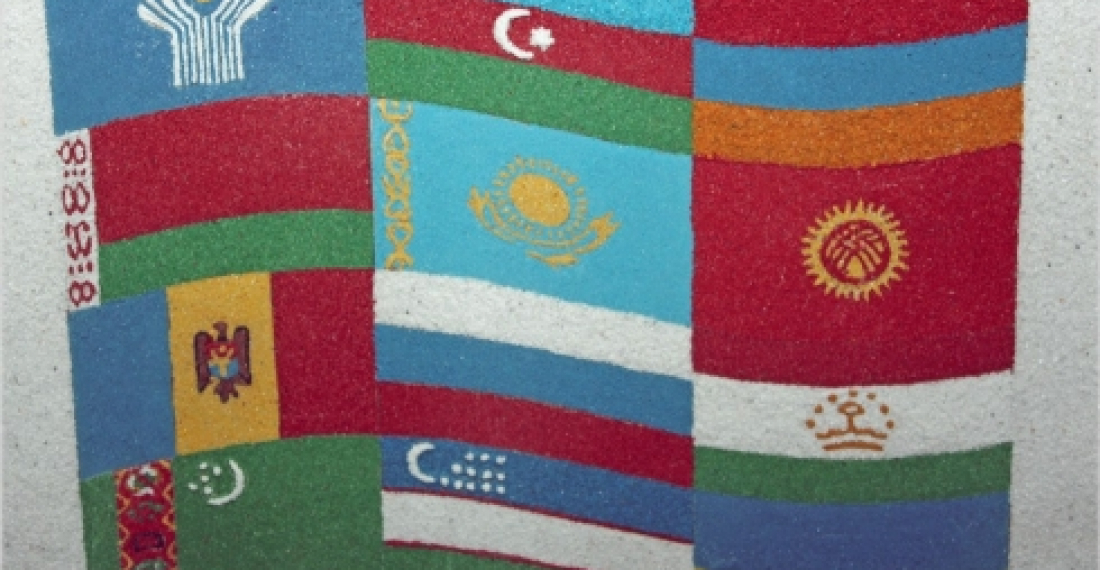
photo: The flags of the members of the Commonwealth of Independent States (CIS).
Related articles

Editor's choice
News
Borrell tells the European Parliament that the situation in Afghanistan was critical, but the EU will remain engaged

Borrell tells the European Parliament that the situation in Afghanistan was critical, but the EU will remain engaged

Borrell underlined that the European Union will make every effort to support the peace process and to remain a committed partner to the Afghan people. "Of course, we will have to take into account the evolving situation, but disengagement is not an option.  We are clear on that: there is no alternative to a negotiated political settlement, through inclusive peace talks.
Editor's choice
News
NATO Chief says war is on Europe's doorstep, and warns against complacency

NATO Chief says war is on Europe's doorstep, and warns against complacency

Russia could attack a Nato country within the next five years, the Secretary General of NATO, Mark Rutte, said in a stark new warning. "Nato's own defences can hold for now," Rutte warned in Berlin, but conflict was "next door" to Europe and he feared "too many are quietly complacent, and too many don't feel the urgency, too many believe that time is on our side. "Russia is already escalating its covert campaign against our societies," Rutte said in a speech in Germany. "We must be prepared for the scale of war our grandparents or great-grandparents endured." Earlier this month, Russia's President Vladimir Putin said his country was not planning to go to war with Europe, but it was ready "right now" if Europe wanted to - or started a war. But similar reassurances were given by Moscow in 2022, just before 200,000 Russian troops crossed the border and invaded Ukraine. Putin has accused European countries of hindering US efforts to bring peace in Ukraine - a reference to the role Ukraine's European allies have recently played in trying to change a US peace plan to end the war, whose initial draft was seen as favouring Russia. But Putin was not sincere, Nato's secretary-general said in the German capital, Berlin. Supporting Ukraine, he added, was a guarantee for European security. "Just imagine if Putin got his way; Ukraine under the boot of Russian occupation, his forces pressing against a longer border with Nato, and the significantly increased risk of an armed attack against us." Russia's economy has been on a war footing for more than three years now - its factories churn out ever more supplies of drones, missiles and artillery shells. According to a recent report by the Kiel Institute for the World Economy, Russia has been producing each month around 150 tanks, 550 infantry fighting vehicles, 120 Lancet drones and more than 50 artillery pieces. The UK, and most of its Western allies, are simply not anywhere near this point. Analysts say it would take years for Western Europe's factories to come close to matching Russia's mass-production of weapons. "Allied defence spending and production must rise rapidly, our armed forces must have what they need to keep us safe," the Nato chief said.

Popular

Editor's choice
News
NATO Chief says war is on Europe's doorstep, and warns against complacency

NATO Chief says war is on Europe's doorstep, and warns against complacency

Russia could attack a Nato country within the next five years, the Secretary General of NATO, Mark Rutte, said in a stark new warning. "Nato's own defences can hold for now," Rutte warned in Berlin, but conflict was "next door" to Europe and he feared "too many are quietly complacent, and too many don't feel the urgency, too many believe that time is on our side. "Russia is already escalating its covert campaign against our societies," Rutte said in a speech in Germany. "We must be prepared for the scale of war our grandparents or great-grandparents endured." Earlier this month, Russia's President Vladimir Putin said his country was not planning to go to war with Europe, but it was ready "right now" if Europe wanted to - or started a war. But similar reassurances were given by Moscow in 2022, just before 200,000 Russian troops crossed the border and invaded Ukraine. Putin has accused European countries of hindering US efforts to bring peace in Ukraine - a reference to the role Ukraine's European allies have recently played in trying to change a US peace plan to end the war, whose initial draft was seen as favouring Russia. But Putin was not sincere, Nato's secretary-general said in the German capital, Berlin. Supporting Ukraine, he added, was a guarantee for European security. "Just imagine if Putin got his way; Ukraine under the boot of Russian occupation, his forces pressing against a longer border with Nato, and the significantly increased risk of an armed attack against us." Russia's economy has been on a war footing for more than three years now - its factories churn out ever more supplies of drones, missiles and artillery shells. According to a recent report by the Kiel Institute for the World Economy, Russia has been producing each month around 150 tanks, 550 infantry fighting vehicles, 120 Lancet drones and more than 50 artillery pieces. The UK, and most of its Western allies, are simply not anywhere near this point. Analysts say it would take years for Western Europe's factories to come close to matching Russia's mass-production of weapons. "Allied defence spending and production must rise rapidly, our armed forces must have what they need to keep us safe," the Nato chief said.