For the last twenty-one years a diplomatic effort aimed at finding a solution to the conflict between Armenians and Azerbaijanis, known informally as the OSCE Minsk Process has failed to achieve a breakthrough despite the efforts of many, and hundreds of meetings over thousands of hours.
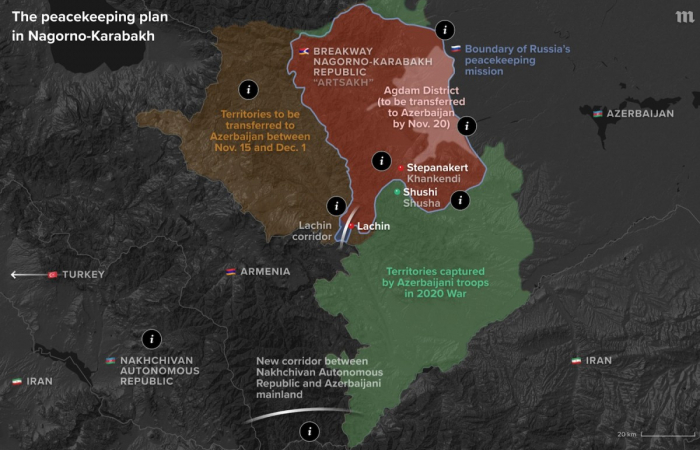
On several occasions, particularly in the period 2008-11 the sides looked very close to agreeing a road-map that would see them gradually moving towards a lasting solution. The conflict initially centered around the status of Nagorno- Karabakh, a territory that is internationally recognized as being part of Azerbaijan but which has a majority Armenian population. However since the hostilities in the 1990s, and the subsequent ceasefire in 1994, other problems and issues have arisen. Nagorno-Karabakh and a large chunk of Azerbaijani territory around it have been under Armenian control since, and a de facto administration has declared itself independent. In the meantime hundreds of thousands of refugees and displaced people, mainly Azerbaijanis but some Armenians also, continue longing to return to their homes.In Nagorno-Karabakh itself the population lives on a permanent war-footing and Armenia is under blockade by Azerbaijan and Turkey. An arms race has turned the region into a potential dangerous flashpoint.
The solution, many believe, is to be found in the so-called Madrid Principles. Intensive negotiations have been held since 2008 between the two Presidents, Ilham Aliev of Azerbaijan and Serzh Sargsyan of Armenia. Yet every time a solution was in sight, something happened and one or the other of the sides lost heart, taking everything back to square one. Or so one is led to believe, except that the diplomats mediating the process keep reassuring everybody that this is not the case because, after all the Madrid Principles have been agreed, with some reservations by all the sides. The sides in the conflict on the other hand insist that the devil is in the detail, and that principles are one thing, signing an agreement is another.
So for nearly two years now the process has descended into a quasi surreal exercise, with the leaderships of Armenia and Azerbaijan and the diplomats representing the three states that co-chair the Minsk process (France, Russia and the United States), engaged in a series of monotonous, slow, small and repetitive steps - a diplomatic equivalent of the Bolero de Ravel, whilst the international community obliviously cheered on, with the enthusiasm of an audience on a first night at La Scala.
At this point only the most naïve optimist has any hopes that the process as it stands is going to give results. For this to happen something has to change that will shuffle all the certainties and create a new basis for negotiations. Several things can do this. The first is war. A new conflict can change the present dynamic. It is one reason why the sides still consider it as an option of last resort. The implications of a new conflict for the countries concerned and for the region in general will be enourmous, and the price in human suffering, given the present level of armament, will be huge. The second development that could change the status quo is serious change in the domestic political situation of either or both of the two countries. This is not something that is impossible to happen, but even if it does the outcome is unlikely to be either clear or predictable for some time.There is also no guarantee that different governments in either Baku or Yerevan will approach the Karabakh conflict resolution process more positively. The third is a change in the overall international situation. A dramatic escalation of the stand-off between the international community and Iran, or a dramatic change of leadership in Russia may force one or both countries to rethink their strategy. But any such development will not necessarily contribute to a peaceful solution of the conflict either, although it may create a different situation on the ground.
Shuffling the certainties can however also happen in the framework of negotiations, but given the lack of trust and communication between the sides this can only happen if the international community is ready to take the trouble to create the right conditions for it.The only way a peaceful and durable solution can be achieved is always going to be through negotiations, which is why the focus inevitably goes back to the Minsk Process. Based on what the participants of this very secretive process have been telling the world we can now conclude that the process is presently mainly focused on managing the conflict and trying to prevent an escalation, rather than proactively trying to find a solution to it. This is unacceptable. It is easy to lay the blame for the evident failure to find an agreement after twenty one years of negotiations on the mediators. There is always going to be a temptation to shoot the messenger, but this needs to be avoided, even if there is some justifiable criticism of the way the process has been conducted.
Yet equally, saying that the problem is the lack of the political will of the sides to engage positively with the process, to make compromises and to take courageous decisions to ensure a peaceful solution, is not going to take us far either. The question needs to be asked if the international community has done all it can to make it easier for the sides to move forward; it demands flexibility from the Armenians and the Azerbaijanis but offering an endorsement of the Bolero of Minsk as the only way out of the present impasse comes across as being as inflexible and unimaginative as the intransigence of Mr Aliev and Mr Sargsyan. It is time for the international community to go back to the drawing-board on this matter, and to come back with a new initiative that builds on the experiences and lessons learnt from the Minsk Process but one that would entice the sides to engage with afresh with a revitalized effort to find a solution to this conflict that continues to suffocate the region’s progress and to cause direct and indirect hardship to millions of people.
This commentary was prepared by the editorial team of commonspaceextra, a quarterly publication published by LINKS Analysis.
You can download or read the full version of commonspaceEXTRA here
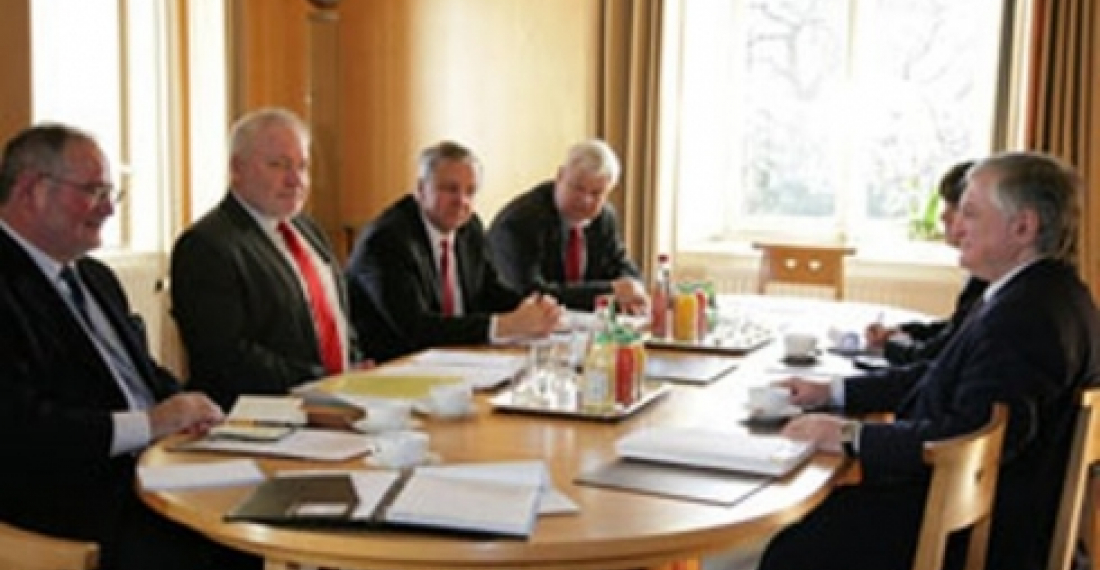
photo The Co-Chairs of the OSCE Minsk Group (Igor Popov of the Russian Federation, Jacques Faure of France, and Ian Kelly of the United States of America) the Foreign Minister of Armenia, Edward Nalbandian meeting in Paris in January 2013. Also participating in the meeting was the Personal Representative of the OSCE Chairperson-in-Office, Ambassador Andrzej Kasprzyk.