Deepening Armenia–Türkiye Normalisation
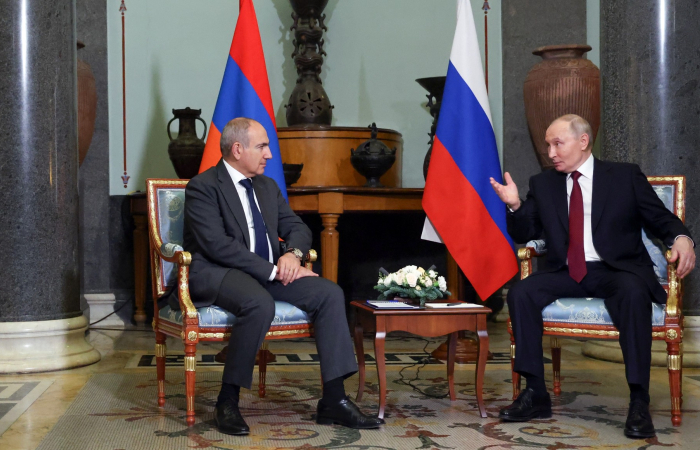
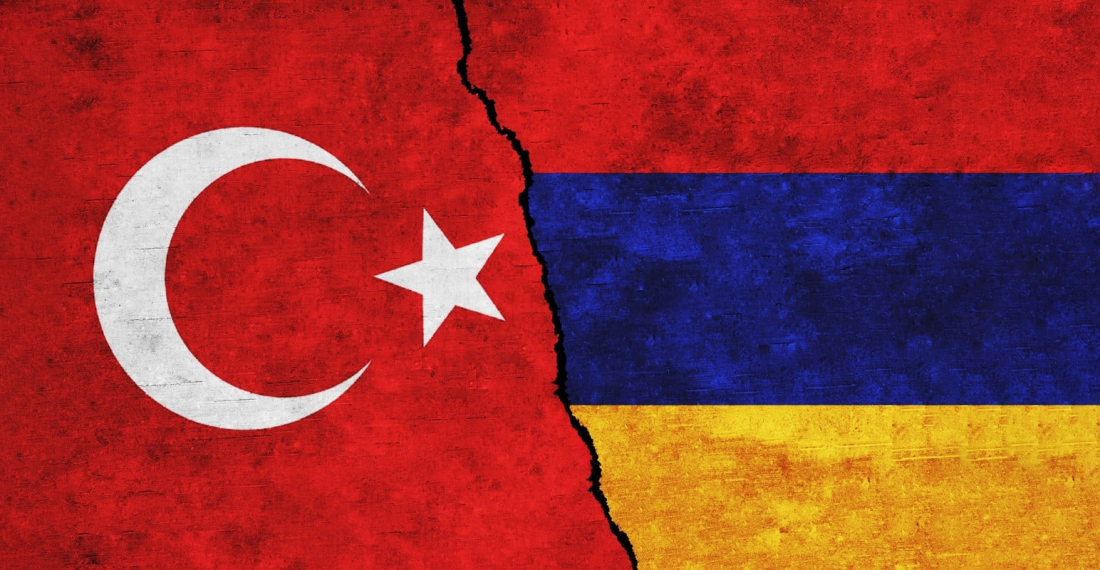
Pashinyan's official visit to Türkiye on June 20, 2025, marks a strategic shift from symbolic reconciliation to strategic rapprochement. Normalisation, for Yerevan, is not an end in itself but a transformative initiative to put an end to Armenia's geopolitical isolation, to diversify its transit routes, to decrease its reliance on Russia and to get access to Turkish ports, measures that reorient Armenia economically and logistically toward the West. Türkiye, on its part, is seizing the moment to strengthen its role as a regional intermediary. Consequently, by promoting normalisation, Ankara solidifies its impact in the South Caucasus and sends a positive signal to Western partners: the EU and U.S., in particular, about its evolving role in the region's stabilisation.
This rapprochement remains conditional, however. President Erdoğan has expressed that meaningful advancement relies on Armenia progressing a peace accord with Azerbaijan, alongside movement toward opening the sealed border. Thus, while the Armenian prime minister's visit signifies political will, its realisation is constrained by the incomplete Yerevan–Baku peace process. The incomplete peace process puts the timing and substance of practical measures such as the reopening of the border or the project of restoration of the rail link between Armenia and Azerbaijan, "Zangezur Corridor," which is occasionally also called the Araxes Rail Link, in a state of strategic interdependence.
Türkiye's Dual Role and Caucasus Power Balance
Erdoğan's public endorsement of Armenia-Azerbaijan reconciliation talks during Pashinyan's working visit is a strategic shift by Ankara. Türkiye, by promoting reconciliation openly, while maintaining good relations with Baku, positions itself not just as a patron of pan-Turkic brotherhood but as a regional peacemaker with diplomatic capital. This dual-track diplomacy, therefore, allows Ankara to position itself at the centre of any South Caucasus settlement architecture: pursuing regional integration while safeguarding its Azerbaijani ally's interests.
Simultaneously, public reconciliation by Armenia with Türkiye is the culmination of a series of policy swings: suspension of Collective Security Treaty Organisation (CSTO) commitments, increased contacts with the U.S. and the EU, and increased independence at the borders. These moves constitute a deliberate geographic and strategic distancing from Moscow. Increased leadership by Türkiye leaves a power vacuum left behind by a withdrawing Russia, making the Caucasus a battleground for influence.
Moscow, faced with Ankara's belligerence, appears to be shifting into a rhetoric of tactical readjustment, speaking rather than bludgeoning. Consequently, Russia now enjoys interlocutor equality with Türkiye by way of the 3+3 regional meetings - a summit usually involves heads of state. Türkiye's increasing position in Armenian-Azerbaijani normalisation stabilises the regional balance of power, so it makes Ankara able to shape outcomes while pushing Moscow toward compromise and cooperation.
Azerbaijani–Armenian Peace Dynamics and Corridor Politics
Prime Minister Pashinyan's trip to Türkiye on June 20 follows hard on the heels of President Aliyev's recent trip to Ankara, generating a choreographed diplomatic rhythm underscoring Türkiye's position as a marshalling power behind two parallel peace tracks. This suggests Ankara's apparent willingness to act as a mediator in ushering in a comprehensive peace architecture bridging Yerevan and Baku directly.
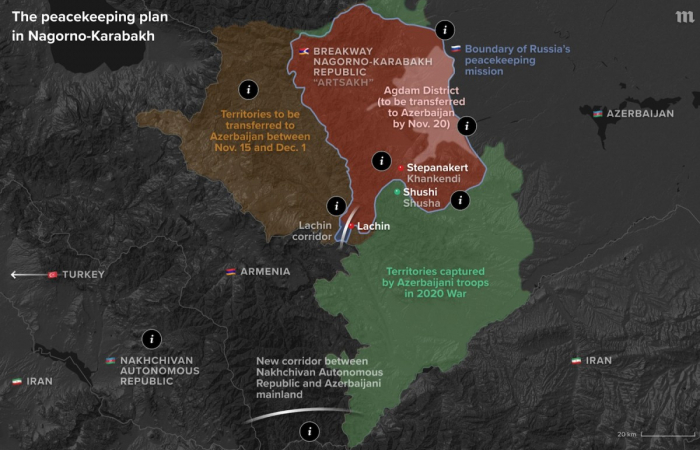
At the heart of these discussions is the highly contested Zangezur Corridor, a proposed land link through Armenia to Azerbaijan's Nakhchivan exclave, seen by Türkiye and Azerbaijan as a foundation of regional connectivity, and by Armenia as a potential infringement on its sovereignty. Although Pashinyan studiously refrained from any formal concession on corridor semantics during his trip, he signalled instead pragmatic readiness to talk under constitutional guarantees. This guarded approach is a calibrated attempt to pacify domestic constituencies that Yerevan is not bartering away territorial integrity in seeking a conversation. Armenia's "Crossroads of Peace" proposal, referred to in regional forums, envisages multimodal connectivity under Armenian sovereign control, and is an option that preserves national agency within the broader regional agenda.
Moving forward, this corridor rationale will become a litmus test for Pashinyan's leadership. Consequently, it requires advancing Russian-brokered ceasefire arrangements without overstepping constitutional boundaries, while balancing Turkish-Azerbaijani economic incentives with domestic political stability. Ultimately, the success or failure of corridor pacts will hinge on whether Armenia can leverage Türkiye's brokerage status in gaining long-term regional integration, or whether playing its hand overcautiously contributes to further domestic polarisation and peace efforts.
Forecasting Shifts in Alliance-Building
Pashinyan's working visit to Türkiye is a turning-point strategic step: Armenia accelerates the westward pivot, supplementing the January 2025 U.S.–Armenia Strategic Partnership Charter and EU membership efforts. Yerevan, by tackling Ankara directly, supports a multi-vector foreign policy. Moreover, Armenia does not merely attempt to discover allies, but constructs bridging alliances, strengthening its diplomatic weight and security evaluation.
Türkiye's equidistant stance, standing with Azerbaijan and at the same time leaving the door open for Armenia, places Ankara in a position of regional interlocutor rather than partisan political actor politics. This fine balancing act underlines the building of a South Caucasus peace architecture under which Türkiye exercises leveraged influence through both capitals.
At the same time, Yerevan's shift west and away from Russia reflects increasing disenfranchisement with Moscow as a security provider. The Kremlin's failure to act during the 2020 and 2023 Nagorno-Karabakh escalations has dispelled illusions of CSTO reliability. This shortfall pressures Armenia to hasten its shift, otherwise, its own security and democratic gains are exchanged for the lack of credible assistance.
The Western role, in the form of visa liberalisation, EU infrastructure investment and U.S. strategic engagement, will determine whether political alignment in Armenia holds or recedes under pressure. Failure by the EU and U.S. after the visit will expose Yerevan to domestic backlash, reforms stuck in the mud and a retreat into isolation.
Finally, Türkiye's entry provides Armenia's western integration a nudge and diplomatic cover while silently reshaping Moscow's strategy from control to facilitation. As Türkiye repositions itself within the region, Russia is compelled to move away from bully patronage toward an orientation in line with European-U.S. models. However, the next steps by Armenia will determine whether such a multilateral pivot translates into a long-term geopolitical realignment for the South Caucasus.