


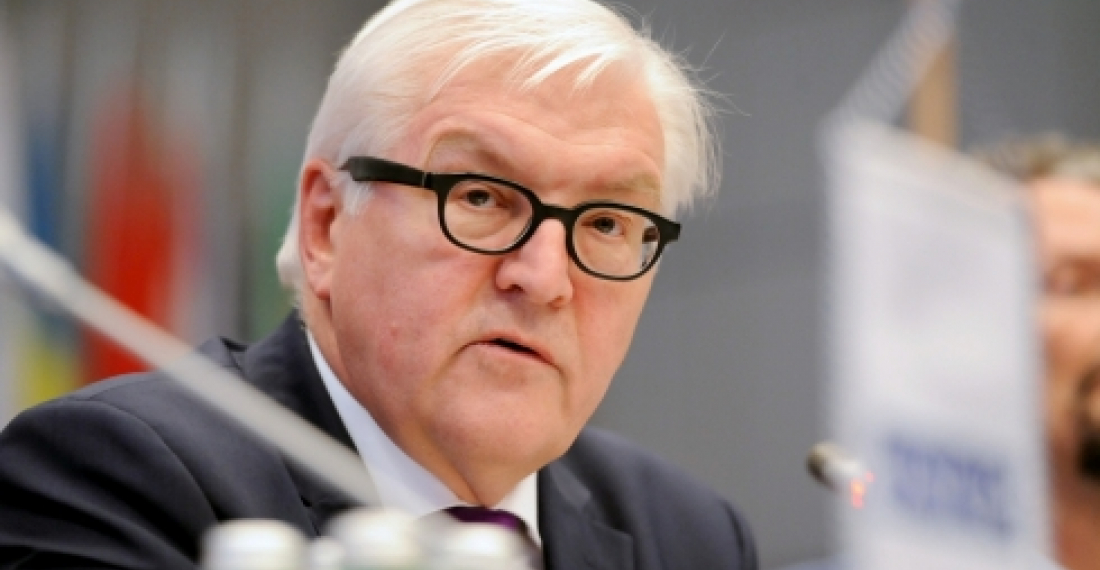
Germany, as this year's Chair of the OSCE, aims to steer the Organization as a platform for real and honest dialogue, said Germany's Foreign Minister Frank-Walter Steinmeier in his first address as OSCE Chairperson-in-Office to the Permanent Council in Vienna.
Presenting the programme of Germany's 2016 OSCE Chairmanship to representatives of the Organization's 57 participating States and 11 Partners for Co-operation, Steinmeier said his country assumes the Chairmanship at a turbulent time with recent deadly terrorist attacks in the region, the ongoing conflict in and around Ukraine as well as crises in the Mediterranean and Middle East areas.
"In these stormy times we need an OSCE that follows clear objectives and has a good compass," he said. "This compass - our common compass - is the set of principles and commitments which we all agreed upon. They form the basis for peace and security in Europe."
Focusing on the protracted conflicts in the OSCE area, Steinmeier said that the German Chairmanship would actively support the OSCE's current negotiating formats and mechanisms related to Nagorno-Karabakh, Transdniestria and the consequences of the 2008 conflict in Georgia. "We will engage actively in finding solutions," he said.
Steinmeier also emphasized the continued need for strong OSCE field missions and to further strengthen OSCE capacities in all phases of the conflict cycle. Highlighting confidence- and security-building measures and arms control, Steinmeier said "we should courageously tackle the modernization of the Vienna Document."
source: osce.org
photo: 2016 OSCE Chairperson-in-Office, German Federal Minister for Foreign Affairs Frank-Walter Steinmeier, during a Permanent Council meeting, Vienna, 14 January 2016. (OSCE/Micky Kroell)



