Across the South Caucasus civil society organisations on Thursday (30 November) called on their governments to adhere to the Ottawa Convention that bans the use, production and sale of anti-personnel landmines. The call came during events held to mark the Day of Solidarity with the victims of landmines and other unexploded remnants of war in the South Caucasus.
In Baku, Azerbaijan, the Azerbaijan Campaign Against Landmines (AzCAL) hosted an event during which it presented its report "Landmines are the most serious obstacle preventing Azerbaijani Internally displaced persons from exercising their right to return to their homes", which was researched and produced earlier this year. Speaking at the event, AzCAL Chairman, Hafiz Safikhanov spoke about the extent of the landmine problem in Azerbaijan and the huge efforts being put in trying to address it. He said that it was time for Azerbaijan to adhere to the Ottawa convention as this will strengthen its ability to mobilise international support. Hafiz Safikhanov also spoke about the work on demining in a regional context. He called on Armenia and Azerbaijan to move forward with the signing of a peace agreement. He proposed that the two countries consider in the future joint humanitarian demining operations, which would be very good for operational reasons, as well as a confidence-building measure.
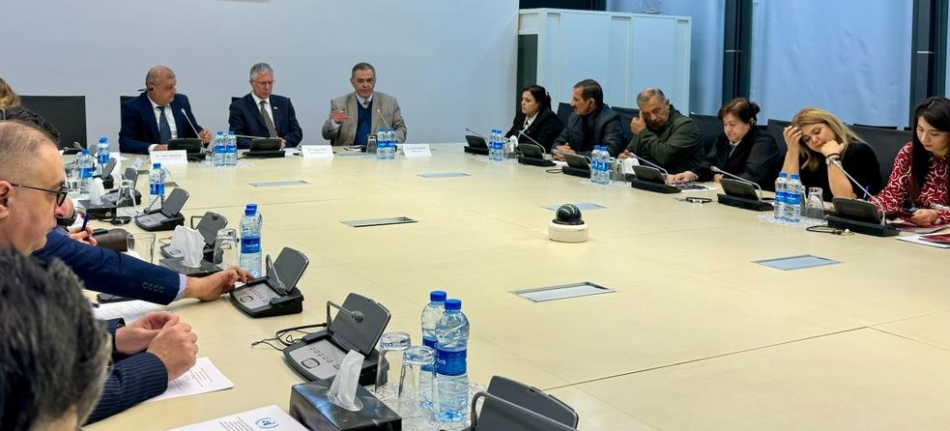
Addressing the gathering, Dr Dennis Sammut, Director of LINKS Europe spoke about the work of the campaign Landmine Free South Caucasus since it was launched in October 2018. He said that the situation in the region had changed substantially since then. There were new challenges but also new opportunities. The new situation made it much more possible that Armenia, Azerbaijan and Georgia join the Ottawa convention and he urged the governments to move swiftly in this direction.
The guest of honour at the event was the British Ambassador to Azerbaijan, Fergus Auld. He reiterated the commitment of the British government to work to eradicate the problem of landmines globally, and in Azerbaijan and the South Caucasus in particular. Ambassador Auld said the UK government calls on the governments of the region to sign the Ottawa Convention as an expression of their commitment for a landmine free South Caucasus.
During the meeting there was also a discussion on the role of women deminers in Azerbaijan. Already two teams consisting of 28 women have been deployed and are working on this issue. A representative from the Azerbaijan State Committee on Women Affairs also talked about the role of women in humanitarian demining and expressed the support of the Committee for the work for a landmine free South Caucasus.
During the meeting, those present also heard testimonials from three persons from the Tovuz region and Aghdam who had suffered life-changing injuries by landmines. A number of civil society organisations also spoke at the event.
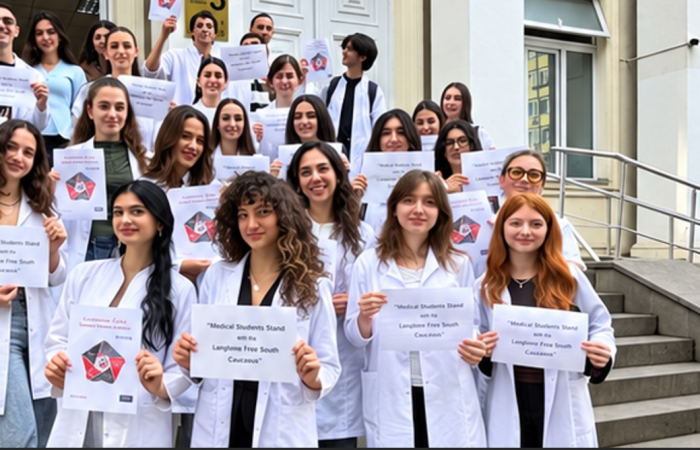
In Tbilisi, the Tbilisi School for Social Research hosted an event during which the remaining problem of landmines in Georgia was discussed. Giorgi Arziani, Director of the Tbilisi School for Social Research spoke of the costs that anti-personnel landmines inflict on civilians' security and how landmines hamper the economic development of the communities that live close to the landmine fields. He also mentioned the LFSC awareness-raising campaigns that were conducted at Georgian schools.
Two video reports were shown to participants, including one on the situation with the minefield near the Red Bridge which was followed by a presentation by Irakli Chitanava from UNDP.
Speaking online from Baku, LINKS Europe Executive Director, Dennis Sammut made a public appeal to Georgian Prime Minister Irakli Garibashvili to take a personal interest in the matter of the Red Bridge minefield. Dennis Sammut said that it was a shame that the area near the Red Bridge - the point where Armenia, Azerbaijan and Georgia are connected - is a minefield. He called for this to be transformed into a peace park. Dennis Sammut said that the current situation could be explained in the past due to the Armenia-Azerbaijan conflict, but now, with the peace process in motion, and with the prime ministers of the three countries meeting recently in Tbilisi, there should be a new beginning. Dennis Sammut called on Prime Minister Garibashvili to integrate the Red Bridge minefield issue in his Peaceful Caucasus initiative and make this a tangible example of the new begining.
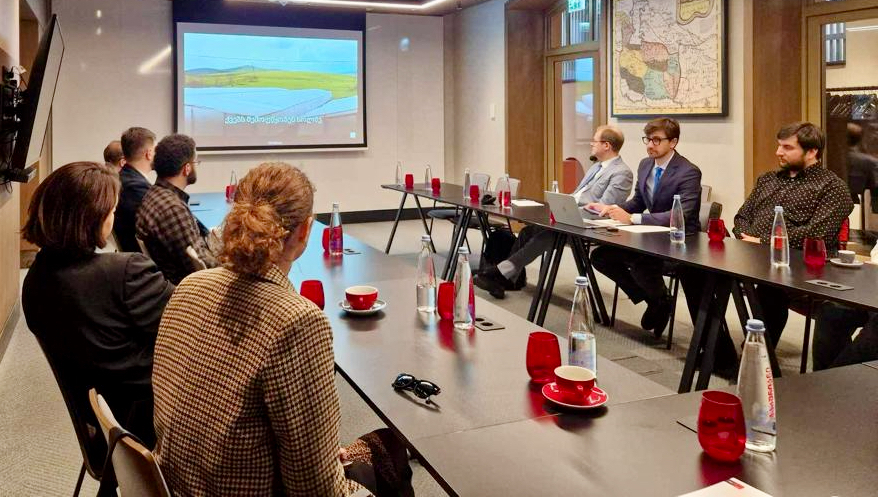
The event in Tbilisi was also addressed by Godfried Hanne, Head of the Regional Office of the EU Special Representative for the South Caucasus who spoke about the work of the European Union in support of a landmine free South Caucasus.
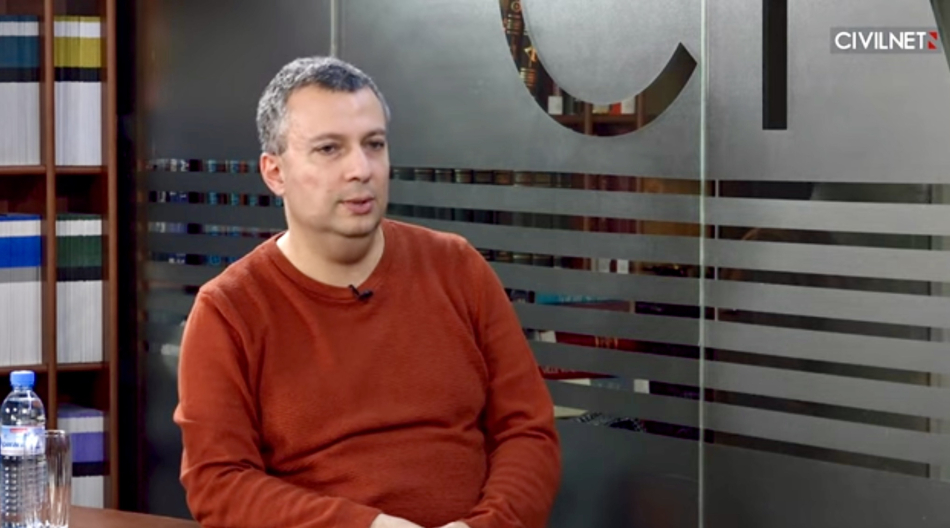
In Yerevan, Armenia, the NGO Television station CivilNet ran a long interview on the problem of landmines in Armenia and in the wider South Caucasus with Benyamin Poghosyan. In the interview, Benyamin Poghosyan urged all concerned to focus on the humanitarian aspect of demining and said that the matter should be depoliticised, and the focus turned to the victims of landmines and their families and communities.
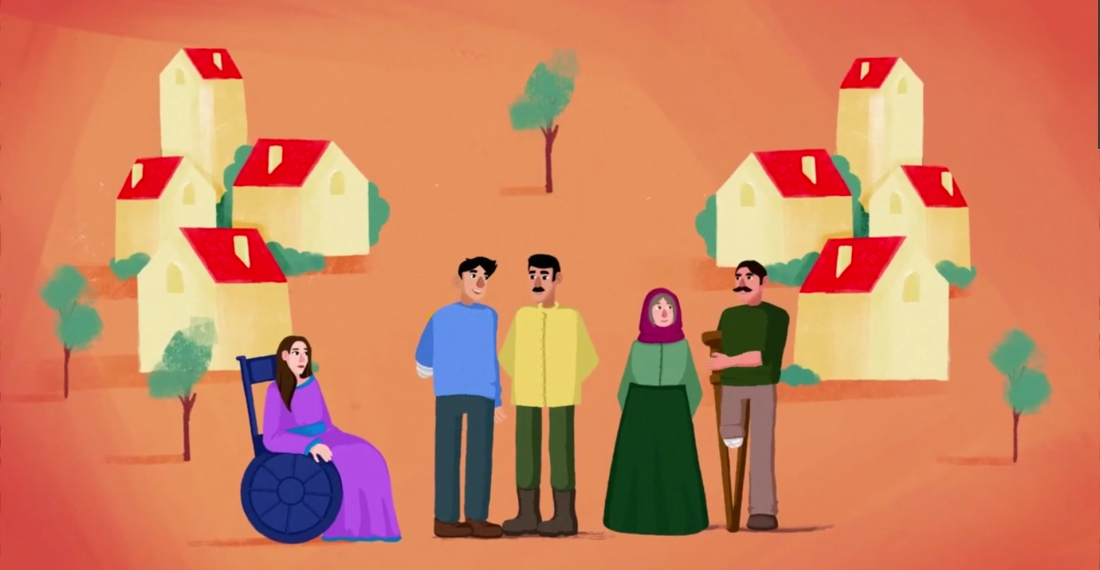
LANDMINE FREE SOUTH CAUCASUS is a regional campaign, taking its message across the region in five languages: Armenian, Azerbaijani, Georgian, Russian and English. Different publicity material has been produced, including leaflets, posters, cartoon videos and infographics for use on social media.
The campaign LANDMINE FREE SOUTH CAUCASUS is co-ordinated by LINKS Europe working with partners from Armenia, Azerbaijan and Georgia and beyond, with the support of the European Union.