


Tajikistan tense amid arrests of senior personalities and former officials and rumours of a failed coup

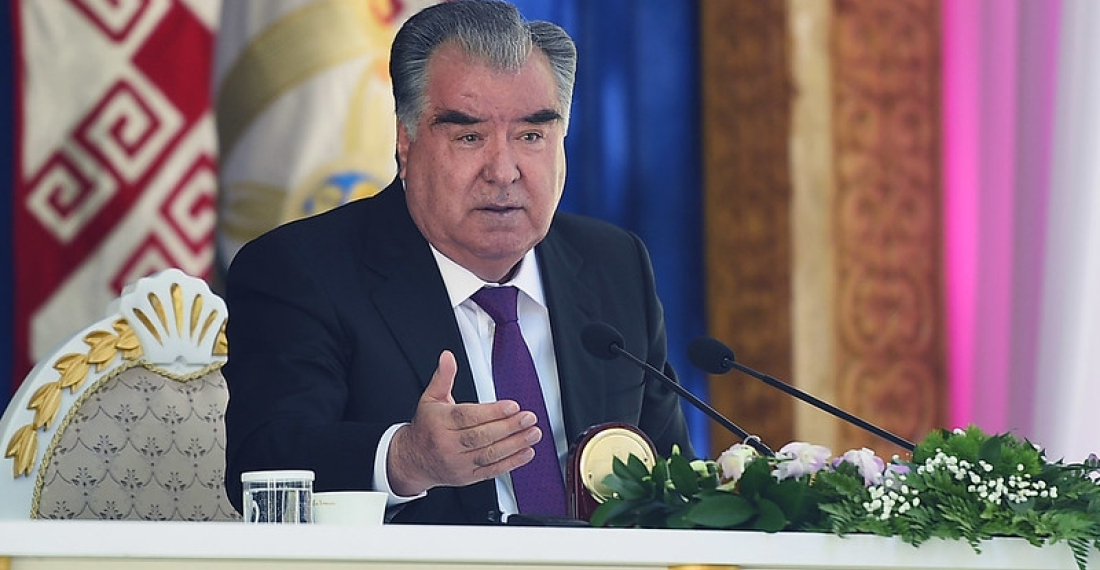
Tadjik President Emomamli Rahmon has run Tajikistan with an iron hand since taking power in 1992. There are now reports that he is preparing to hand power to his son. So, news of dissent in the Central Asian Republic is rare. News of a coup and the arrests of many prominent former officials have therefore triggered a lot of speculation. Saidjafar Usmonzoda, a prominent member of the Tajik parliament, was detained on June 14 for allegedly “plotting to overthrow the government.” Prosecutor-General Yusuf Rahmon accused Usmonzoda of collaborating with the foreign-based opposition group National Pact of Tajikistan and of speaking with its leader, the self-exiled Sharofiddin Gadoev. Parliament quickly stripped Usmonzoda of his immunity 

His arrest was soon followed by the detention of former Foreign Minister Hamrokhon Zarifi.

But perhaps more prominently has been the detention of the former Chairman of the Supreme Soviet of Tajikistan, Akbarsho Iskandarov. During the wave of conflicts in the early 1990s, he took over as the Chairman of Parliament and served as Tajikistan’s acting president. In recent years, he worked at the Institute of Philosophy, Political Science, and Law of the Academy of Sciences. Prior to this, for many years, he served as Ambassador Extraordinary and Plenipotentiary of Tajikistan to Turkmenistan, Kazakhstan, and Mongolia.

The General Prosecutor’s Office summoned Akbarsho Iskandarov for questioning on June 13 and 14, following which they did not release him. The reason he was interviewed and the grounds on which he has been detained are unknown.

“Investigators of the General Prosecutor’s Office questioned about 50 people during these days and released them on their recognisance, while Akbarsho Iskandarov was not released,” a source stated.

As is often the case in authoritarian countries dissent often bubbles under the surface. The Tajik authorities have not been very forthcoming with information about what is going on, but the developments come on top of an already tense time for the Tadjik leadership as it tries to deal with the fallout from the involvement of Tadjiks in the recent terrorist attacks in Moscow. His leadership has embarked on a number of measures, which some consider knee-jerk, such as banning the hijab.

All in all, Tajikistan’s problems seem to be piling on top of each other, and as Central Asia’s poorest country, it is vulnerable to sudden shock. Other Central Asian leaders look at the situation in Tajikistan with concern, not least because of the risk of falling out into their own quite fragile political processes.
Source: This article was prepared by the editorial team of commonspace.eu. It was first published in the 25 June 2024 issue of the fortnightly digital newsletter, Central Asia Concise.

Related articles

Editor's choice
News
Borrell tells the European Parliament that the situation in Afghanistan was critical, but the EU will remain engaged

Borrell tells the European Parliament that the situation in Afghanistan was critical, but the EU will remain engaged

Borrell underlined that the European Union will make every effort to support the peace process and to remain a committed partner to the Afghan people. "Of course, we will have to take into account the evolving situation, but disengagement is not an option.  We are clear on that: there is no alternative to a negotiated political settlement, through inclusive peace talks.
Editor's choice
News
Thai-Cambodia border clashes enter fourth day

Thai-Cambodia border clashes enter fourth day

Renewed fighting between Thailand and Cambodia has entered its fourth day, with both sides accusing one another of violating international law, as they await a promised phone call from United States President Donald Trump. Cambodia’s Ministry of Defence accused Thailand’s military of carrying out numerous attacks within the country in the early hours of Thursday morning, including deploying tanks and artillery to strike targets in the country’s Pursat, Banteay Meanchey, and Oddar Meanchey provinces. In one such attack, Cambodia accused Thai soldiers of violating international humanitarian law by firing on civilians in Prey Chan village in Banteay Meanchey province. In another, it accused Thai forces of shelling “into Khnar Temple area”, and said Thai forces had also “fired artillery and support fire into the O’Smach area”. “Cambodia urges that Thailand immediately stop all hostile activities and withdraw its forces from Cambodia’s territorial integrity, and avoid acts of aggression that threaten peace and stability in the region,” the Defence Ministry said. Clashes took place on Wednesday at more than a dozen locations along the contested colonial-era demarcated 817-kilometre (508-mile) Thai-Cambodian border, with some of the most intense fighting being reported since a five-day battle in July, which saw dozens killed on both sides. Cambodia’s Ministry of the Interior said homes, schools, roads, Buddhist pagodas and ancient temples had been damaged by “Thailand’s intensified shelling and F-16 air strikes targeting villages and civilian population centres up to 30km [18.6 miles] inside Cambodian territory”. (click the image to read the full story).

Popular

Editor's choice
News
Thai-Cambodia border clashes enter fourth day

Thai-Cambodia border clashes enter fourth day

Renewed fighting between Thailand and Cambodia has entered its fourth day, with both sides accusing one another of violating international law, as they await a promised phone call from United States President Donald Trump. Cambodia’s Ministry of Defence accused Thailand’s military of carrying out numerous attacks within the country in the early hours of Thursday morning, including deploying tanks and artillery to strike targets in the country’s Pursat, Banteay Meanchey, and Oddar Meanchey provinces. In one such attack, Cambodia accused Thai soldiers of violating international humanitarian law by firing on civilians in Prey Chan village in Banteay Meanchey province. In another, it accused Thai forces of shelling “into Khnar Temple area”, and said Thai forces had also “fired artillery and support fire into the O’Smach area”. “Cambodia urges that Thailand immediately stop all hostile activities and withdraw its forces from Cambodia’s territorial integrity, and avoid acts of aggression that threaten peace and stability in the region,” the Defence Ministry said. Clashes took place on Wednesday at more than a dozen locations along the contested colonial-era demarcated 817-kilometre (508-mile) Thai-Cambodian border, with some of the most intense fighting being reported since a five-day battle in July, which saw dozens killed on both sides. Cambodia’s Ministry of the Interior said homes, schools, roads, Buddhist pagodas and ancient temples had been damaged by “Thailand’s intensified shelling and F-16 air strikes targeting villages and civilian population centres up to 30km [18.6 miles] inside Cambodian territory”. (click the image to read the full story).

