


Editorial Comment: Cease fire!

Editorial Comment

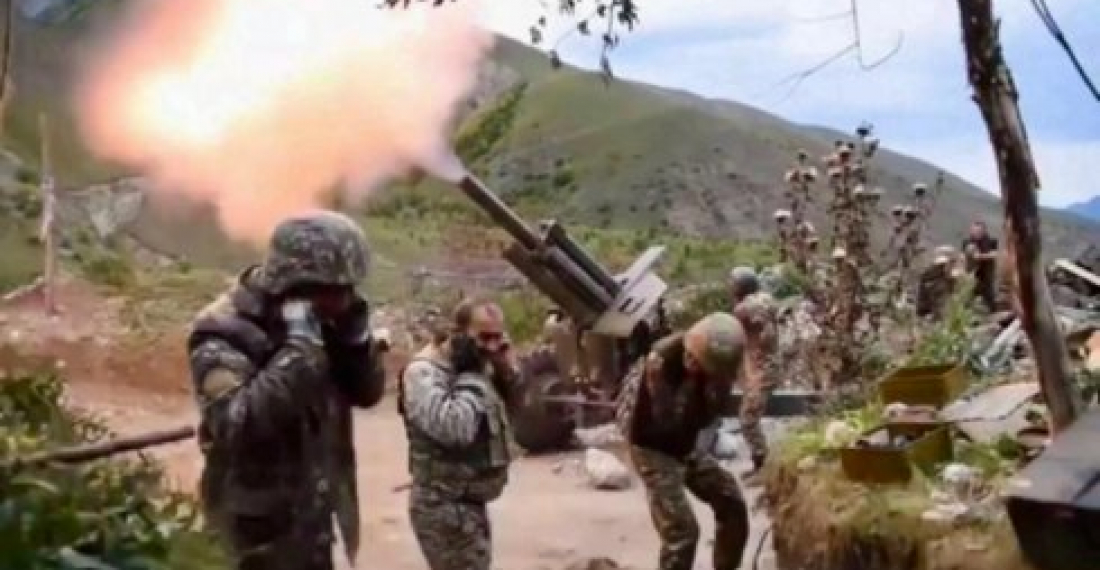
The news in the early hours of Saturday morning that a humanitarian cease fire had been agreed between Armenia and Azerbaijan after ten hours of negotiations in Moscow in talks brokered by Russia was warmly welcomed across the world. The distressing news of death and destruction that has been coming out of the South Caucasus in the last weeks has caused concern in the international community.

Unfortunately forty eight hours after the cease fire was supposed to come into effect there are still reports that both sides are violating it. This must now stop.

Many world leaders, as well as civil society and community groups have called for an end to the fighting and a just solution to the conflict that has been ongoing for three decades. Finding this solution is now urgent. But a cease fire needs to come first to stop unnecessary casualties, including of civilians. There is also an urgent need to collect the bodies of hundreds of soldiers on both sides who have died in the last two weeks. Not to do so would be a gross violation of the norms in the conduct of war.

This surge of violence over the last weeks has forced policy makers to rethink about the next steps. The political leaderships of Armenia and Azerbaijan have the first and biggest responsibility. It should be obvious to all sides by now that maximalist positions do not lead to solutions, but simply more suffering. Compromise is the magic word that no leader has yet had the courage to utter. They must.

The international community must also reflect on its own conduct. Those countries who have flooded the region with arms also need to answer in front of the court of world public opinion. Others who could have done more in the past to resolve the Karabakh conflict must also think what their role will be in the future. The three co-chair countries of the OSCE Minsk Group, having assumed the responsability to act as mediators, must now redouble their efforts and ensure that they maintain the confidence of all the sides going forward.

All this will no doubt be under discussion in the coming days and weeks. But for the moment there needs to be one, clear and unambiguous message. Cease fire!

This editorial comment was prepared by the editorial team of commonspace.eu and reflects the policy of this website




Related articles

Editor's choice
News
Situation in South Yemen strains relations between Saudi Arabia and UAE

Situation in South Yemen strains relations between Saudi Arabia and UAE

The relations between Saudi Arabia and the United Arab Emirates (UAE) are increasingly strained as a result of the different approach of the two countries towards Yemen. Whilst both countries were initially together in resisting the Houthi take over in Yemen, the UAE subsequently focused on the South of the country, backing the Southern Movement (STC), which seeks to restore the independence of South Yemen. South Yemen became an independent country in 1967, at the end of British rule, and only unified with the north in 1990. The Saudi-led “Coalition to Support Legitimacy in Yemen” on Tuesday, 30 December, said it conducted a “limited” airstrike targeting two ships “that smuggled weapons and other military hardware into Mukalla in southern Yemen”. The ships originated in the UAE port of Furjeirah. In a statement carried by the Saudi Press Agency (SPA), the Coalition Forces spokesman, Major General Turki Al-Maliki, said that two ships coming from the port of Fujairah in the United Arab Emirates entered the Port of Mukalla in Hadramaut without obtaining official permits from the Joint Forces Command of the Coalition. He stressed the Coalition's "continued commitment to de-escalation and enforcing calm in the governorates of Hadramawt and Al-Mahra, and to prevent any military support from any country to any Yemeni faction without coordination with the legitimate Yemeni government and the Coalition. The Southern Transitional Council (STC), launched a sweeping military campaign early in December, seizing the governorates of Hadramaut along the Saudi border and the eastern governorate of Al-Mahra in Yemen’s border with Oman. The UAE-backed STC forces captured the city of Seiyun, including its international airport and the presidential palace. They also took control of the strategic PetroMasila oilfields, which account for a massive portion of Yemen’s remaining oil wealth. (click the image to read the article in full).

Popular

Editor's choice
News
Situation in South Yemen strains relations between Saudi Arabia and UAE

Situation in South Yemen strains relations between Saudi Arabia and UAE

The relations between Saudi Arabia and the United Arab Emirates (UAE) are increasingly strained as a result of the different approach of the two countries towards Yemen. Whilst both countries were initially together in resisting the Houthi take over in Yemen, the UAE subsequently focused on the South of the country, backing the Southern Movement (STC), which seeks to restore the independence of South Yemen. South Yemen became an independent country in 1967, at the end of British rule, and only unified with the north in 1990. The Saudi-led “Coalition to Support Legitimacy in Yemen” on Tuesday, 30 December, said it conducted a “limited” airstrike targeting two ships “that smuggled weapons and other military hardware into Mukalla in southern Yemen”. The ships originated in the UAE port of Furjeirah. In a statement carried by the Saudi Press Agency (SPA), the Coalition Forces spokesman, Major General Turki Al-Maliki, said that two ships coming from the port of Fujairah in the United Arab Emirates entered the Port of Mukalla in Hadramaut without obtaining official permits from the Joint Forces Command of the Coalition. He stressed the Coalition's "continued commitment to de-escalation and enforcing calm in the governorates of Hadramawt and Al-Mahra, and to prevent any military support from any country to any Yemeni faction without coordination with the legitimate Yemeni government and the Coalition. The Southern Transitional Council (STC), launched a sweeping military campaign early in December, seizing the governorates of Hadramaut along the Saudi border and the eastern governorate of Al-Mahra in Yemen’s border with Oman. The UAE-backed STC forces captured the city of Seiyun, including its international airport and the presidential palace. They also took control of the strategic PetroMasila oilfields, which account for a massive portion of Yemen’s remaining oil wealth. (click the image to read the article in full).

