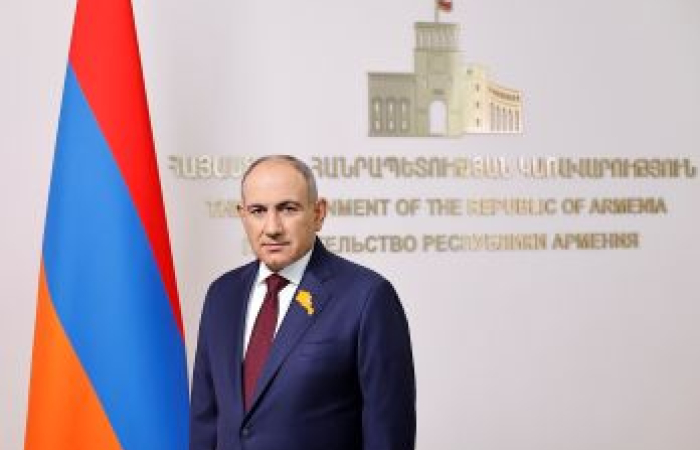
The absence of Armenian President Serzh Sargsyan from NATO's 25th Summit in Chicago is causing a debate in domestic and international circles. Whilst Armenia is not a member of NATO, it co-operates with the Alliance through the Partnership for Peace programme, and has a small contingent in the Afghanistan operation - ISAF. Sargsyan was apparently already on his way to the summit but decided not to attend in protest at the Summit declaration.
According to RIA Novosti, at a meeting with the Armenian community in Chicago, the Armenian Foreign Foreign Minister Edward Nalbandian explained that Sargsyan was not attending because of an apparent contradiction between the draft wording of the Summit Declaration and the position of the OSCE Minsk Group responsible for mediation in the Karabakh conflict: "This formulation [of the Declaration] is not in line with the statements and decisions on the settlement of the issue adopted in recent years. It can not only impede the process of the settlement of the Nagorno-Karabakh issue, but also endanger the fragile situation in the region, in particular against the background of unprecedented increase of Azerbaijan’s military expenses and bellicose rhetoric of its leadership".
Some Armenian analysts are questioning this excuse. In an interview with Tert.am, political scientist Edgar Vadanyan said that Sargsyan wanted to send a message to president Putin who also decided not to attend the summit, that he supported his position.
As expected, the focus of the Summit was largely on Afghanistan, but matters concerning the Caucasus region were also brought up, and have been incorporated into the Summit Declaration,
Released on the 20th of May, the Declaration states in paragraph 47:
"With our vision of a Euro-Atlantic area at peace, the persistence of protracted regional conflicts in South Caucasus and the Republic of Moldova continues to be a matter of great concern for the Alliance ... With respect to all these conflicts, we urge all parties to engage constructively and with reinforced political will in peaceful conflict resolution, and to respect the current negotiation formats. We call on them all to avoid steps that undermine regional security and stability. We remain committed in our support of the territorial integrity, independence, and sovereignty of Armenia, Azerbaijan, Georgia, and the Republic of Moldova, and will also continue to support efforts towards a peaceful settlement of these regional conflicts, based upon these principles and the norms of international law, the United Nations Charter, and the Helsinki Final Act".
It is this formulation that seems to have upset the Armenian side. However observers thing that the formulation was generic enough for Armenia to be able to attend the meeting. As it is not a member of NATO it was not expected to endorse the declaration in any case. By positioning itself in this way Armenia may have narrowed further its manoevrability in international diplomacy.
Not unexpectedly, Azerbaijan has seized the opportunity to score political points. The spokesman for the Azerbaijani Foreign Ministry, Elman Abdullaev said that the Azerbaijani side highly appreciated the declaration, which was adopted in Chicago and noted that this document showed the fair position of Azerbaijan. “Such declaration shows that NATO demonstrates fair position again. Several countries, including OSCE Minsk Group co-chair countries France and the US also signed the declaration. These countries showed their approaches again”. Abdullayev noted that Nalbandian’s statement that “the relevant clause of Final Declaration of Chicago Summit is contrary to the negotiations process of settlement of Nagorno Karabakh conflict and can damage the negotiations” was absurd, because France and the US that are mediating in the conflict’s settlement signed this Declaration.
Commonspace.eu political editor said in a comment that some observers think Armenia may have scored an auto-goal by not attending the summit. In the current diplomatic and geo-political context Armenian strategy is best served by occupying any space that is available. Everytime the Armenian chair is empty - and it is happening often these days - it looses political and diplomatic ground.
source: commonspace.eu with RIA Novosti, Tert.Am, APA and NATO Information Service
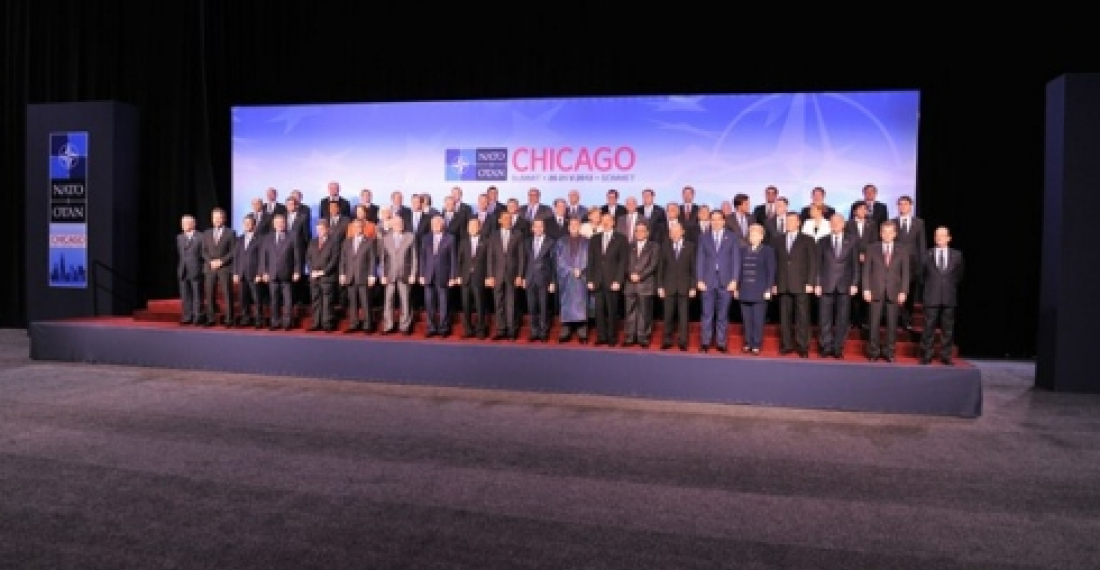
Photo: Family photo of the leaders attending the meeting on Afghanistan at the 25th NATO summit in Chicago.