


The Turkish-Russian love affair has its limits.

"Russian President Vladimir Putin is due to visit Yerevan at the invitation of his Armenian counterpart Serzh Sargsyan to participate in the commemorative events dedicated to the 100th anniversary of Armenian Genocide in the Osman Empire", the Kremlin press service said on Monday, as reported by the Tass News Agency.

"As part of the visit, the meeting of the presidents of Russia and Armenia will be held that will discuss the issues of bilateral agenda, cooperation in integration associations and also topical regional and international issues," the statement says.

Turkish leaders spent last week criticising Pope Francis and the European Parliament for statements that were made in which the term genocide was used to describe the massacres that occured in Anatolia during World War 1 during which hundreds of thousands of Armenians died.

Commonspace.eu political editor said in a comment that "Putin's visit is a slap in the face of Turkish President Recip Tayip Erdogan who has put a lot of effort in developing relations with Putin, and who recently hosted the Russian president in Ankara. On that occasion a number of grandiose projects were announced. It is not clear where Turkish-Russian relations will stand after the visit, but observers will be watching to see if the same colourful language used by Turkish leaders in the context of the statements by the Pope and the European parliament, will be used again in the case of the Russian leader."


source: commonspace.eu

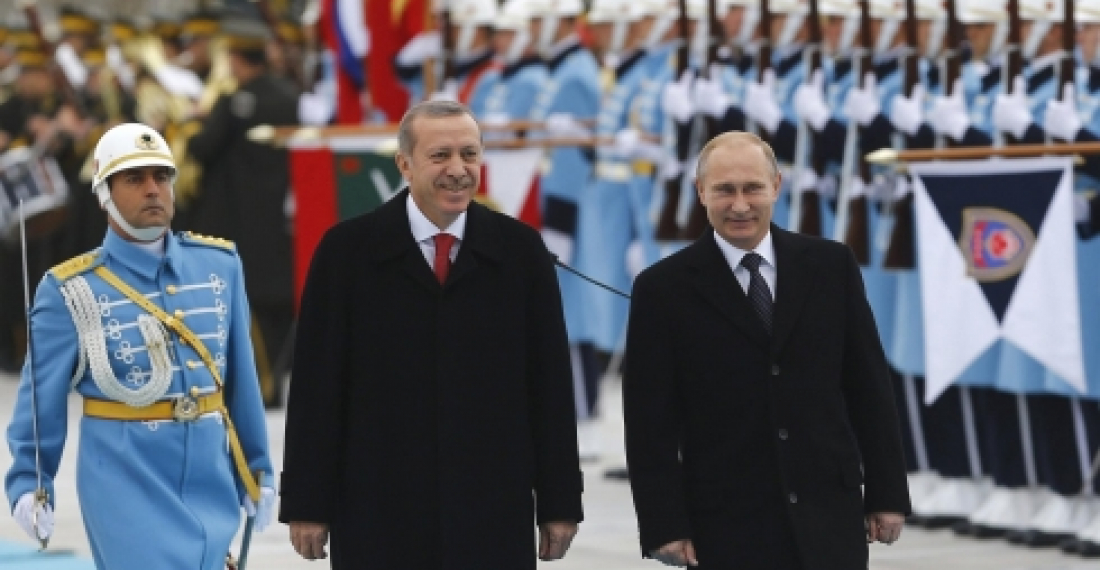
photo: President Erdogan of Turkey welcoming President Putin of Russia to Ankara in January 2015. (archive picture).


Related articles

Editor's choice
News
Borrell tells the European Parliament that the situation in Afghanistan was critical, but the EU will remain engaged

Borrell tells the European Parliament that the situation in Afghanistan was critical, but the EU will remain engaged

Borrell underlined that the European Union will make every effort to support the peace process and to remain a committed partner to the Afghan people. "Of course, we will have to take into account the evolving situation, but disengagement is not an option.  We are clear on that: there is no alternative to a negotiated political settlement, through inclusive peace talks.
Editor's choice
News
Pope's visit to Türkiye and Lebanon has a strong ecumenical character, and places interreligious dialogue at its centre

Pope's visit to Türkiye and Lebanon has a strong ecumenical character, and places interreligious dialogue at its centre

Pope Leo XIV has begun the first overseas trip of his pontificate, a six-day visit to Türkiye and Lebanon, which started yesterday (27 November) and ends on Tuesday (2 December). According to Vatican Radio, the visit "carries a strong ecumenical character and places interreligious dialogue at its centre. It will also be a moment of closeness to Christian communities and local populations across the region".   During nearly a week in the region, Pope Leo XIV will meet civil and religious authorities, visit mosques and ancient churches, pray at Beirut’s port in memory of the victims of the 2020 explosion, and hold private meetings with Presidents Recep Tayyip Erdoğan and Joseph Aoun.   A highlight of the visit will be a visit to Nicaea, where the Pope will mark the anniversary of the Council of Nicaea. Christians of many traditions recognise the Council of Nicaea as a foundation of shared faith. One of the most anticipated moments will be the Pope’s encounter with Lebanese youth in Bkerké, at the Maronite Patriarchate, a meeting expected to carry strong messages of hope in the Jubilee Year. A central event will be the ecumenical celebration in İznik, where the Pope and Ecumenical Patriarch Bartholomew will walk together toward the ruins of the Basilica of St Neophytos. The prayer, held before icons of Christ and the Council, will conclude with the lighting of a candle—a symbolic gesture of unity. The journey will also highlight interreligious engagement.   Memorable moments are expected throughout the trip: a wreath at Atatürk’s mausoleum, prayer inside the Blue Mosque, Mass at Istanbul’s Volkswagen Arena, the planting of a cedar at the presidential palace in Beirut, and prayer at the tomb of St Charbel in Lebanon. The Vatican said that "Pope Leo XIV’s pilgrimage to Türkiye and Lebanon aims to offer a voice of peace, unity, and hope at the heart of the Middle East."

Popular

Editor's choice
News
Pope's visit to Türkiye and Lebanon has a strong ecumenical character, and places interreligious dialogue at its centre

Pope's visit to Türkiye and Lebanon has a strong ecumenical character, and places interreligious dialogue at its centre

Pope Leo XIV has begun the first overseas trip of his pontificate, a six-day visit to Türkiye and Lebanon, which started yesterday (27 November) and ends on Tuesday (2 December). According to Vatican Radio, the visit "carries a strong ecumenical character and places interreligious dialogue at its centre. It will also be a moment of closeness to Christian communities and local populations across the region".   During nearly a week in the region, Pope Leo XIV will meet civil and religious authorities, visit mosques and ancient churches, pray at Beirut’s port in memory of the victims of the 2020 explosion, and hold private meetings with Presidents Recep Tayyip Erdoğan and Joseph Aoun.   A highlight of the visit will be a visit to Nicaea, where the Pope will mark the anniversary of the Council of Nicaea. Christians of many traditions recognise the Council of Nicaea as a foundation of shared faith. One of the most anticipated moments will be the Pope’s encounter with Lebanese youth in Bkerké, at the Maronite Patriarchate, a meeting expected to carry strong messages of hope in the Jubilee Year. A central event will be the ecumenical celebration in İznik, where the Pope and Ecumenical Patriarch Bartholomew will walk together toward the ruins of the Basilica of St Neophytos. The prayer, held before icons of Christ and the Council, will conclude with the lighting of a candle—a symbolic gesture of unity. The journey will also highlight interreligious engagement.   Memorable moments are expected throughout the trip: a wreath at Atatürk’s mausoleum, prayer inside the Blue Mosque, Mass at Istanbul’s Volkswagen Arena, the planting of a cedar at the presidential palace in Beirut, and prayer at the tomb of St Charbel in Lebanon. The Vatican said that "Pope Leo XIV’s pilgrimage to Türkiye and Lebanon aims to offer a voice of peace, unity, and hope at the heart of the Middle East."

