Monday Commentary: An opportunity not to be missed

"The Brussels meeting between the Armenian and Azerbaijani foreign ministers scheduled for Wednesday (11 July) is an opportunity to re-energise the Karabakh peace process. It should  not be missed", says Dennis Sammut in this week's Monday commenatry

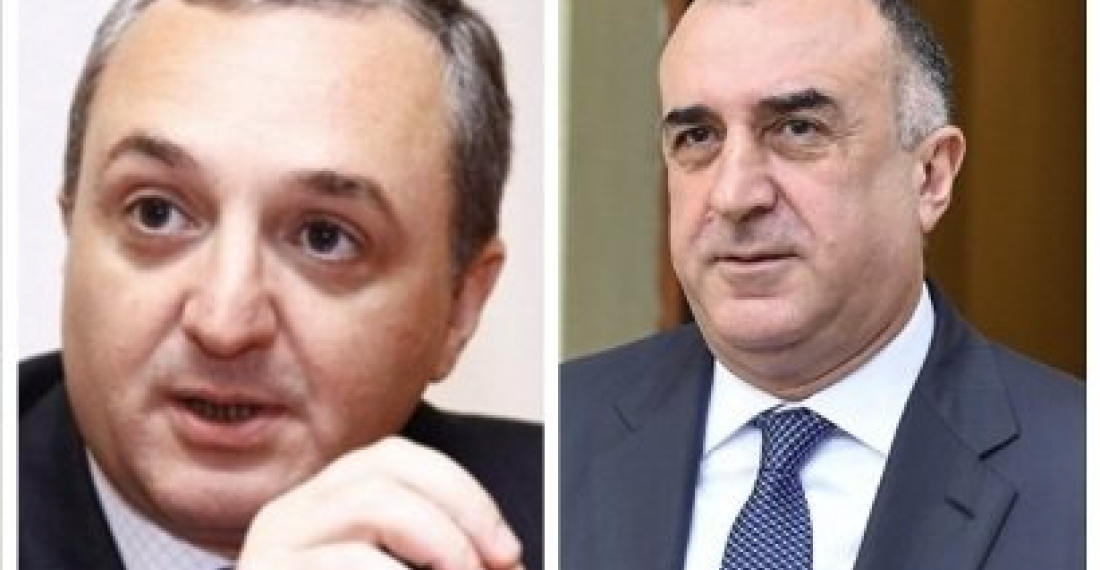
Both Armenia and Azerbaijan have confirmed that their foreign ministers, Zohrab Mnatsakanyan and Elmar Mammadyarov will meet in Brussels on Wednesday (11 July) on the margins of the NATO Summit. This will be the first high level meeting between senior officials of the two sides since the change of government in Armenia in May. It will be held in the format of the OSCE Minsk Group process, and facilitated by the three co-chair of the process representing France, Russia and the United States.

The process to find a peaceful resolution of the conflict between the two countries has been largely stalled for most of the last year. The two sides have spent the time reiterating their entrenched positions. Elections and political changes in the two countries have made it impossible for progress in the negotiations to be registered. In the meantime both sides have expressed frustration at each other's position and intransigence. The co-Chairmen have patiently tried to keep the lines of communication open, tempers down and misperception to the minimum. Their patience and perseverance needs to be applauded.

Expectations of results from the Brussels meeting are modest. But the importance of the meeting should not be underestimated. This is not only a chance to renew the contacts; pick up from where discussions have been left earlier, and for the sides to size each other up, important and essential as these things are. It is also an opportunity to turn the page, and to focus on what is important. Also to agree on a sequence as to what happens next - something that has been in question.

Eventually the leaders of the two countries, Ilham Aliyev and Nikol Pashinyan, need to get together, but not before enough preparatory work is done to make such a meeting meaningful. The Brussels meeting will show the extent that is possible, and in which time frame.

Behind the scenes there is much that can be done to ensure that the right conditions for negotiations exist. The war rhetoric that comes out on a daily basis from Baku and Yerevan certainly contributes little for such endeavours. There are many things the two sides can do to send a message to the other side, and to the international community, that they are negotiating in good fate. They should not shy from such actions, and broader society needs to be supportive.

This week's Brussels meeting between the Armenian and Azerbaijani foreign ministers is an opportunity to re-energise the Karabakh peace process. It should  not be missed!

source: Dennis Sammut is the Director of LINKS (Dialogue, Analysis and Research). His Monday Commentary is published weekly on commonspace.eu. dennis@links-dar.org 


The views expressed in opinion pieces and commentaries do not necessarily reflect the position of commonspace.eu or its partners

Photo: Zohrab Mnatsakanyan and Elmar Mammadyarov  (archive picture)

Related articles

Editor's choice
News
Borrell tells the European Parliament that the situation in Afghanistan was critical, but the EU will remain engaged

Borrell tells the European Parliament that the situation in Afghanistan was critical, but the EU will remain engaged

Borrell underlined that the European Union will make every effort to support the peace process and to remain a committed partner to the Afghan people. "Of course, we will have to take into account the evolving situation, but disengagement is not an option.  We are clear on that: there is no alternative to a negotiated political settlement, through inclusive peace talks.
Editor's choice
News
Germany accuses Russia of cyberattacks and disinformation campaign

Germany accuses Russia of cyberattacks and disinformation campaign

The German government holds Russia responsible for a cyberattack on German air traffic control, and for targeted disinformation campaigns before the last federal election. According to the German Foreign Office in Berlin, the incidents could be clearly attributed to the Russian military intelligence service, the GRU. In response, the Russian ambassador to Berlin was summoned to the Foreign Ministry. "We have been observing a massive increase in threatening hybrid activities by Russia for some time now," a spokesperson for the Foreign Ministry stated. These range from disinformation campaigns and espionage to cyberattacks and sabotage attempts. The aim is to divide society, sow distrust, and undermine confidence in democratic institutions. The spokesperson added that with these actions, Russia is "very concretely threatening our security, not only through its war of aggression against Ukraine, but also here in Germany."  The Foreign Ministry spokesperson explained that the cyberattack on air traffic control in August 2024 was clearly attributed to the hacker collective "APT28," known as "Fancy Bear," and to the responsibility of the Russian military intelligence service, the GRU. Furthermore, it could now be "conclusively stated" that Russia had attempted "to influence and destabilize both the last Federal election and the ongoing internal affairs of the Federal Republic of Germany." There was "absolutely irrefutable evidence" for this". The so-called "Storm 1516" campaign, which has been running since 2024, is allegedly backed by "reliable information" that the Moscow-based think tank "Center for Geopolitical Expertise" is behind it. The Center is also said to be supported by Russian military intelligence. Its primary aim is to influence democratic elections in the West. (Click the image to read more).

Popular

Editor's choice
News
Germany accuses Russia of cyberattacks and disinformation campaign

Germany accuses Russia of cyberattacks and disinformation campaign

The German government holds Russia responsible for a cyberattack on German air traffic control, and for targeted disinformation campaigns before the last federal election. According to the German Foreign Office in Berlin, the incidents could be clearly attributed to the Russian military intelligence service, the GRU. In response, the Russian ambassador to Berlin was summoned to the Foreign Ministry. "We have been observing a massive increase in threatening hybrid activities by Russia for some time now," a spokesperson for the Foreign Ministry stated. These range from disinformation campaigns and espionage to cyberattacks and sabotage attempts. The aim is to divide society, sow distrust, and undermine confidence in democratic institutions. The spokesperson added that with these actions, Russia is "very concretely threatening our security, not only through its war of aggression against Ukraine, but also here in Germany."  The Foreign Ministry spokesperson explained that the cyberattack on air traffic control in August 2024 was clearly attributed to the hacker collective "APT28," known as "Fancy Bear," and to the responsibility of the Russian military intelligence service, the GRU. Furthermore, it could now be "conclusively stated" that Russia had attempted "to influence and destabilize both the last Federal election and the ongoing internal affairs of the Federal Republic of Germany." There was "absolutely irrefutable evidence" for this". The so-called "Storm 1516" campaign, which has been running since 2024, is allegedly backed by "reliable information" that the Moscow-based think tank "Center for Geopolitical Expertise" is behind it. The Center is also said to be supported by Russian military intelligence. Its primary aim is to influence democratic elections in the West. (Click the image to read more).