The response to Russian adventurism needs to be cool-headed, realistic, principled and firm, argues Dennis Sammut in this commentary.
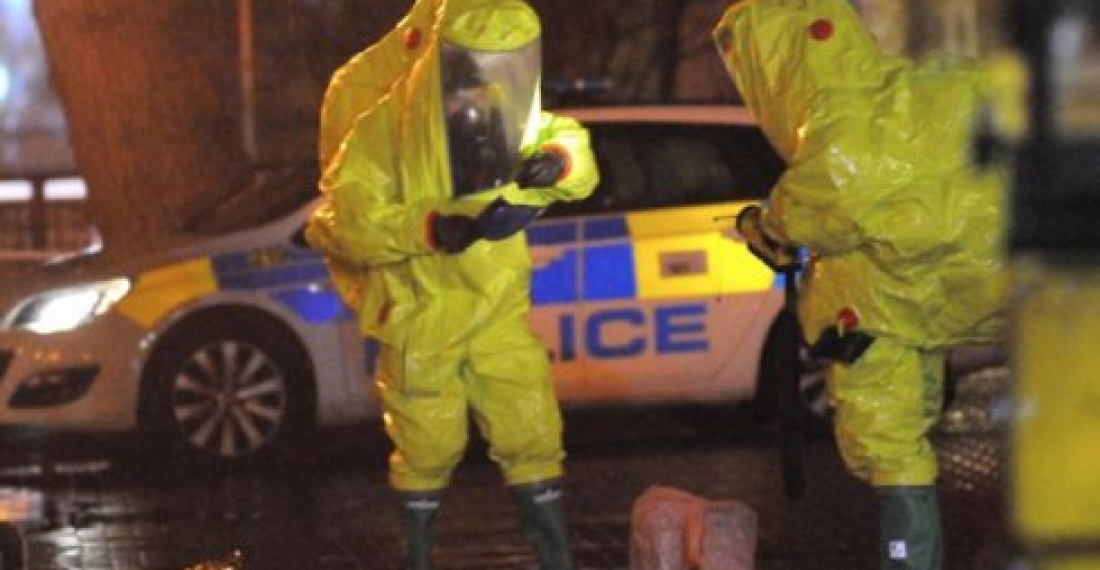
The sight of hundreds of troops and policemen, some in chemical warfare dress, on the streets of the idyllic English town of Salisbury, responding to a chemical attack targeting a former spy, has intrigued the public in Britain and beyond over the last days. Could it really be that President Putin's Russia has been so brazen as to launch yet another chemical attack against a target in the UK, even as the Litvinenko case is still so fresh in people's minds?
Many are asking what should be the reaction if it is proven that the Russians did commit the crime. It is still a big IF, and all we have been told so far is circumstantial, with the Russian government denying any involvement. The British Government, apart from an outburst by Boris Johnson in Parliament on Monday, has been careful not to apportion blame yet.
But regardless of that, the last days have told us a lot on the state of relations between Russia and west, Britain in particular. The fact that most people in Britain are convinced that it was the Kremlin and its henchmen who were behind the attack, something that would have been considered unthinkable, even in the heyday of the cold war, and the brazenness of the Russian government's public response to such a serious accusation, pretty much sums up the depth to which these relations have been allowed to sink.
Whilst it takes the action and goodwill of two sides to build a relationship, the actions of the Putin government in Russia, particularly over the last decade, have been reckless, and the message astonishingly clear: do not like, just fear us. President Putin's "State of the Nation" speech on 1 March, and the bravado about new armaments and weapon systems that could bring about nuclear Agamemnon, could not have been clearer.
read more: Presidential Address to the Federal Assembly ( external link to kremlin.ru)
What will be the next steps of a leadership with this frame of mind and with these resources at its disposal?
Salisbury, if attributed to Russia, would leave us with a very scary prospect. As pundits have been quick to point out, for decades it has been an understood practise in the murky world of espionage that once a spy swap has been done, as was the case with the victim of the Salisbury attack, than the matter was closed. This means that president Putin, if his government was indeed responsible, cannot be even trusted with the honour of thieves.
That we are even contemplating this possibility - given that Russia is the biggest country on earth, has the second largest nuclear arsenal and a large array of military capacity, is for me by itself mind a shocking prospect.
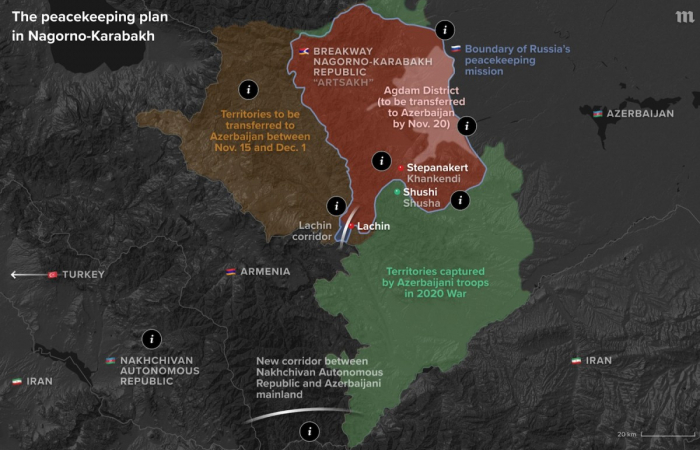
Russia's neighbours to the East - in Ukraine, Moldova and the Baltic States, and to the south - in the South Caucasus, are also watching the events in Salisbury with incredulity. They have all experienced directly the reckless policies of Mr Putin. Here we do not need to wait for evidence. There are no ifs and buts. Russia's annexation of Crimea, the hybrid war in Eastern Ukraine, the installation of protectorates in Georgia's secessionist regions of Abkhazia and South Ossetia, the cynical dumping of billions of dollars-worth of military equipment in the volatile Nagorno-Karabakh conflict zone, are just some examples of the Kremlin's reckless policy over the last years, in its quest to retain or regain hegemony over its neighbourhood.
In his speech on 1 March, President Putin yet again hankered back to the times of the Soviet Union. He said: "After the collapse of the USSR, Russia, which was known as the Soviet Union or Soviet Russia abroad, lost 23.8 percent of its national territory, 48.5 percent of its population, 41 of the GDP, 39.4 percent of its industrial potential (nearly half of our potential, I would underscore), as well as 44.6 percent of its military capability due to the division of the Soviet Armed Forces among the former Soviet republics."
President Putin did not explain how Russia could have lost that which was not its own in the first place, and how the Union of Soviet Socialist Republics, supposedly a union of fifteen sovereign republics, all of a sudden became Russia in all but name. This thinking is hugely dangerous and provocative because it once more puts into question the very existance of the successor states.
Neighbouring countries have no option but to manage their relationship with Russia, however unsavoury the Kremlin's actions and policies are. Those, like Ukraine, Moldova and Georgia who do not have the luxury of a veneer of protection, as is afforded to the Baltic States by NATO or EU membership, need to do this even more, and even more wisely.
The statement issued on Friday by Georgian Prime Minister Giorgi Kvirikashvili addressing Georgian-Russian relations, has received a mixed response in Tbilisi, and as yet little response beyond. Yet for Georgia, Kvirikashvili's approach is the way to go. Diplomatic channels, even if as yet not full diplomatic relations, need to be maintained and developed. Georgia has few tools at its disposal, and it needs to use what it has wisely.
read more: Georgian Prime Minister calls on Russia to take relations "out of vicious circle"
Russia's failure to intervene, as it easily could, to deflate the tension that has arisen around the incident leading to the death in South Ossetian custody of Archil Tatunashvili is yet another example of the sort of Russia the world is dealing with. It was right that the Georgian prime minister should put the problem at the lap of the Kremlin authorities, and he did so putting it in both the right way and in the right context.
Throughout Europe, from the quaint streets of the Cathedral town of Salisbury, to the scenic valleys of the Caucasus people are waking up to the chill of a dangerous European order that unless managed properly, is going to inevitably lead to conflict.
The response to this situation, which has been unfolding for some time, and is likely to continue unfolding yet for more years to come, needs to be cool headed, realistic, principled and firm.
First, diplomacy should be the tool of choice. President Putin dangled the tool of diplomacy in his 1 March speech. The west needs to dangle it back and not let him take the moral high ground. The two organisations that have the capacity to provide the setting for an engagement of this magnitude are the UN and the OSCE. Both need to rediscover their core vocation and the sharpness they had during the time of the cold war, and focus on what matters most. Other channels of communicating with Russia at different levels must not be shut, they must in fact be expanded.
Second, it cannot be business as usual, and it cannot be seen to be business as usual. The message needs to be hammered in, especially to those elements of the Russian elite who still think that they can have the best of both worlds. Everything short of military action should be on the table.
Third, the response needs to be as co-ordinated as possible. Easier said than done in this age of Trump, Brexit, and Berlusconi 2.0, but co-ordination is absolutely necessary.
Fourth, Russian military adventurism needs to be contained. Ukraine was a wake-up call for NATO and for the EU, but perhaps not enough. The west must also do the right thing with countries like Georgia and Ukraine and not sacrifice them as offerings of appeasement.
Fifth, the west needs to get its message right, and be able to communicate this message to its own populations, to the Russian people and to those in between.
Many people I talk to in Europe and in Russia's neighbourhood - in government, civil society, the think tank community, and business - are very uncomfortable with the situation we have today. They really do not want to see a confrontation with Russia. They hope change in Russia itself will help resolve the situation. I share the belief that in time the Russian people will wake up to the folly of the current policies of their government, but realistically that time has not come yet. Until they do Russian adventurism needs to be contained using all the tools available.
Source: Dennis Sammut is the Director of LINKS (Dialogue, Analysis and Research). His Monday Commentary is published weekly on commonspace.eu
photo: British Soldiers in chemical warfare uniforms in the town of Salisbury following a chemical attack targeting a Russian defector.