After an erratic 2022, which saw prospects for peace and normalisation of relations between Armenia and Azerbaijan, and between Armenia and Turkey, swing between unprecedented new heights and familiar lows, and after a rather pessimistic start for 2023 when diplomacy appeared to have to come to dead end, March has started with cautious optimism in the air, and the prospect of a historic Spring breakthrough appears within reach.
This is due to the convergence of a number of factors and developments, some anticipated and some not.
Ten developments that offer cause for optimism
1. US brokered talks between Aliyev and Pashinyan in Munich
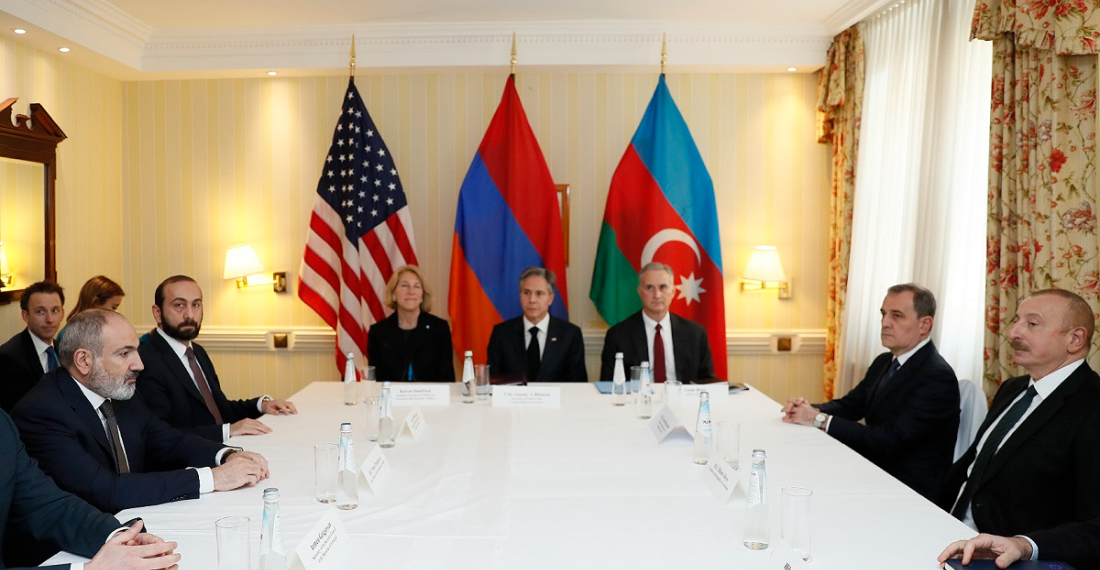
It has to be listed first, more for its symbolism than for its substance. The meeting between Prime Minister Nikol Pashinyan of Armenia and President Ilham Aliyev of Azerbaijan, brokered by US Secretary of State, Antony Blinken, which took place on the margins of the Munich Security Conference on 18 February sent an important signal that the two sides were back in negotiations mood. The meeting itself did not result in any new agreements but clearly it could not have happened if there was not a willingness to move the peace process forward. So it was much more than a photo opportunity. The personal involvement of Blinken was also a signal that the US was actively supporting these positive developments.
2. Deployment of an EU Monitoring Mission
On 20 February, the EU deployed its civilian monitoring mission in Armenia sending a strong signal of its long-term commitment to the normalisation of Armenia-Azerbaijan relations. Although Azerbaijan has criticised the deployment of the mission, and warned of the risk that it can be turned into a tool against it, its criticism has been measured, and it appears to be adopting the approach that the proof of the pudding is in the eating. On the other hand, the deployment of the mission has been widely welcomed in Armenia and has gone some way to calming Armenian nerves that have been quite jittery since the 2020 military defeat in the 44-day War. Russia has come out fully against the mission, but the fact that no one seemed to care very much about that was telling in itself.
Read more here.
3. Revival of the Brussels format
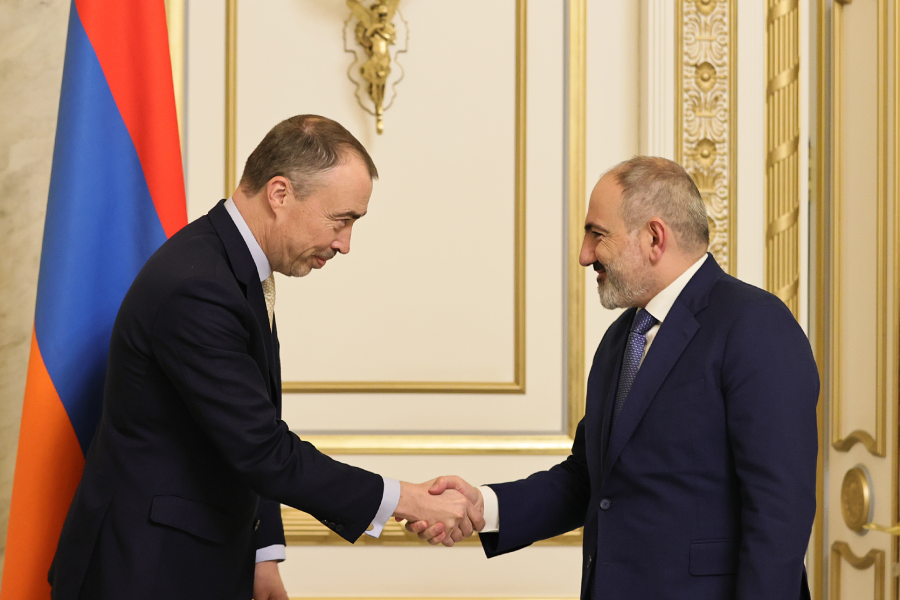
There was a moment at the beginning of 2023 when the Brussels format for negotiations between Armenia and Azerbaijan, with the mediation of European Council President Charles Michel, appeared to be doomed. Armenia’s, and partly France’s, insistence of having President Macron in the process, got a definite no from Baku. It seems that common sense has now prevailed, and that a resumption of the talks in the trilateral format is set to resume. There are rumours of an imminent meeting in Brussels. This will again test Michel’s capacity to use personal charm – in contrast to Putin’s arms twisting – to get the two leaders to meet, except that this time expectations are higher. Such a meeting will have to deliver something tangible. General statements are no longer enough.
4. Internet diplomacy
Incredible as it may seem, it appears that Armenia and Azerbaijan have for the last six months been trying to conduct negotiations on a peace agreement between them by email. The sides have exchanged texts, but they have also exchanged comments on the texts. In tandem with face to face negotiations such a procedure is normal, but doing it on its own can only be described as challenging. Still, contact is contact, and hopefully once face to face talks start all the work done can serve as a good basis for moving forward, and at least each side is now more familiar with each other’s parameters.
5. Ruling of the International Court of Justice
The binding ruling on 22 February, by the International Court of Justice, demanding that Azerbaijan restores unhindered access on the Lachin corridor connecting Armenia with the Armenian population of Karabakh came at an important moment, and is an incentive for Baku to take a more flexible approach on Lachin. It coincided with Baku achieving at least some of its demands on the issue, including the removal of Ruben Vardanyan from the position of State Minister in Stepanakert. Restoration of free movement will eliminate a key obstacle to the resumption of talks.
6. A fluid political situation in Stepanakert
The circumstances around the hiring of Russian-Armenian millionaire, Ruben Vardanyan, as State Minister in Nagorno-Karabakh in September 2022, and his firing in February 2023, remain shrouded in mystery. It is clear that someone in Moscow gave a wink and a nudge to Vardanyan to leave the comfort of his life in Moscow and move to Stepanakert, but official Moscow swears it had nothing to do with the move. Baku perceived Vardanyan’s arrival as a provocation and a conspiracy, and immediately demanded that he leave. He now no longer has an official position but is still there. As State Minister Vardanyan ruffled many feathers in Stepanakert’s tightly knit community, and may have failed to appreciate the cost of that.
The political situation among the Armenian community of Nagorno-Karabakh remains fluid. Aratyik Haratyunyan remains the president with control over the security forces but the situation on many bread and butter issues that emerged after November 2020 remains bleak. In the meantime, Samuel Babayan, a controversial former Defence Minister within the self-declared Nagorno-Karabakh Republic and one of the more substantial Karabakh personalities, is back, and where he will throw his weight will be significant. The big discussion in Stepanakert remains how to engage with Baku. A lot of the posturing of the past evaporated in 2020, and what was left has taken a big knock following Vardanyan’s dismissal. What comes next remains an open question, but a new sense of realism appears to be emerging.
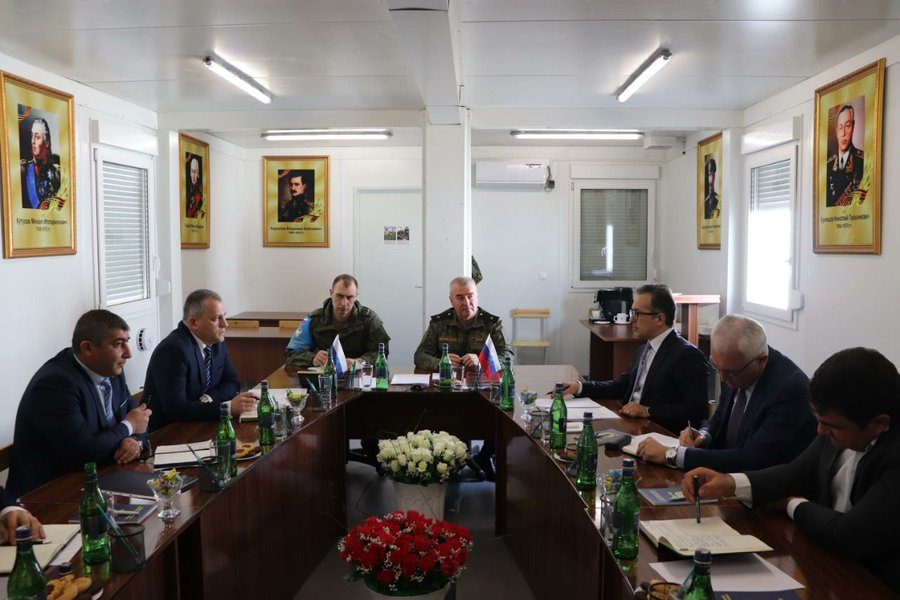
7. Baku and Stepanakert hold direct talks
On 1 March it was announced that Baku and Stepanakert had held talks facilitated by the Head of the Russian military contingent. These now appeared to be substantial talks on tangible issues and broader challenges. It was an opportunity for Baku to announce the name of the person who will lead its team in the discussions with the Karabakh Armenians going forward. Ramin Mammadov is an MP, and originally from Karabakh himself. He has so far been unknown in Baku political circles, but is well networked within the Azerbaijani community of Karabakh. For the Armenian side, it was the Secretary of the NKR Security Council who led.
It is reported that these discussions will continue. Many see these discussions as a parallel track to the Brussels process, and it is likely this track will evolve into a more elaborate arrangement at some point, but for the moment the meeting has been seen as a very positive development.
8. Earthquake diplomacy between Armenia and Turkey
On 6 February a massive earthquake hit Turkey and Syria. Whole Turkish cities were devastated, and tens of thousands of people died. The international response was massive and generous. It was however the support of tiny Armenia that caught a lot of attention. Despite the fact that the two countries do not have diplomatic relations, and their land borders remain closed, Armenia responded quickly, sending aid and a rescue team. It was a gesture full of political symbolism which did not go unnoticed by the Turks.
Whilst talks between Turkey and Armenia had been going on for more than a year in an effort to normalise relations the diplomatic contacts that accompanied the Armenian humanitarian support gave an unprecedented boost. The two sides are now poised for important decisions. President Aliyev met Turkish president Recep Tayyip Erdogan during a short surprise visit to Istanbul on Saturday (25 February) as the two sides appeared to be co-ordinating positions ahead of important developments.
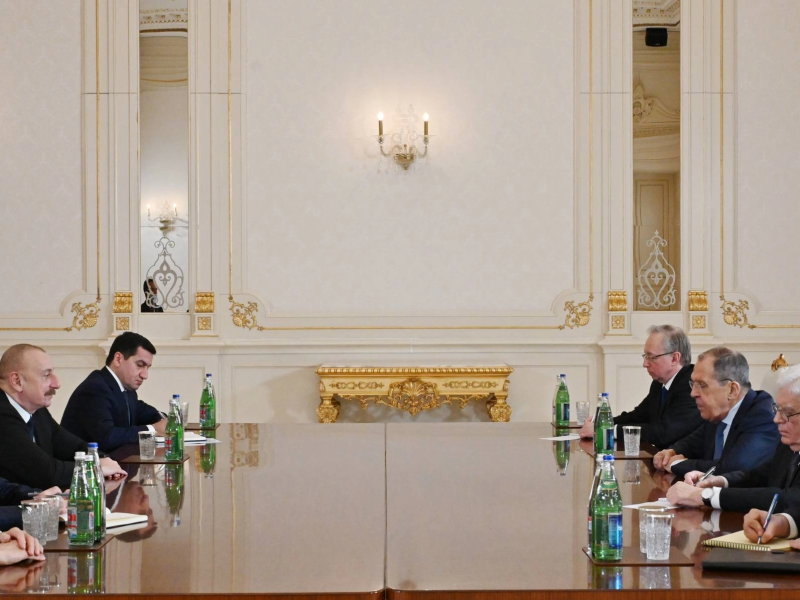
9. The limitations of Russia’s power and influence have been exposed
Russian Foreign Minister Sergei Lavrov was in Baku this week. Both sides paid the traditional lip service to bilateral relations. But in both Armenia and Azerbaijan Russia appears to be in retreat. With Russian resources focused primarily on the war in Ukraine, and with both Armenia and Azerbaijan, for very different reasons, unsatisfied with the Russian position on the South Caucasus, the best Russia can do is dig-in.
It is true, Moscow still has a huge array of tools it can use in its dealings with Baku and Yerevan, but the stick, which was the most popular one in the past, appears to be less and less threatening, and Lavrov’s charm is no substitute. Russia still has the potential to be a spoiler in case of an Armenia-Azerbaijan deal that excludes its interests, but even this now appears to be less relevant.
10. More confident leaderships in both Baku and Yerevan
The tenth element is less tangible. For Armenia-Azerbaijan peace talks and normalisation of relations process to succeed the leaderships in Baku and Yerevan have to have the confidence to go through with compromises and tough decisions. So far, either one side, or the other, appeared to lack this confidence. At the moment, for the first time both sides seem to have gathered this self-confidence, and have the political capital at home that allows them to push through a historic peace agreement. This factor should not be underestimated.
Cautious optimism
Of course it is possible that despite all these positive factors and vibes 2023 may yet repeat the swings of 2022. There is an urgent need for the two sides to declare a ceasefire in the information sphere, where both sides still heap vitriolic comments on each other. The two sides have also failed to put in place a structured programme for confidence building that accompanies the negotiations, and which is a necessary factor for progress in the negotiations to be consolidated at every point. These two issues need to be addressed soonest if the present momentum is not to be lost once again.
The next few days and weeks will be crucial for the future of Armenia-Azerbaijan relations and the long term peace and prosperity of the South Caucasus. There is some cautious optimism. We have been here before, but somehow, this time it feels different.