This a commentary prepared by the editorial team of Caucasus Concise
The present Georgian constitution was approved by the Georgian parliament on 24 August 1995, and came into force on 17 October 1995, after a short but emotional ceremony in front of the Parliament building on Tbilisi's Rustaveli Avenue. As the ceremony was taking place many had tears in their eyes. Georgia had just emerged from a nightmare of war and chaos. The adoption of the new constitution was rightly seen as a turning point, bringing Georgia back from the brink of lawlessness and criminality, and returning it to the rule of law.
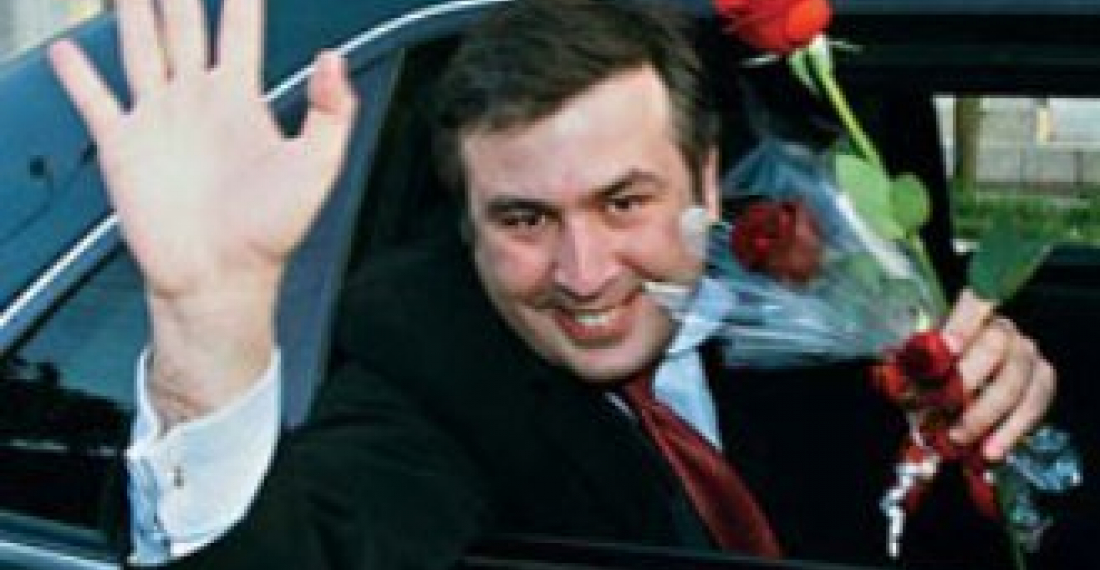
Several amendments have been made to the constitution since, the most radical in 2010, when Mikheil Saakashvili's UNM government used its then total dominance of the parliament to push through changes, including the transformation of the country from a Presidential to a parliamentary republic. Critics then accused Saakashvili of wanting to repeat the Putin scenario by moving to the premiership once his two terms in office had expired. As it happened, the UNM lost the 2012 election, and Saakashvili became a lame dug president for the last year of his presidency, cooked in his own stew, as some commentators remarked.
During the last parliament there were some small constitutional amendments, but the UNM, now in opposition, blocked any major constitutional changes. A transfer of the Parliament back to Tbilisi from Kutaisi, where it was controversially relocated by Saakashvili, was one of several proposals blocked. Constitutional changes are now now back on the agenda following the victory of Georgian Dream in the elections earlier this month. The matter however is not being discussed on its own merits, but rather in the context of the run-offs taking place for 50 seats in the next parliament. These will determine if the Georgian Dream will not only have a working majority in the new parliament - something of which it is already reasonably assured, but if it will also have a constitutional majority, i.e. will it have enough seats to change the constitution without the agreement of the main opposition party, the UNM.
Over the last days the UNM has tried to make this the central issue in the run-off elections, warning that if the Georgian Dream secures a constitutional majority Georgia will be turned into a dictatorship.
Critics of UNM say that this is a case of the pot calling the kettle black. UNM's history of constitutional change and reform in Georgia is not exactly exemplary. However more reassuringly the Georgian government has moved swiftly to dismiss speculation about future constitutional changes. Georgia's Prime Minister Giorgi Kvirikashvili, speaking just before of a cabinet meeting on Wednesday (19 October) said that the constitution needs amendments, but the process should be carried out through broad public involvement and without any haste.
"In the past we had an example when the constitution was tailored on one person and on a single political force, which led to usurption of power. We want a constitutional majority first and foremost for delivering on our promises and to implement a very ambitious development plan... which implies creation of unprecedented high level of dynamic for the economic development in order for the country to make a breakthrough in terms of economic, social development and the development of democratic institutions, and to continue those important reforms, which have been launched as part of our European and Euro-Atlantic agenda," Kvirikashvili said.
"That's why we want the constitutional majority; that is first and foremost a huge responsibility before voters," he said. "We inherited a very unbalanced constitution and a group should necessarily be established, which through broad engagement of the public will elaborate amendments, which would prevent everyone to ever concentrate and usurp power and to have once and for all a truly European, democratic constitution".
He, however, also stressed that there will be no hasty action in this regard. "That's not something we will rush into," he said. "Of course not; haste will not be good here."
Kvirikashvili was not very well known, either in Georgia or overseas, before he became Prime Minister in December. Yet throughout his short time in office, and particularly during the recent election campaign, Kvirikashvili has emerged as a calm and articulate leader, open for dialogue with his opponents, and focused on delivering a professional and efficient government able to deal with Georgia's current and upcoming challenges. He has refrained from personal insults of his political foes, and has been overall a positive factor in Georgian politics.
His reassurances on Georgia's constitution can therefore be taken at face value, and should be welcomed, as indeed they were by President Giorgi Margvelashvili, who sees himself as the ultimate protector of the Georgian constitution.
A country's constitution is a dynamic document, and changes should be made to it whenever necessary. However the process needs to happen in a calm atmosphere and through wide consultations. Georgia has a vibrant civil society and its representatives can and should be consulted fully, as should all political forces, including those not represented in the new parliament. The idea of a Constitutional Commission or "Group", as proposed by Prime Minister Kvirikashvili, should be welcomed. Another instrument that can and should be used is the Venice Commission - a European mechanism that assists countries in addressing Constitutional and legislative matters. They too should be involved at an early stage.
In the end, what needs to be judged, is not the ability of a particular political party to push through constitutional changes, but the substance of these changes, and the process used to adopt them. Georgia in 2016 is a different place from what it was in 1995. The run-off elections on 30 October, are important in their own right, and should be fought on the broad spectrum of issues that also characterised the poll on 8 October. Standards in these run-off elections also need to be high to ensure that this election process is concluded peacefully and successfully. After that, a calm and adquately long debate on the constitution can take place, to which everyone should contribute.
This is a commentary prepared by the editorial team of Caucasus Concise
photo: Georgian president Mikehil Saakashvili (2004-2013). The UNM lost the 2012 election, and Saakashvili became a lame dug president for the last year of his presidency, cooked in his own stew, as some commentators remarked.