Armenia summons Belarus Ambassador to Foreign Ministry after "bewildering" statement on situation in Karabakh

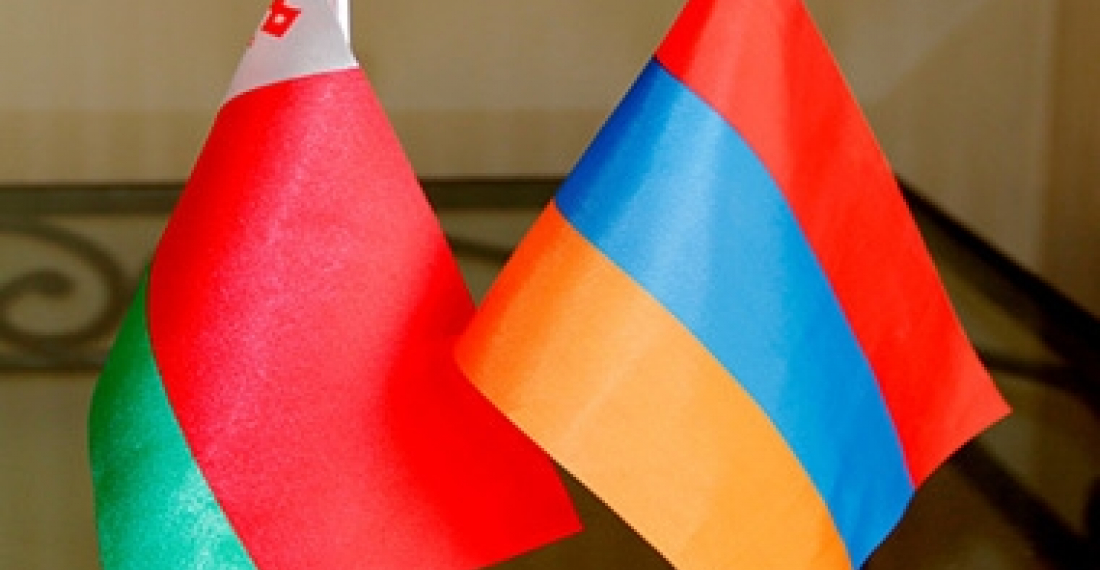
Armenia has summoned the Belarus Ambassador in Yerevan to the Foreign Ministry on Sunday afternoon after what it described as a "bewildering statement" by the Belarus Foreign Ministry, issued in Minsk on Saturday in the aftermath of clashes in the Karabakh conflict zone.

The Armenian website HETQ reported that during the meeting Deputy Foreign Minister Shavarsh Kocharyan expressed to Igor Nazaruk, Ambassador of Belarus in Yerevan, the deep bewilderment of the Armenian side regarding some provisions reflected in the statement of the MFA of the Republic of Belarus on the developments in Nagorno-Karabakh, released on April 2, 2016.

According to the website the Armenian Deputy Foreign Minister told Ambassador Igor Nazaruk that such statement is incompatible with the spirit of the Armenia-Belarus relations and contradicts the commitments of the sides taken within the framework of the CSTO and other international structures, undermines the negotiation process while encouraging the use of force in the Nagorno-Karabakh settlement process.

The statement of the Belarus Foreign Ministry, posted on the Ministry website says:

"The Republic of Belarus is deeply concerned about the resumption of active hostilities with the use of heavy weapons in the Nagorno-Karabakh region.

"As a member country of the OSCE Minsk Group have consistently advocated a peaceful solution to the conflict in accordance with the generally recognized principles and norms of international law, first of all, on the basis of respect and ensure the sovereignty, territorial integrity and inviolability of borders, as well as the relevant UN Security Council resolutions and OSCE decisions .

"We urge the parties to immediately cease fire and to avoid any actions leading to an increase in tension and casualties. We hope that the co-chairs of the OSCE Minsk Group with the support of all friendly countries to Azerbaijan and Armenia use their authority and influence to ensure de-escalation and return to find a solution to the Karabakh conflict to the negotiating table."

Both Armenia and Belarus are members of the Collective Security Treaty Organisation and the Eurasian Economic Union. Azerbaijan is a member of neither.

source: commonspace.eu with www.hetq.am and www.mfa.gov.by
 

Related articles

Editor's choice
News
Borrell tells the European Parliament that the situation in Afghanistan was critical, but the EU will remain engaged

Borrell tells the European Parliament that the situation in Afghanistan was critical, but the EU will remain engaged

Borrell underlined that the European Union will make every effort to support the peace process and to remain a committed partner to the Afghan people. "Of course, we will have to take into account the evolving situation, but disengagement is not an option.  We are clear on that: there is no alternative to a negotiated political settlement, through inclusive peace talks.
Editor's choice
News
Pope's visit to Türkiye and Lebanon has a strong ecumenical character, and places interreligious dialogue at its centre

Pope's visit to Türkiye and Lebanon has a strong ecumenical character, and places interreligious dialogue at its centre

Pope Leo XIV has begun the first overseas trip of his pontificate, a six-day visit to Türkiye and Lebanon, which started yesterday (27 November) and ends on Tuesday (2 December). According to Vatican Radio, the visit "carries a strong ecumenical character and places interreligious dialogue at its centre. It will also be a moment of closeness to Christian communities and local populations across the region".   During nearly a week in the region, Pope Leo XIV will meet civil and religious authorities, visit mosques and ancient churches, pray at Beirut’s port in memory of the victims of the 2020 explosion, and hold private meetings with Presidents Recep Tayyip Erdoğan and Joseph Aoun.   A highlight of the visit will be a visit to Nicaea, where the Pope will mark the anniversary of the Council of Nicaea. Christians of many traditions recognise the Council of Nicaea as a foundation of shared faith. One of the most anticipated moments will be the Pope’s encounter with Lebanese youth in Bkerké, at the Maronite Patriarchate, a meeting expected to carry strong messages of hope in the Jubilee Year. A central event will be the ecumenical celebration in İznik, where the Pope and Ecumenical Patriarch Bartholomew will walk together toward the ruins of the Basilica of St Neophytos. The prayer, held before icons of Christ and the Council, will conclude with the lighting of a candle—a symbolic gesture of unity. The journey will also highlight interreligious engagement.   Memorable moments are expected throughout the trip: a wreath at Atatürk’s mausoleum, prayer inside the Blue Mosque, Mass at Istanbul’s Volkswagen Arena, the planting of a cedar at the presidential palace in Beirut, and prayer at the tomb of St Charbel in Lebanon. The Vatican said that "Pope Leo XIV’s pilgrimage to Türkiye and Lebanon aims to offer a voice of peace, unity, and hope at the heart of the Middle East."

Popular

Editor's choice
News
Pope's visit to Türkiye and Lebanon has a strong ecumenical character, and places interreligious dialogue at its centre

Pope's visit to Türkiye and Lebanon has a strong ecumenical character, and places interreligious dialogue at its centre

Pope Leo XIV has begun the first overseas trip of his pontificate, a six-day visit to Türkiye and Lebanon, which started yesterday (27 November) and ends on Tuesday (2 December). According to Vatican Radio, the visit "carries a strong ecumenical character and places interreligious dialogue at its centre. It will also be a moment of closeness to Christian communities and local populations across the region".   During nearly a week in the region, Pope Leo XIV will meet civil and religious authorities, visit mosques and ancient churches, pray at Beirut’s port in memory of the victims of the 2020 explosion, and hold private meetings with Presidents Recep Tayyip Erdoğan and Joseph Aoun.   A highlight of the visit will be a visit to Nicaea, where the Pope will mark the anniversary of the Council of Nicaea. Christians of many traditions recognise the Council of Nicaea as a foundation of shared faith. One of the most anticipated moments will be the Pope’s encounter with Lebanese youth in Bkerké, at the Maronite Patriarchate, a meeting expected to carry strong messages of hope in the Jubilee Year. A central event will be the ecumenical celebration in İznik, where the Pope and Ecumenical Patriarch Bartholomew will walk together toward the ruins of the Basilica of St Neophytos. The prayer, held before icons of Christ and the Council, will conclude with the lighting of a candle—a symbolic gesture of unity. The journey will also highlight interreligious engagement.   Memorable moments are expected throughout the trip: a wreath at Atatürk’s mausoleum, prayer inside the Blue Mosque, Mass at Istanbul’s Volkswagen Arena, the planting of a cedar at the presidential palace in Beirut, and prayer at the tomb of St Charbel in Lebanon. The Vatican said that "Pope Leo XIV’s pilgrimage to Türkiye and Lebanon aims to offer a voice of peace, unity, and hope at the heart of the Middle East."