In this op-ed Dennis Sammut discusses the results of the election held in Turkey on 1 November 2015.
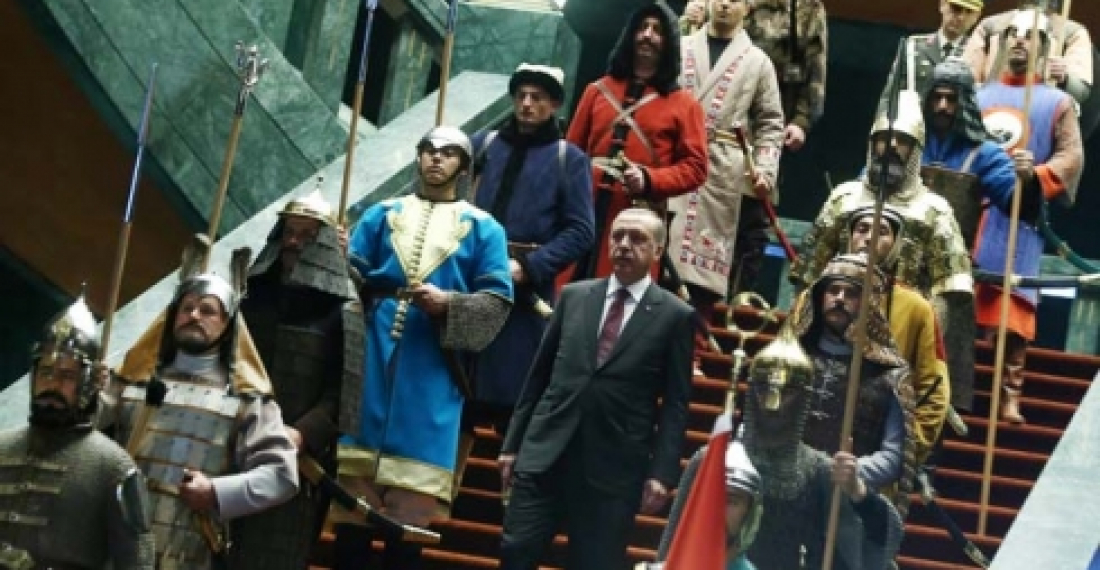
The victory of the AK Party in Turkey's re-run Parliamentary election on 1 November was absolute and convincing. For yet another time President Recip Tayip Erdogan has shown that he is a master-tactician that knows how to play the Turkish political scene as no other can. After his Justice and Development Party (AKP) lost absolute majority in the election held in June, and having failed to form a coalition government, President Erdogan called for another election which this time he has won resolutely. In June some had written Erdogan off, saying that from now on he was permanently damaged and on an irreversible decline. Not for the first time he has proved his critics wrong.
It has been a difficult and highly polarised election campaign, marred by violence, especially in the country's troubled South East region mainly populated by Kurds. The opposition has accused the government of putting pressure on the media, of lack of transparency in the conduct of the security services, and of using administrative resources in support of the ruling party. There appears to be some truth in all these accusations, and these issues could have impacted the result of the elections somewhat. Yet when you also consider that Turkey is facing a huge refugee crisis, and that the economy has been suffering because of the political turmoil of the last year, the victory of the AK party remains convincing, and the opposition got nowhere near providing a serious challenge to its rule.
Despite everything Turkey remains a vibrant democracy. More than forty-eight million people voted in the election - a high turnout of 85.18% that shows a level of citizen engagement with the democratic process that should make the established European democracies jealous.
Everybody in Turkey now needs to focus on the challenges ahead. President Erdogan has already dramatically changed the role of the presidency in Turkish politics, without a comma having been as yet changed in the Turkish constitution. The AK Party's victory on Sunday is not big enough for him to be able to push for the constitutional changes he wished for, at least not without the support of other parties. Erdogan has yet to learn how to make the transformation from politician to statesman. As a politician there is no doubt that he is a master of his trade, but this does not necessarily make him a good statesman. Now is his chance to show his nation and the world that he can rise above the daily political fray. His attitude towards his opponents, and his vision on the issue of how to deal with the Kurdish question, will provide him with his early and most difficult tests.
The opposition parties also need to re-examine their actions. The nationalist MHP lost two million votes between June and November. This was not only due because it allowed the AK Party to hijack its agenda, but also because it showed that it was not versatile enough to sustain support beyond its core group. It has not emerged as the leading party in any of the 81 provinces of Turkey. For the left-leaning and pro-Kurdish HDP the fact that it has been able to cross the difficult 10% threshold and secure seats in the parliament may still be a source of satisfaction, but the Party failed to maintain the glamour that surrounded it in June that had enabled it to attract support beyond the Kurdish community. It continuous to remain strong in the South East, but it lost votes in other areas, including in Istanbul, where the AK Party managed to increase its vote by one million.
Perhaps the most difficult decisions ahead need to be taken by the main opposition CHP Party. Despite a convincing election campaign the Party hardly saw a change in its fortune from June to November, and remains stuck at about 25% of the popular vote. The Party has done some good work in the past decade to atone for the mistakes of the past, but clearly it is not enough. In the minds of many Turks the CHP remains tainted with too cosy a relationship with the military, and with memories of economic decline. It has a long way to go before it can win a convincing victory, but the journey must start and a new generation of leaders needs to be allowed to take over, at national as well as provincial level.
For the AK Party itself this is a time for celebration, but there is a stark reality which the Party needs to address with urgency - how to prepare for the post-Erdogan era. Debating such an issue is at the moment considered nearly sacrilegious, yet if the party wants to secure its future it must. Those within the Party who believe in a more inclusive approach, especially on social issues, have a lot of work ahead of them. Most importantly the Party needs to understand that democracy is its biggest friend, and in turn it needs to be democracy's biggest supporter. Only true democracy can guarantee that Turkey does not return to the bad ways of the past, and only true democracy can secure a solution for Turkey's current problems.
This op-ed, prepared by Dennis Sammut, was first published on commonspace.eu on 2 November 2015.