


Iran plunges into the Karabakh crisis

Iran has plunged into the current Karabakh crisis, saying it has an initiative to help stop the ongoing war between Armenia and Azerbaijan.The Deputy Foreign Minister for Political Affairs of Iran, Abbas Araghchi, is due to visit Baku, Moscow, Yerevan and Ankara where is expected to unveil the so-called Iranian plan. 

"In this regional trip, I will introduce the initiative presented by the Islamic Republic of Iran regarding the Nagorno-Karabakh crisis", the Iranian news agency IRNA quoted the Deputy Minister as saying after he inspected the Iranian border with the two countries prior to his departure on the mission. "Iran seeks lasting peace in the region, and in this visit to the countries involved in the Nagorno-Karabakh crisis I will consult, and I hope the plan of the Islamic Republic of Iran will contribute to lasting peace in the region."

Commenting on the diplomatic move, Iranian Minister of Foreign Affairs, Javad Zarif said "Iran's plan for a permanent solution to the Nagorno-Karabakh conflict has been formulated and will be presented today and tomorrow with the approval of the country's top officials".

Commonspace.eu Middle East Analyst, Noman Ahmed has been monitoring the Iranian response to the ongoing Karabakh War. In this analysis he says that Iran is keen to reduce  the risks and the costs for itself of this bitter conflict. The new Iranian shuttle diplomacy and plan are intended to do that first and foremost. He adds:

Officially Iran takes the position of most of the international community, and the government remained neutral. Historically however it has built more warm ties with Armenia than with its Shia neighbour, Azerbaijan, due to several political and economic reasons. Despite sharing the same religion (Islam)and sect (Shia), the Azeri and Persians are of different ethnic, linguistic and cultural background. Iran amasses several ethnicities including the Azeris who reside in the northern provinces of Ardabil, East Azerbaijan and West Azerbaijan just shy of the Azerbaijani sovereign territory. 

However, since the beginning of October, Iran has, for the first time, supported the Azerbaijani side, apparently in response to protestors who took to the streets in these three provinces and showed solidarity with their Azeri brothers chanting "Karabakh is ours". Both the government and religious leaders in these provinces reiterated Iranian unity and solidarity for the Azeris in fear of backlash from the Azeri community inside Iran. Those protestors are likely to be from the same community who over the last weeks have gathered daily to watch the fighting from the other bank of the Aras river and cheer Azerbaijani soldiers as they advanced into Nagorno Karabakh.

After calling for Azerbaijani territorial integrity, and mobilising its religious institution for the cause of Azerbaijan, protesters in Tabriz still demanded more. Last weekend protestors called for Iran to shut its border with Armenia. The slogans asserted the unity of Azerbaijan and denounced Iran's support for Armenia, according to VOA Azerbaijan. The protestors also demanded the release of activists detained in earlier protests in northern Iranian provinces. The Iranian government did not respond yet to this second wave of protests.

National unity is not the only concern for Iran. More than 50 rockets, a drone and several incidents of stray fire hit Iranian territory resulting in an increased state of readiness and mobilisation of security apparatus near the border. The Iranian Foreign Ministry has throughout the last month issued several warnings, and a second drone was downed by Iran in East Azerbaijan province.  

A third challenge for Iran, which it has discussed with all concerned parties, and with Russia and Turkey as well, is the presence of foreign fighters at a close proximity of its borders. It is not clear what exact number of foreign fighters are in Nagorno Karabakh, but recruitment is active according to various sources. There are also reports of some of some foreign non-civilians deaths.

Iran, therefore, had to be active diplomatically even if the Russians and Turks do not consider it a neutral, effective broker. Iran has vocalised its concern to Turkey and Russia and hoped they would address the issue of foreign fighters. Mohammad Farazmand, ambassador of Iran in Ankara, said "For this reason, we do not want conflict and instability in the region; Therefore, efforts should be made to resolve this issue through fair solutions." Iran does not want a conflict near its borders, and doesn't want the conflict to spill over in its territories, even by accident.

Internally, Iran needs to manage rising Azeri activism in its own territories but still maintain sufficient neutrality to be part of the peace process in which it could amplify its concerns over terrorism and border security. Iranian writers in the local media seem to be divided. Some believe that Iran should take a bigger role in establishing peace saying that it had historically been "a custodian of the Caucasus" and managed to govern it despite Russian and Ottoman influences. They also believe Azeris should be supported as Muslims, ignoring Azerbaijan's secular identity. 

Others believe Iran needs to avoid being embroiled in the conflict and adhere to strict neutrality. The latter argue that Nagorno Karabakh is not a Persian territory and that the Azeris will never accept the Iranian system of political leadership and neither should Iran stand by a pro-Turkish side. This has also been the position of the opposition group known as the National Front who denounced the voices of religious leaders in support of Azerbaijan.

For the Iranian regime, addressing the Nagorno Karabakh is easier said than done. The situation in Nagorno Karabakh can be catastrophic for Iran. The 2020 Nagorno-Karabakh war is likely to have collateral damage across the wider South Caucasus and and beyond, and Iran is keen to reduce to the risks and the costs of this bitter conflict. The new Iranian shuttle diplomacy and plan are intended to do that first and foremost.

Source: Noman Ahmed is the Middle East analyst at commonspace.eu

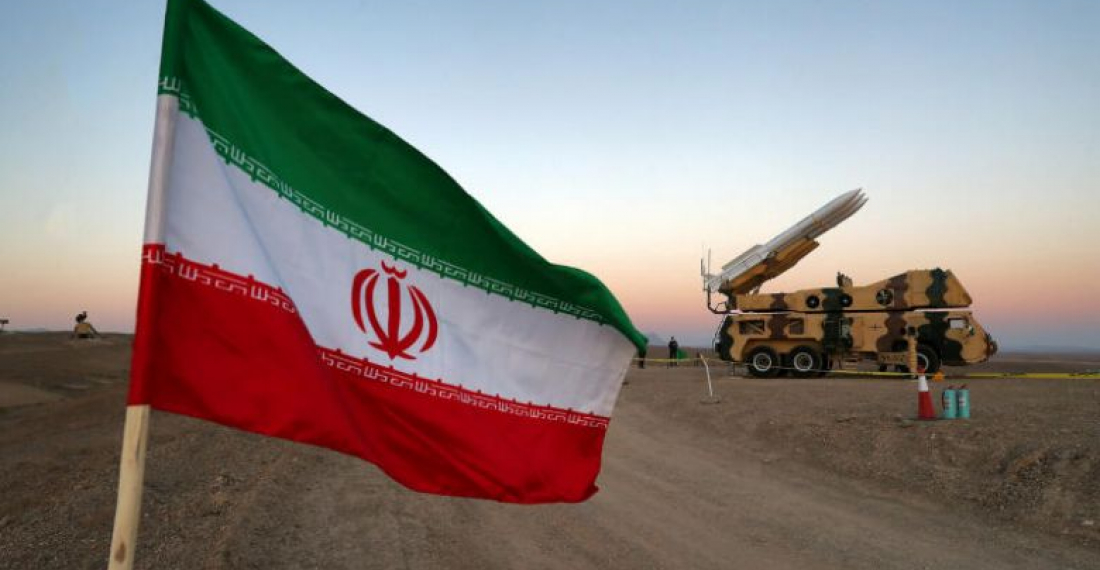
Photo: An Iranian flag is pictured near in a missile during a military drill, with the participation of Iran’s Air Defense units, Iran October 19, 2020. WANA (West Asia News Agency) via REUTERS


Related articles

Editor's choice
News
Council of Europe launches new International Claims Commission for Ukraine

Council of Europe launches new International Claims Commission for Ukraine

Thirty-four countries and the European Union have signed a new convention establishing an International Claims Commission for Ukraine at a diplomatic conference co-hosted by the 46-nation Council of Europe and the Netherlands in the Hague. The diplomatic conference was attended by leaders and high-level representatives from over 50 states, including the President of Ukraine, Volodymyr Zelenskyy, the President of the Republic of Moldova, Maia Sandu, and the Prime Minister of the Netherlands, Dick Schoof.  “Today marks a major step forward in ensuring accountability for Ukraine. The International Claims Commission represents justice and hope for tens of thousands of victims—our determination that those who have suffered will not be forgotten. I call for quick ratifications so we can get the commission rapidly up and running for the people of Ukraine,” said Council of Europe Secretary General Alain Berset. Ukrainian President Volodymyr Zelenskyy said: “We expect that every mechanism for compensation from the Register of Damage and Claims Commission to the actual payments – will start working and receive strong and sufficient international support, so that people can truly feel that any kind of damage caused by the war can be compensated. This war, and Russia’s responsibility for it, MUST become a clear example – so that others learn not to choose aggression.” “Accountability is about creating the conditions for peace that endures. And therefore, accountability is a condition of security – today and for the future. But accountability is not only about Ukraine. And it is not only about one aggressor and one victim. Accountability is about Europe. About every country in Europe. It is about whether Europe, as a whole, is willing to defend its peace,” said Maia Sandu, President of the Republic of Moldova, which currently holds the Presidency of the Council of Europe’s Committee of Ministers. The Prime Minister of the Netherlands, Dick Schoof, said: “Every day Russia is deliberately bombarding homes, destroying businesses and damaging infrastructure in Ukraine. Russia must compensate Ukraine for the damage caused. That is why we have launched the International Claims Commission for Ukraine and we are honoured to host it.” The International Claims Commission will be the second part of a comprehensive compensation mechanism related to Russia’s war of aggression, building on the existing Register of Damage for Ukraine. The claims commission will be established within the framework of the Council of Europe and will also be open to other countries. The Register of Damage for Ukraine, created in 2023, collects and records compensation claims submitted by individuals, organisations and public bodies in Ukraine. Forty-four states and the European Union have so far joined the Register, which has already received 86,000 claims. The International Claims Commission will review, assess and decide upon claims submitted to the Register of Damage for Ukraine and determine the amount of compensation, if any, which is due in each case. The convention establishing the commission will enter into force once it has been ratified by 25 signatories, as long as sufficient funds have been secured to support its initial work.

Popular

Editor's choice
News
Council of Europe launches new International Claims Commission for Ukraine

Council of Europe launches new International Claims Commission for Ukraine

Thirty-four countries and the European Union have signed a new convention establishing an International Claims Commission for Ukraine at a diplomatic conference co-hosted by the 46-nation Council of Europe and the Netherlands in the Hague. The diplomatic conference was attended by leaders and high-level representatives from over 50 states, including the President of Ukraine, Volodymyr Zelenskyy, the President of the Republic of Moldova, Maia Sandu, and the Prime Minister of the Netherlands, Dick Schoof.  “Today marks a major step forward in ensuring accountability for Ukraine. The International Claims Commission represents justice and hope for tens of thousands of victims—our determination that those who have suffered will not be forgotten. I call for quick ratifications so we can get the commission rapidly up and running for the people of Ukraine,” said Council of Europe Secretary General Alain Berset. Ukrainian President Volodymyr Zelenskyy said: “We expect that every mechanism for compensation from the Register of Damage and Claims Commission to the actual payments – will start working and receive strong and sufficient international support, so that people can truly feel that any kind of damage caused by the war can be compensated. This war, and Russia’s responsibility for it, MUST become a clear example – so that others learn not to choose aggression.” “Accountability is about creating the conditions for peace that endures. And therefore, accountability is a condition of security – today and for the future. But accountability is not only about Ukraine. And it is not only about one aggressor and one victim. Accountability is about Europe. About every country in Europe. It is about whether Europe, as a whole, is willing to defend its peace,” said Maia Sandu, President of the Republic of Moldova, which currently holds the Presidency of the Council of Europe’s Committee of Ministers. The Prime Minister of the Netherlands, Dick Schoof, said: “Every day Russia is deliberately bombarding homes, destroying businesses and damaging infrastructure in Ukraine. Russia must compensate Ukraine for the damage caused. That is why we have launched the International Claims Commission for Ukraine and we are honoured to host it.” The International Claims Commission will be the second part of a comprehensive compensation mechanism related to Russia’s war of aggression, building on the existing Register of Damage for Ukraine. The claims commission will be established within the framework of the Council of Europe and will also be open to other countries. The Register of Damage for Ukraine, created in 2023, collects and records compensation claims submitted by individuals, organisations and public bodies in Ukraine. Forty-four states and the European Union have so far joined the Register, which has already received 86,000 claims. The International Claims Commission will review, assess and decide upon claims submitted to the Register of Damage for Ukraine and determine the amount of compensation, if any, which is due in each case. The convention establishing the commission will enter into force once it has been ratified by 25 signatories, as long as sufficient funds have been secured to support its initial work.

