


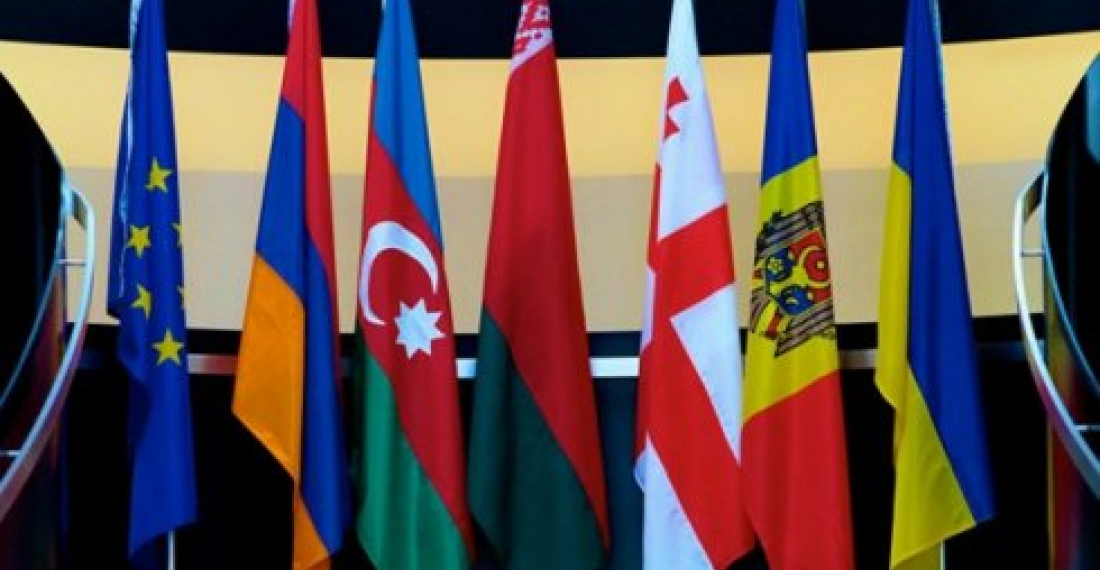
About nuances and subtleties in the Eastern Partnership

This is a commentary prepared by the editorial team of Caucasus Concise, a weekly curated newsletter published in association with commonspace.eu
The Eastern Partnership is proving to be a versatile and effective instrument, but work needs to continue to fine tune its strategy.

The 8th Ministerial Meeting of the European Union's Eastern Partnership (EaP) was held in Luxembourg on 19 June. The EaP brings together the EU's 28 member states with six partners on the Union's Eastern borders: Armenia, Azerbaijan, Belarus, Georgia, Moldova and Ukraine.

The six partners may share a common recent history, as well as many similar problems, but each is in a different place in their difficult transition, from being part of the USSR to the new realities of the 21st century. They have also each chosen different trajectories, including in how they want to structure their relationship with the EU. The first attempts of the EaP which had a one size fits all approach clearly failed. The Riga Summit was a testing moment for the initiative, but much has happened since. A more nuanced approach is showing every sign of being more successful.

Three of the six partners are now Associate members of the EU and part of the DCFTA framework. The agreements signed with Ukraine, Georgia and Moldova are far reaching and have huge potential. They will take time however to digest fully, and implementation will not always be easy. All three countries now also have visa-free travel to EU countries, something that is both welcome, and in many ways a game-changer.

Armenia has initialled a new comprehensive co-operation agreement with the EU. This may be signed later this year. Azerbaijan has started negotiations on its own bilateral agreement and progress has been reported. Belarus has a way to go, given the problematic issues related with its governance, but there is a complete change of mood in EU-Belarus relations, and the prospects of strong future co-operation is now considered possible and a desirable development in both Minsk and Brussels.

In Luxembourg this week, a new twenty point concept on deliverables for the EaP was discussed, and broadly welcomed. The 20 deliverables are in four key areas: governance; economic development; mobility and people to people; and connectivity, energy efficiency and other issues. The lofty document, written in Brussels jargon, issued by the European Commission needs to be "translated" into language that people can understand in order that these deliverables can become beacons for the millions of people in EaP region, for who the European Union is the best hope for a better future.

Differentiation must remain a key feature of the EaP going forward, and the European Union must make it clear that those who snub the EU's values should not aspire for the same level of relations as others who embrace them.

Furthermore the three countries that are in association with the EU are clearly in a different place from the others who are not. Some visible way of showing this going forward should be found, without necessarily creating divisions between them and the other three. Subtlety does not always work in this part of the world, but in this context it is worth giving it a try. Preparations for the next Eastern Partnership scheduled for November in Brussels, are now going in earnest. The Eastern Partnership is proving to be a versatile and effective instrument for European Union engagement with neighbours to the east, but work needs to continue to fine tune its strategy.

This is a commentary prepared by the editorial team of Caucasus Concise, a weekly curated newsletter published in association with commonspace.eu

Related articles

Editor's choice
News
Borrell tells the European Parliament that the situation in Afghanistan was critical, but the EU will remain engaged

Borrell tells the European Parliament that the situation in Afghanistan was critical, but the EU will remain engaged

Borrell underlined that the European Union will make every effort to support the peace process and to remain a committed partner to the Afghan people. "Of course, we will have to take into account the evolving situation, but disengagement is not an option.  We are clear on that: there is no alternative to a negotiated political settlement, through inclusive peace talks.
Editor's choice
News
Germany accuses Russia of cyberattacks and disinformation campaign

Germany accuses Russia of cyberattacks and disinformation campaign

The German government holds Russia responsible for a cyberattack on German air traffic control, and for targeted disinformation campaigns before the last federal election. According to the German Foreign Office in Berlin, the incidents could be clearly attributed to the Russian military intelligence service, the GRU. In response, the Russian ambassador to Berlin was summoned to the Foreign Ministry. "We have been observing a massive increase in threatening hybrid activities by Russia for some time now," a spokesperson for the Foreign Ministry stated. These range from disinformation campaigns and espionage to cyberattacks and sabotage attempts. The aim is to divide society, sow distrust, and undermine confidence in democratic institutions. The spokesperson added that with these actions, Russia is "very concretely threatening our security, not only through its war of aggression against Ukraine, but also here in Germany."  The Foreign Ministry spokesperson explained that the cyberattack on air traffic control in August 2024 was clearly attributed to the hacker collective "APT28," known as "Fancy Bear," and to the responsibility of the Russian military intelligence service, the GRU. Furthermore, it could now be "conclusively stated" that Russia had attempted "to influence and destabilize both the last Federal election and the ongoing internal affairs of the Federal Republic of Germany." There was "absolutely irrefutable evidence" for this". The so-called "Storm 1516" campaign, which has been running since 2024, is allegedly backed by "reliable information" that the Moscow-based think tank "Center for Geopolitical Expertise" is behind it. The Center is also said to be supported by Russian military intelligence. Its primary aim is to influence democratic elections in the West. (Click the image to read more).

Popular

Editor's choice
News
Germany accuses Russia of cyberattacks and disinformation campaign

Germany accuses Russia of cyberattacks and disinformation campaign

The German government holds Russia responsible for a cyberattack on German air traffic control, and for targeted disinformation campaigns before the last federal election. According to the German Foreign Office in Berlin, the incidents could be clearly attributed to the Russian military intelligence service, the GRU. In response, the Russian ambassador to Berlin was summoned to the Foreign Ministry. "We have been observing a massive increase in threatening hybrid activities by Russia for some time now," a spokesperson for the Foreign Ministry stated. These range from disinformation campaigns and espionage to cyberattacks and sabotage attempts. The aim is to divide society, sow distrust, and undermine confidence in democratic institutions. The spokesperson added that with these actions, Russia is "very concretely threatening our security, not only through its war of aggression against Ukraine, but also here in Germany."  The Foreign Ministry spokesperson explained that the cyberattack on air traffic control in August 2024 was clearly attributed to the hacker collective "APT28," known as "Fancy Bear," and to the responsibility of the Russian military intelligence service, the GRU. Furthermore, it could now be "conclusively stated" that Russia had attempted "to influence and destabilize both the last Federal election and the ongoing internal affairs of the Federal Republic of Germany." There was "absolutely irrefutable evidence" for this". The so-called "Storm 1516" campaign, which has been running since 2024, is allegedly backed by "reliable information" that the Moscow-based think tank "Center for Geopolitical Expertise" is behind it. The Center is also said to be supported by Russian military intelligence. Its primary aim is to influence democratic elections in the West. (Click the image to read more).
