Theme

Diplomacy

Editor's choice
News
Council of Europe launches new International Claims Commission for Ukraine

Council of Europe launches new International Claims Commission for Ukraine

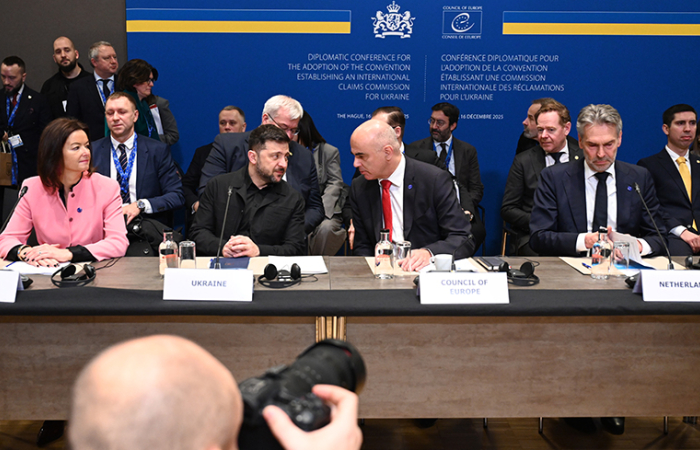
Thirty-four countries and the European Union have signed a new convention establishing an International Claims Commission for Ukraine at a diplomatic conference co-hosted by the 46-nation Council of Europe and the Netherlands in the Hague. The diplomatic conference was attended by leaders and high-level representatives from over 50 states, including the President of Ukraine, Volodymyr Zelenskyy, the President of the Republic of Moldova, Maia Sandu, and the Prime Minister of the Netherlands, Dick Schoof.  “Today marks a major step forward in ensuring accountability for Ukraine. The International Claims Commission represents justice and hope for tens of thousands of victims—our determination that those who have suffered will not be forgotten. I call for quick ratifications so we can get the commission rapidly up and running for the people of Ukraine,” said Council of Europe Secretary General Alain Berset. Ukrainian President Volodymyr Zelenskyy said: “We expect that every mechanism for compensation from the Register of Damage and Claims Commission to the actual payments – will start working and receive strong and sufficient international support, so that people can truly feel that any kind of damage caused by the war can be compensated. This war, and Russia’s responsibility for it, MUST become a clear example – so that others learn not to choose aggression.” “Accountability is about creating the conditions for peace that endures. And therefore, accountability is a condition of security – today and for the future. But accountability is not only about Ukraine. And it is not only about one aggressor and one victim. Accountability is about Europe. About every country in Europe. It is about whether Europe, as a whole, is willing to defend its peace,” said Maia Sandu, President of the Republic of Moldova, which currently holds the Presidency of the Council of Europe’s Committee of Ministers. The Prime Minister of the Netherlands, Dick Schoof, said: “Every day Russia is deliberately bombarding homes, destroying businesses and damaging infrastructure in Ukraine. Russia must compensate Ukraine for the damage caused. That is why we have launched the International Claims Commission for Ukraine and we are honoured to host it.” The International Claims Commission will be the second part of a comprehensive compensation mechanism related to Russia’s war of aggression, building on the existing Register of Damage for Ukraine. The claims commission will be established within the framework of the Council of Europe and will also be open to other countries. The Register of Damage for Ukraine, created in 2023, collects and records compensation claims submitted by individuals, organisations and public bodies in Ukraine. Forty-four states and the European Union have so far joined the Register, which has already received 86,000 claims. The International Claims Commission will review, assess and decide upon claims submitted to the Register of Damage for Ukraine and determine the amount of compensation, if any, which is due in each case. The convention establishing the commission will enter into force once it has been ratified by 25 signatories, as long as sufficient funds have been secured to support its initial work.

Filter archive

Publication date
Editor's choice
News
Syria readmitted to the Arab League 11 years after suspension

Syria readmitted to the Arab League 11 years after suspension

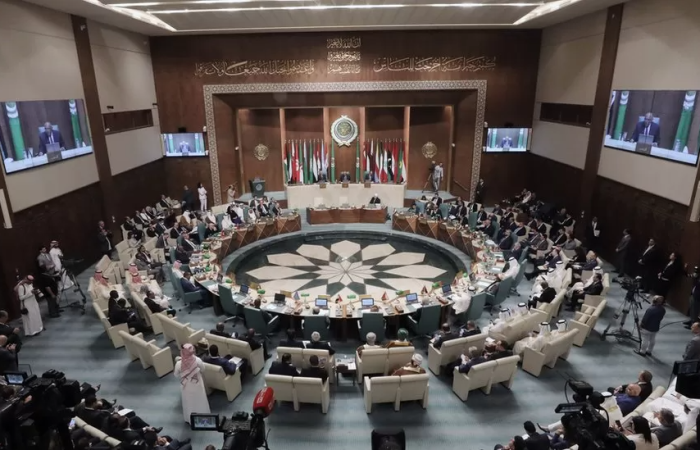
Syria has been readmitted to the Arab League 11 years after its membership was suspended over the government's violent crackdown of pro-democracy protests in 2011 that led to the outbreak of the Syrian Civil War. In a meeting of 13 out of 22 foreign ministers at the Arab League's headquarters in the Egyptian capital Cairo on Sunday (7 May), they agreed to "resume the participation of the delegations of the government of the Syrian Arab Republic in the meetings of the Council of the League of Arab States", according to a statement.  The Arab League Secretary General Ahmed Aboul Gheit also told journalists on Sunday that Syrian President Bashar al-Assad could participate in the upcoming Arab League summit in Saudi Arabia if he is invited and if he wants to attend. In the statement released after the vote to readmit Syria, which was reportedly not unanimous, the Arab League said that the "resolution of the Syria conflict is a step-by-step matter", of which Syria's readmission to the group was only a first step. The statement added that the Arab League supports Syria's territorial integrity and the "withdrawal of all foreign forces" from the country.
Editor's choice
Editorial
Editorial: the moment of truth

Editorial: the moment of truth

"The signing of an agreement – it is still not clear if it will be called a Peace Agreement, or something else – will certainly not mean that all issues between Armenia and Azerbaijan are resolved," writes commonspace.eu in this editorial. "There is also much that still needs to be done to build enough trust and confidence for any agreement to not simply be a piece of paper. But an agreement will certainly be the sign of the end of an era of war and hostilities which has also poisoned the atmosphere between the two neighbouring nations." The foreign ministers of Armenia and Azerbaijan, accompanied by large delegations, were in Washington this week for face to face negotiations on the future relations between their countries. After a hiatus of several months, during which contact was relegated to exchange of emails, the two sides, with some US prodding, on Monday engaged in what many consider to be the most detailed exercise yet in trying to chart the future relations between the two countries.
Editor's choice
News
Armenia and Azerbaijan meet in Washington D.C. for a week of talks

Armenia and Azerbaijan meet in Washington D.C. for a week of talks

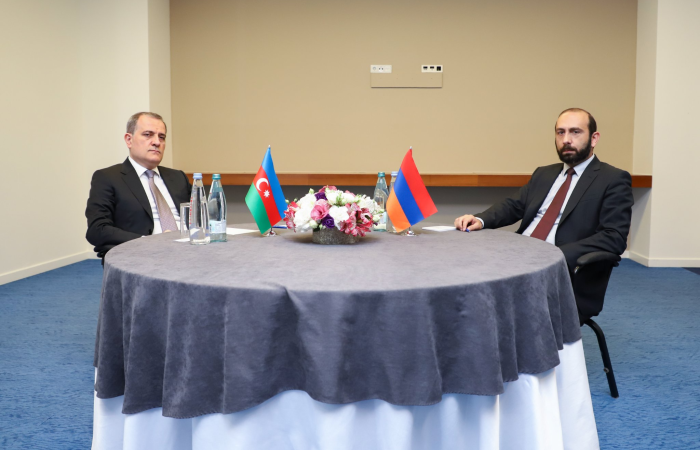
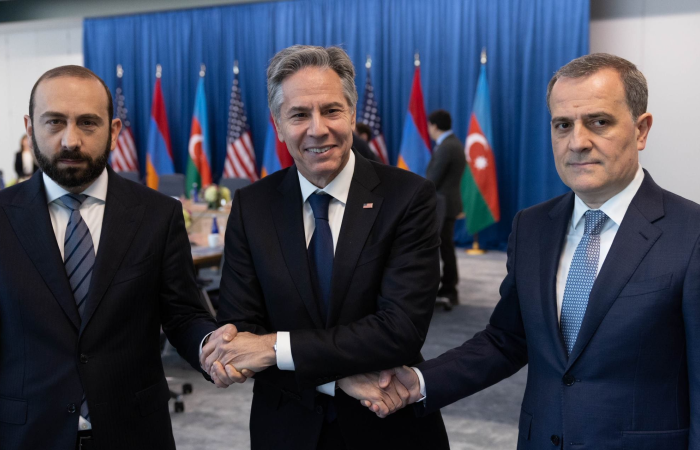
On Monday (1 May) the foreign ministers of Armenia and Azerbaijan met with the US Secretary of State Antony Blinken for the first day of talks understood to be taking place until latest Friday (5 May). AFP have reported that the talks will last four days. Armenian Foreign Minister Ararat Mirzoyan and Azerbaijani Foreign Minister Jeyhun Bayramov, along with their delegations, are meeting at the George P. Schultz National Foreign Affairs Training Center in Arlington, Virginia, a short distance south-west of Washington D.C. Mirzoyan, Bayramov and Blinken are understood to have sat down for negotiations at 09:45 local time yesterday, after both foreign ministers had their own individual meetings with Blinken beforehand. Statements issued by both Armenia and Azerbaijan said that issues of the security situation in the region and the process of normalisation of relations between the two countries were discussed in the meeting hosted by Blinken. Radio Free Europe/Radio Liberty's Armenian Service report that the talks are more aimed at "an agreement on the normalisation of relations" rather than a peace treaty, citing a U.S. official speaking to reporters on the condition of anonymity.
Editor's choice
Opinion
Opinion: The Armenian government needs to communicate better to the public what the EUMA is about

Opinion: The Armenian government needs to communicate better to the public what the EUMA is about

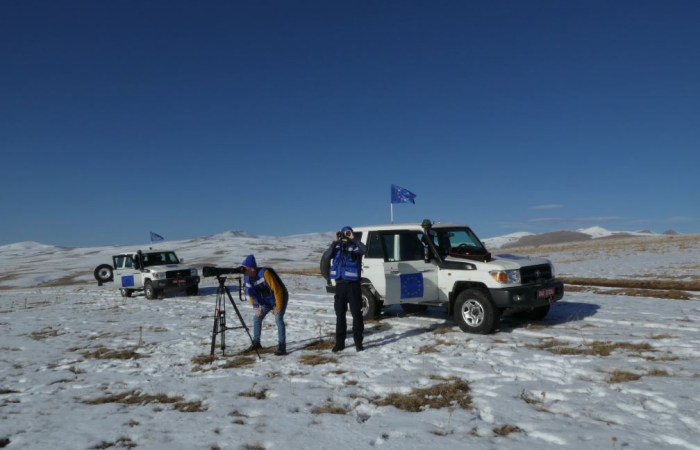
Efficient strategic communication has become necessary in the South Caucasus as the governments of the region and outside regional and global powers vie for influence in the current highly complex geo-political realities. In this op-ed for commonspace.eu Benyamin Poghosyan argues that one for the priorities for the Armenian government is to explain clearly to public opinion what the recently deployed EU Monitoring Mission is and is not about. Otherwise the same disappointment that emerged towards Russia earlier will surely appear as regards the European Union also.