Theme

Diplomacy

Editor's choice
News
Council of Europe launches new International Claims Commission for Ukraine

Council of Europe launches new International Claims Commission for Ukraine

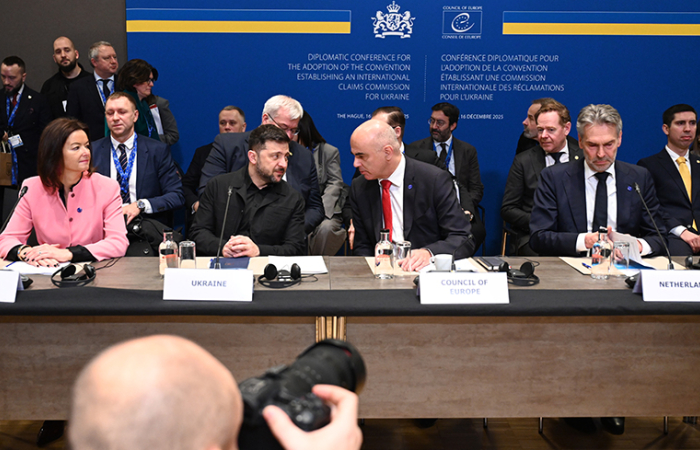
Thirty-four countries and the European Union have signed a new convention establishing an International Claims Commission for Ukraine at a diplomatic conference co-hosted by the 46-nation Council of Europe and the Netherlands in the Hague. The diplomatic conference was attended by leaders and high-level representatives from over 50 states, including the President of Ukraine, Volodymyr Zelenskyy, the President of the Republic of Moldova, Maia Sandu, and the Prime Minister of the Netherlands, Dick Schoof.  “Today marks a major step forward in ensuring accountability for Ukraine. The International Claims Commission represents justice and hope for tens of thousands of victims—our determination that those who have suffered will not be forgotten. I call for quick ratifications so we can get the commission rapidly up and running for the people of Ukraine,” said Council of Europe Secretary General Alain Berset. Ukrainian President Volodymyr Zelenskyy said: “We expect that every mechanism for compensation from the Register of Damage and Claims Commission to the actual payments – will start working and receive strong and sufficient international support, so that people can truly feel that any kind of damage caused by the war can be compensated. This war, and Russia’s responsibility for it, MUST become a clear example – so that others learn not to choose aggression.” “Accountability is about creating the conditions for peace that endures. And therefore, accountability is a condition of security – today and for the future. But accountability is not only about Ukraine. And it is not only about one aggressor and one victim. Accountability is about Europe. About every country in Europe. It is about whether Europe, as a whole, is willing to defend its peace,” said Maia Sandu, President of the Republic of Moldova, which currently holds the Presidency of the Council of Europe’s Committee of Ministers. The Prime Minister of the Netherlands, Dick Schoof, said: “Every day Russia is deliberately bombarding homes, destroying businesses and damaging infrastructure in Ukraine. Russia must compensate Ukraine for the damage caused. That is why we have launched the International Claims Commission for Ukraine and we are honoured to host it.” The International Claims Commission will be the second part of a comprehensive compensation mechanism related to Russia’s war of aggression, building on the existing Register of Damage for Ukraine. The claims commission will be established within the framework of the Council of Europe and will also be open to other countries. The Register of Damage for Ukraine, created in 2023, collects and records compensation claims submitted by individuals, organisations and public bodies in Ukraine. Forty-four states and the European Union have so far joined the Register, which has already received 86,000 claims. The International Claims Commission will review, assess and decide upon claims submitted to the Register of Damage for Ukraine and determine the amount of compensation, if any, which is due in each case. The convention establishing the commission will enter into force once it has been ratified by 25 signatories, as long as sufficient funds have been secured to support its initial work.

Filter archive

Publication date
Editor's choice
News
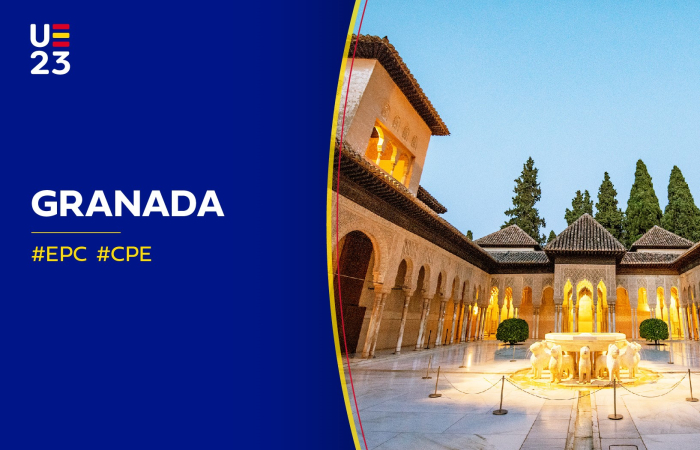
What could have been signed today in Granada?

What could have been signed today in Granada?

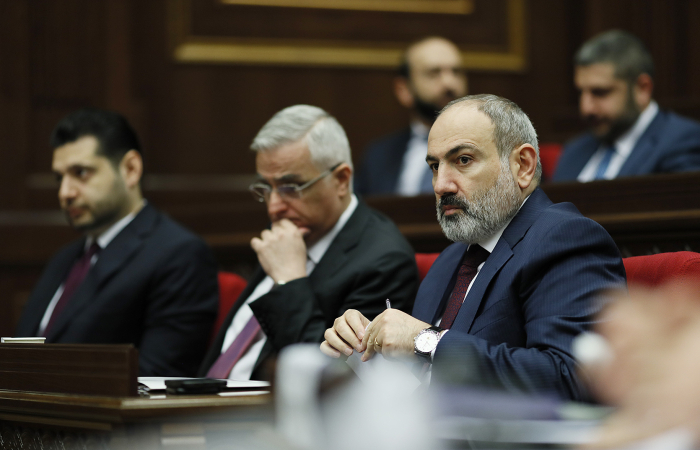
For weeks, expectations were built up that a summit between the leaders of Armenia and Azerbaijan, hosted by European Council president, Charles Michel, French President Emanuel Macron and German Chancellor, Olaf Scholz, scheduled on the margins of the meeting of the European Political Community in Granada, Spain on 5 October, will give a stimulus to the Armenia-Azerbaijan peace process. Just a day before, however, Azerbaijan announced that President Ilham Aliyev will not attend. What could have been agreed in Granada? Speaking in the Armenian parliament on 4 October, Armenian Prime Minister Nikol Pashinyan outlined the points of a document that he said he had hoped could have been signed in Granada the next day had the Azerbaijani leader not cancelled his visit, but which he still felt could be signed at an opportune moment. Pashinyan outlined the three principles as: 1. Armenia and Azerbaijan recognize each other’s territorial integrity, based on the understanding that Armenia territory is 29800 square km while Azerbaijan territory is 86600 square km; 2. The Alma Ata declaration should be the political basis for border delimitation and later demarcation. It is important that before delimitation is made, agreement is reached on which maps delimitation and demarcation will be based on. This should be implemented based on the maps of 1975, but in principle, we may be flexible on this;   3. Restoration of communications of the region should take place based on the principles of sovereignty, laws, equality, and reciprocity of the countries.  
Editor's choice
News
Pashinyan says Armenia is ready to sign peace document

Pashinyan says Armenia is ready to sign peace document

Armenian Prime Minister Nikol Pashinyan, speaking at prime minister's question time in the Armenian parliament on Wednesday (4 October), said that a document now exists which he was ready to sign, that was consistent with the logic of peace and stability in the region. Pashinyan said that he does not want to create a false impression that the document is against the interests of Azerbaijan and completely compatible with the interests of Armenia. "Armenia hopes that the conceptual document will be signed at an opportune moment. I am ready to sign it," he said. Earlier, the prime minister said that he had hoped that the document could have been signed in Granada on the margins of the European Political Community Summit on Thursday (5 October). It now transpires however that Azerbaijan President Ilham Aliyev has refused to attend the summit. Pashinyan said he will attend the summit nonetheless. commonspace.eu political editor said in a comment that it is clear that there is now broad agreement between Armenia and Azerbaijan on at least a general document, which the Armenian prime minister called a "Conceptual Document", which may be the basis for a future, more comprehensive peace treaty. But all the sides are aware of broader sensitivities, and it seems that Russian pressure on Aliyev made him miss an important opportunity to take the peace process forward by signing the document in Granada this week. This is a highly risky gamble since circumstances can change very fast. One therefore hopes that the "opportune moment" mentioned by prime minister Pashinyan will come within days, not weeks.
Editor's choice
Commentary
Commentary: Is this the EU’s last chance to bring peace and reconciliation to Armenia and Azerbaijan?

Commentary: Is this the EU’s last chance to bring peace and reconciliation to Armenia and Azerbaijan?

On the eve of the expected meeting between the leaders of Armenia and Azerbaijan in Granada on Thursday (5 October), on the margins of the gathering of the European Political Community, Brussels' leading think tank, the European Policy Centre, has published a commentary by commonspace.eu Managing Editor and Director of LINKS Europe, Dr Dennis Sammut on the prospects of the EU's initiative to bring lasting peace between Armenia and Azerbaijan. He argues that "the exodus of 100,000 Armenians from Karabakh following the recent Azerbaijani military operation has focused minds. However, as it pursues its peace initiative with Armenia and Azerbaijan, the EU’s primary objective is to get both sides to sign a peace agreement. Going forward, the EU needs to adopt a regional approach as the core of its engagement with the South Caucasus." Given the speed of changes on the ground, there is a risk that the EU peace initiative may run out of steam or become irrelevant since, at this point, Armenia-Azerbaijan relations can take different trajectories. Granada offers the last opportunity for a substantial peace agreement that would, at last, turn the page on an ugly chapter of modern South Caucasus history. It is unlikely that a substantial deal can be signed yet. Still, in Granada, it should become quite clear whether the conditions exist to overcome the final obstacles, with the sides formally recognising each other’s territorial integrity based on the borders stated in the 1991 Almati Declaration, and, eventually, by establishing full diplomatic relations. The EU needs to be strategic in its vision and focused on its approach. Getting an Armenia-Azerbaijan peace deal agreed and signed by the end of the year must now be the priority.
Editor's choice
News
Senior Iranian official called on all parties in the South Caucasus to help establish peace in the region

Senior Iranian official called on all parties in the South Caucasus to help establish peace in the region

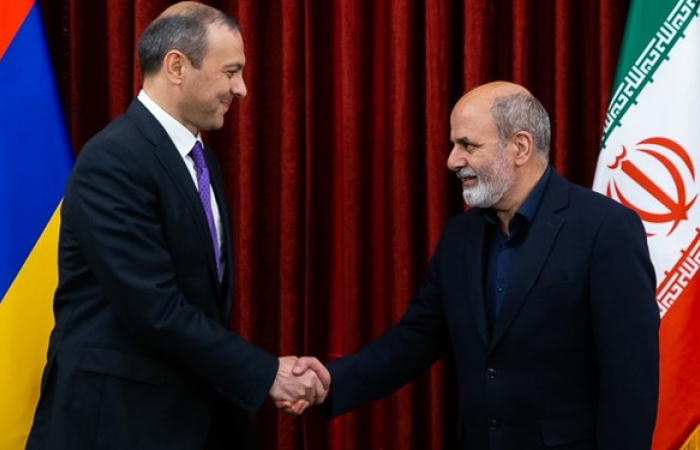
The Secretary of Iran's Supreme National Security Council (SNSC), Ali Akbar Ahmadian, underscored Tehran's firm opposition to geopolitical changes in the region, and warned that any border change will bring about instability and insecurity and aggravate crises. Ahmadian made the comments in a Sunday meeting with Secretary of the National Security Council of Armenia, Armen Grigoryan, in Tehran. The Iranian official pointed to the latest developments in the Caucasus region, and called on all parties to help establish peace in the region. The Iranian FARS news agency said that Ahmadian reaffirmed Iran's principled and unchanging policy on developing relations and interaction with the neighboring states and creating a region free of conflict. "Frank and constructive dialogue among regional countries will prepare the ground for [improving] sustainable security, balanced development and prosperity of the nations in the region," the SNSC secretary stated. Ahmadian voiced Iran's readiness to arrange a meeting among the regional states.
Editor's choice
News
Biden meets C5 leaders to confirm commitment for Central Asian countries security and prosperity

Biden meets C5 leaders to confirm commitment for Central Asian countries security and prosperity

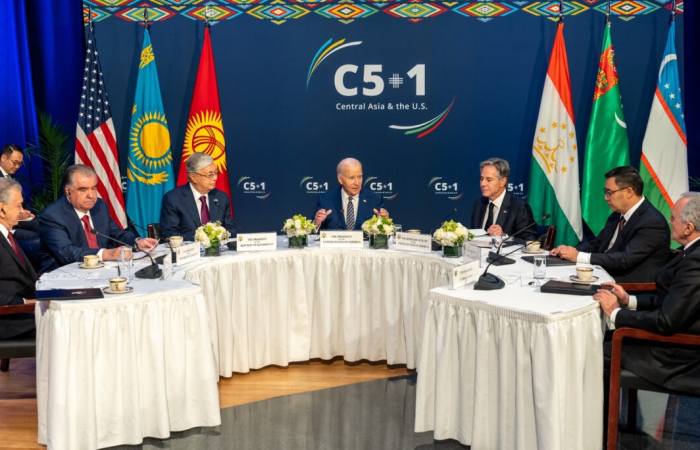
US President, Joe Biden, on Tuesday (19 September) met in New York on the margins of the UN General Assembly, the leaders of the five Central Asian Republics. Attending the meeting were the presidents of Kazakhstan, the Kyrgyz Republic, Tajikistan, Turkmenistan, and Uzbekistan. This was the inaugural C5+1 presidential summit.   A readout from the White House said that the leaders discussed a range of issues, including security, trade and investment, regional connectivity, the need to respect the sovereignty and territorial integrity of all nations, and ongoing reforms to improve governance and the rule of law. 
Editor's choice
News
Biden to meet Central Asian leaders in the first C5+1 presidential summit

Biden to meet Central Asian leaders in the first C5+1 presidential summit

For a number of years, the United States has promoted a mechanism for dialogue with the five Central Asian Republics: Kazakhstan, Kyrgyzstan, Tajikistan, Turkmenistan and Uzbekistan. Known as the C5 + 1 these meetings have usually be en held at the level of foreign minister. The first meeting was held in 2015, and the mechanism now also has a secretariat to ensure continuation between meetings. Today (19 September) in New York, US president Joe Biden will take the relationship further, by upgrading the dialogue to presidential level. This is both symbolic and significant. For a long time the United States has been accused of abandoning Central Asia, tacitly accepting that this was Russia's back yard. Well if it ever was, it no longer is. China has become an even more important player in Central Asia than Russia, and the Central Asian Republics are desperately trying to open up to the world. A slow, painful but hugely necessary process of reform is taking place in the five countries, in some pursued with more enthusiasm than others. At today's meeting, President Biden is expected to give encouragement to this reform process, but the key message will be one of support for the sovereignty, independence and territorial integrity of the five countries - a welcome message in the region given Russia's continued pressures.  Also on the US president's agenda will be Afghanistan, which neighbours a number of the C5 countries. And of course there is the issue of sanctions against Russia as a result of its invasion of Ukraine. Russia has been trying to use the Central Asian republics to circumvent the sanctions. This is an important issue for the international community and the US president will seek the best way to secure the support of the C5 governments.