Theme

Conflict and Peace

Stories related to violent conflicts, diplomatic tensions, and conflict prevention, mediation and resolution.

Editor's choice
News
European leaders set out their plan for Ukraine

European leaders set out their plan for Ukraine

The leaders of Germany, Denmark, Finland, France, Italy, Netherlands, Norway, Poland, Sweden, and United Kingdom, together with the President of the European Council, and the President of the European Commission, o  Monday (15 December) issued a statement, outlining their plan for Ukraine. In their statement, Chancellor Merz, Prime Minister Frederiksen, President Stubb, President Macron, Prime Minister Meloni, Prime Minister Schoof, Prime Minister Støre, Prime Minister Tusk, Prime Minister Kristersson, Prime Minister Starmer, as well as President Costa and President von der Leyen spoke about "Peace for Ukraine". The Leaders welcomed significant progress on President Trump’s efforts to secure a just and lasting peace in Ukraine. They also welcomed the close work between President Zelenskyy’s and President Trump’s teams as well as European teams over the recent days and weeks. They agreed to work together with President Trump and President Zelenskyy to get to a lasting peace which preserves Ukrainian sovereignty and European security. Leaders appreciated the strong convergence between the United States, Ukraine and Europe. Leaders agreed that ensuring the security, sovereignty, and prosperity of Ukraine was integral for wider Euro-Atlantic security. They were clear that Ukraine and its people deserved a prosperous, independent, and sovereign future, free from fear of future Russian aggression. Both the US and European leaders committed to work together to provide robust security guarantees and economic recovery support measures for Ukraine in the context of an agreement on ending the war. This would include commitments to: Provide sustained and significant support to Ukraine to build its armed forces, which should remain at a peacetime level of 800,000 to be able to deter conflict and defend Ukraine’s territory. A European-led ‘multinational force Ukraine’ made up from contributions from willing nations within the framework of the Coalition of the Willing and supported by the US. It will assist in the regeneration of Ukraine’s forces, in securing Ukraine’s skies, and in supporting safer seas, including through operating inside Ukraine. (Click the image to read the statement in full).
Editor's choice
News
NATO Chief says war is on Europe's doorstep, and warns against complacency

NATO Chief says war is on Europe's doorstep, and warns against complacency

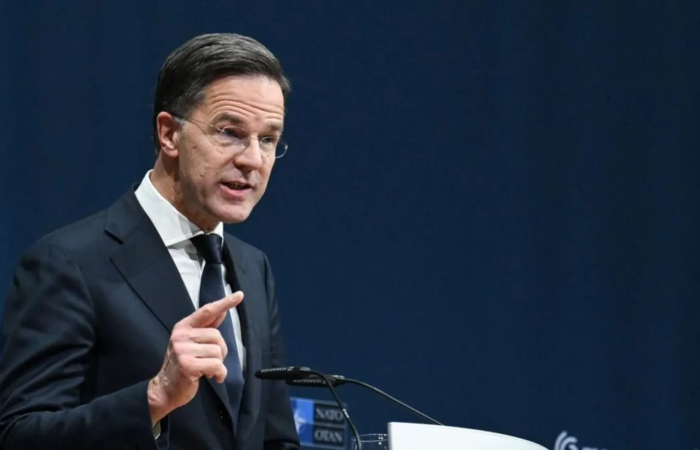
Russia could attack a NATO country within the next five years, the Secretary General of NATO, Mark Rutte, said in a stark new warning. "NATO's own defences can hold for now," Rutte warned in Berlin, but conflict was "next door" to Europe, and he feared "too many are quietly complacent, and too many don't feel the urgency, too many believe that time is on our side. "Russia is already escalating its covert campaign against our societies," Rutte said in a speech in Germany. "We must be prepared for the scale of war our grandparents or great-grandparents endured." Earlier this month, Russia's President Vladimir Putin said his country was not planning to go to war with Europe, but it was ready "right now" if Europe wanted to - or started a war. But similar reassurances were given by Moscow in 2022, just before 200,000 Russian troops crossed the border and invaded Ukraine. Putin has accused European countries of hindering US efforts to bring peace in Ukraine - a reference to the role Ukraine's European allies have recently played in trying to change a US peace plan to end the war, whose initial draft was seen as favouring Russia. But Putin was not sincere, Nato's secretary-general said in the German capital, Berlin. Supporting Ukraine, he added, was a guarantee for European security. "Just imagine if Putin got his way; Ukraine under the boot of Russian occupation, his forces pressing against a longer border with Nato, and the significantly increased risk of an armed attack against us." Russia's economy has been on a war footing for more than three years now - its factories churn out ever more supplies of drones, missiles and artillery shells. According to a recent report by the Kiel Institute for the World Economy, Russia has been producing each month around 150 tanks, 550 infantry fighting vehicles, 120 Lancet drones and more than 50 artillery pieces. The UK, and most of its Western allies, are simply not anywhere near this point. Analysts say it would take years for Western Europe's factories to come close to matching Russia's mass-production of weapons. "Allied defence spending and production must rise rapidly, our armed forces must have what they need to keep us safe," the Nato chief said.

Filter archive

Publication date
Editor's choice
News
UK, Canada, Australia and Portugal recognise Palestinian State; More EU countries are expected to follow in the next days

UK, Canada, Australia and Portugal recognise Palestinian State; More EU countries are expected to follow in the next days

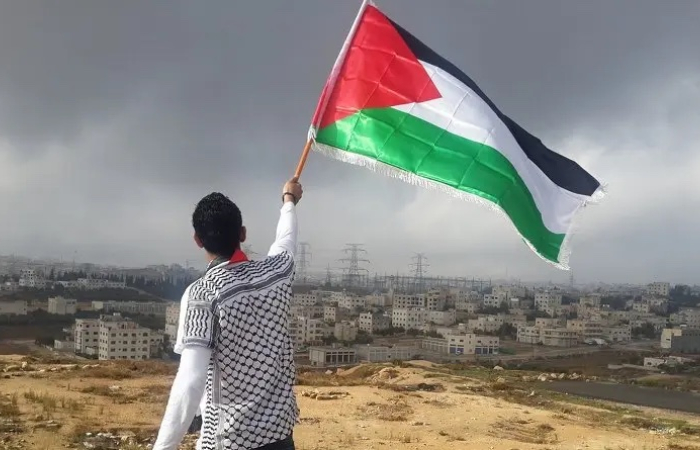
The United Kingdom, Canada, Australia and Portugal, announced on Sunday (21 September) that they were formally recognising the State of Palestine. British prime minister, Sir Keir Starmer, announced the UK's recognition of a Palestinian state, in what represents a significant change in government policy. In a video statement on X, the prime minister said: "In the face of the growing horror in the Middle East we are acting to keep alive the possibility of peace and a two-state solution." Australia, Canada and Portugal also announced formal recognition of the state of Palestine, with France and other EU states expected to follow. Responding on Sunday, Israeli Prime Minister Benjamin Netanyahu said a Palestinian state "will not happen".
Editor's choice
News
US Blocks Again the UN Call for an Immediate Gaza Ceasefire

US Blocks Again the UN Call for an Immediate Gaza Ceasefire

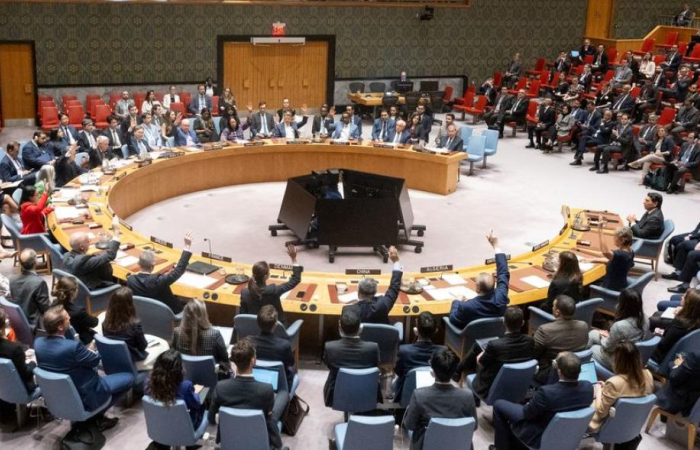
On Thursday (18 September), the United States exercised its veto power at the United Nations Security Council to block a draft resolution that demanded an immediate, unconditional, and permanent ceasefire in Gaza. The resolution also called for the lifting of restrictions on humanitarian aid to the enclave and the unconditional release of all hostages held by Hamas and other groups. Fourteen of the fifteen council members backed the resolution; the US alone opposed it.
Editor's choice
Opinion
The 3+3 Initiative in Retrospect: A Framework Out of Step with Current Realities

The 3+3 Initiative in Retrospect: A Framework Out of Step with Current Realities

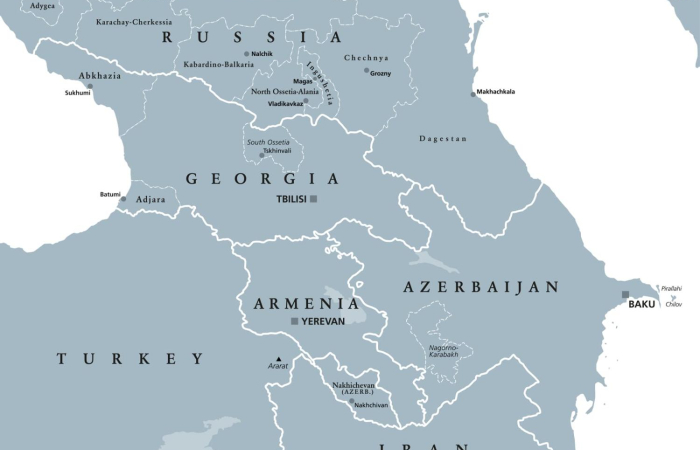
On September 8, 2025, during his address at the Moscow State Institute of International Relations (MGIMO), Russian Foreign Minister Sergey Lavrov discussed the potential revival of the “3+3” format in the South Caucasus while commenting on Russia’s relations with regional countries. He noted that the initiative was initially proposed by Turkey and Azerbaijan and highlighted that it is also supported by Iran, signaling broader regional backing. Lavrov further referenced the trilateral agreement between Azerbaijan, Armenia, and Russia on restoring transport links and welcomed the ongoing process of normalization between Armenia and Turkey.
Editor's choice
Opinion
Symbolism Meets Realpolitik in Armenia-Türkiye Normalization Efforts

Symbolism Meets Realpolitik in Armenia-Türkiye Normalization Efforts

The prospect of peace in the South Caucasus may finally be within reach. Following the high-profile meeting between Armenian Prime Minister Nikol Pashinyan and Azerbaijani President Ilham Aliyev at the White House as facilitated by U.S. President Donald Trump on 8 August, hopes are rising that Yerevan and Baku could soon sign a long-anticipated peace treaty. That breakthrough has already been welcomed internationally, sparking renewed movement on the Armenia–Türkiye track as well. Opening the Armenian-Türkiye border has long been a policy objective for successive governments in Yerevan.
Editor's choice
News
Libya government reaches preliminary accord with powerful armed group

Libya government reaches preliminary accord with powerful armed group

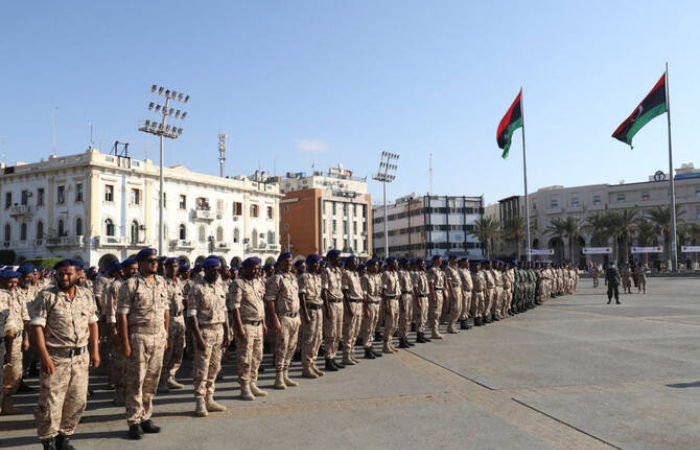
Libya’s UN-recognized government based in Tripoli has reached a preliminary accord with a powerful armed group to end months of tensions that have flared into occasional violence, a government adviser and local media said on Saturday 13 September. Negotiations between the government and the Radaa Force were facilitated by Turkiye, according to the same sources quoted by Arab News. Ziyad Deghem, an adviser to the head of the Presidential Council transitional body, said the details of the accord “will be announced to the public at a later date.” Libyan broadcaster Al-Ahrar on Saturday posted on X a video that it said showed defense ministry forces entering an airport controlled by Radaa.
Editor's choice
News
Gaza Burning: Israel expands military operation and warns residents to leave

Gaza Burning: Israel expands military operation and warns residents to leave

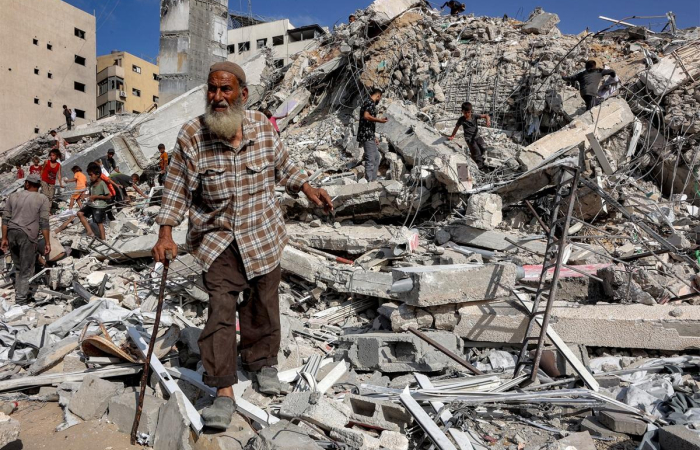
The Israeli military began a ground offensive targeting Gaza city on Tuesday 16 September slowly squeezing in on the Palestinian territory’s largest city that has seen block after block already destroyed in the Israel-Hamas war. Residents still in the city were warned they must leave and head south. The push marks yet another escalation in a conflict that has roiled the Middle East as any potential ceasefire feels even further out of reach despite months of diplomacy. While the military wouldn’t offer a timeline for the offensive, Israeli media outlets suggested it could take months. Earlier in the day, according to Associated Press, Israeli Defense Minister Israel Katz declared that “Gaza is burning” while independent experts commissioned by the United Nations’ Human Rights Council announced that Israel is committing genocide in Gaza, joining a rising international chorus of such accusations.
Editor's choice
News
 UN General Assembly vote highlights Israel's isolation

UN General Assembly vote highlights Israel's isolation

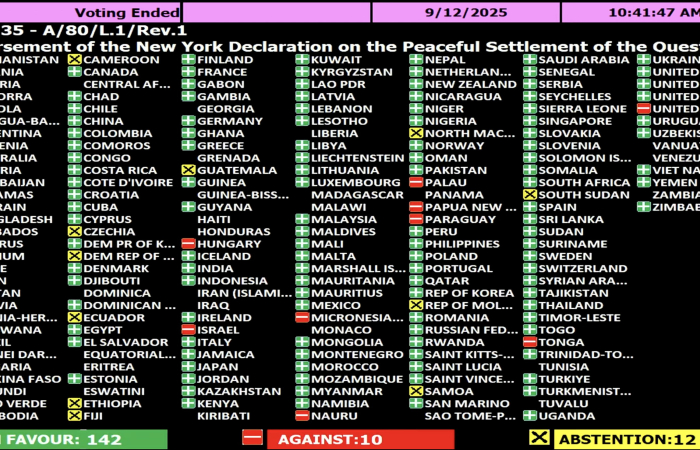
Applause rang out in the UN General Assembly Hall on Friday as countries endorsed a declaration on the peaceful settlement of the question of Palestine and implementation of the two-State solution with Israel.  The New York Declaration is the outcome of an international conference held in July at UN Headquarters, organized by France and Saudi Arabia, which resumes later this month. The General Assembly comprises all 193 UN Member States and 142 countries voted in favour of a resolution backing the document. Israel voted against it, alongside nine other countries – Argentina, Hungary, Micronesia, Nauru, Palau, Papua New Guinea, Paraguay, Tonga and the United States – while 12 nations abstained. The vote highlights the current Israeli international isolation as a result of its current policies. Prior to the vote, French Ambassador Jérôme Bonnafont recalled that the New York Declaration “lays out a single roadmap to deliver the two-State solution”. This involves an immediate ceasefire in Gaza, release of all hostages held there, and the establishment of a Palestinian State that is both viable and sovereign. The roadmap further calls for the disarmament of Hamas and its exclusion from governance in Gaza, normalization between Israel and the Arab countries, as well as collective security guarantees.
Editor's choice
News
NATO States remain on Heightened Alert as Russia and Belarus Launch Military Drills

NATO States remain on Heightened Alert as Russia and Belarus Launch Military Drills

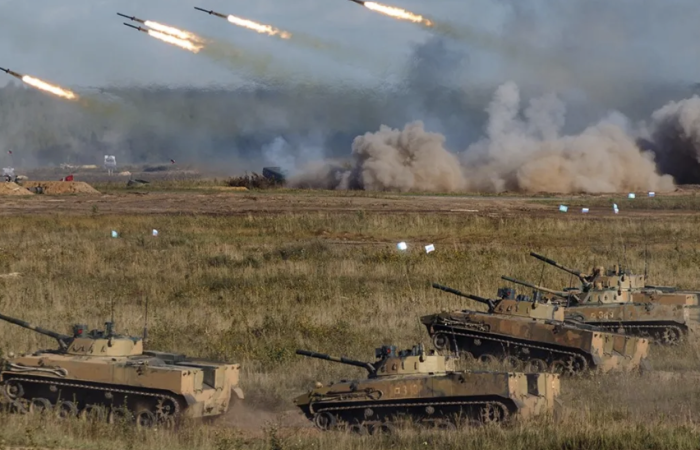
On Friday (12 September), Russia and Belarus commenced large-scale joint military exercises under the name “Zapad 2025,” in operations that have triggered concern among NATO members along the alliance’s eastern frontier. The manoeuvres begin only days after Poland accused Moscow of violating its airspace with an unprecedented number of drones, intensifying tensions across the region. According to the Russian Ministry of Defence, the purpose of Zapad 2025 is to enhance the skills of commanders and staff, improve cooperation, and conduct field training among regional and allied troop groupings. The Kremlin insists the drills were planned well in advance of the drone incident on Wednesday (10 September) involving Poland.