Theme

Conflict and Peace

Stories related to violent conflicts, diplomatic tensions, and conflict prevention, mediation and resolution.

Editor's choice
News
Egypt rejects Israeli "offer" for an exit only Rafah checkpoint in Gaza

Egypt rejects Israeli "offer" for an exit only Rafah checkpoint in Gaza

Egypt has rejected an Israeli "offer" for opening for exit only the Rafah checkpoint in Gaza. According to the Egyptian State Information Service, Egyptian authorities refuted on Wednesday afternoon reports that Israel claims it will open the Rafah crossing, the only lifeline for Gaza to the outside world, but only for those wishing to leave the besieged coastal enclave.  Citing an Egyptian official, the service stated that ''any agreement to open the crossing will cover both entry and exit, in line with US President Donald Trump's plan for humanitarian and political arrangements following the ceasefire.'' Cairo reaffirmed its adherence to the plan and UN Security Council Resolution 2803, including the right of return for Palestinians and maintaining two-way operations at the crossing. Earlier in the day, Israel's Coordinator of Government Activities in the Territories (COGAT) announced that the Rafah crossing would reopen ''within the next few days,'' marking the first such move since February 2025. According to the statement, departures would require prior Israeli security approval and would follow mechanisms previously implemented under EU supervision. Notably, the statement made no mention of the entry of humanitarian aid, which continues to flow through the Kerem Shalom crossing. A Palestinian official also echoed the Egyptian denial of Israel's claim. The announced agreements stress that no Palestinians will be forced to leave Gaza. Those who choose to travel will have the right to return, while humanitarian aid will continue through UN agencies, the International Red Cross and Crescent, and other independent organisations. A European Union official, who requested anonymity and is familiar with the matter, told TNA that the EU has received no official notification from Israel regarding new arrangements, stressing that "no changes exist beyond the January agreements, and we await Israel's formal approval for crossing operations under the Trump plan. "Reopening the crossing will follow mechanisms jointly supervised by the EU and the Palestinian Authority to ensure oversight and transparency, according to the EU official.

Filter archive

Publication date
Editor's choice
Analysis
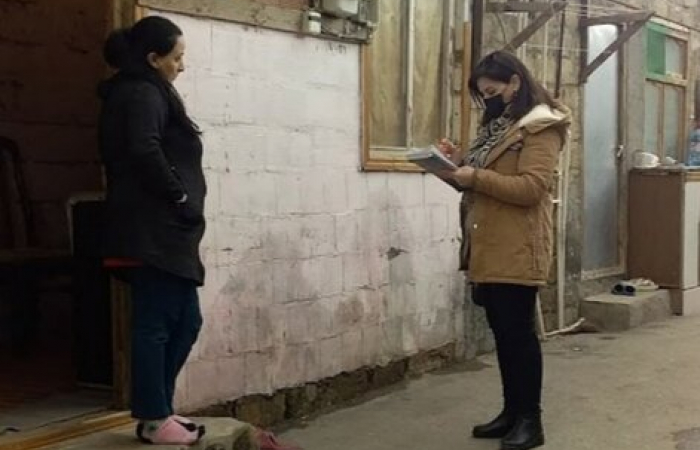
Fear and lack of trust are an obstacle for peaceful co-existence between Armenians and Azerbaijanis in Nagorno-Karabakh

Fear and lack of trust are an obstacle for peaceful co-existence between Armenians and Azerbaijanis in Nagorno-Karabakh

A recent survey of women from the large community of Azerbaijanis displaced by the conflict in Nagorno Karabakh in the 1990s shows that fear and lack of trust are an obstacle for peaceful co-existence between Armenians and Azerbaijanis in Nagorno-Karabakh. The survey is part of a report, “IDP Women: needs assessment for post conflict life, including expectations for safe return home”, prepared by Khalisa Shahverdiyeva on behalf of the Azerbaijani NGO “Women’s empowerment for sustainable development”. Following the 2020 Karabakh war a new situation has emerged which opened the prospect of the return of hundreds of thousands of Azerbaijanis displaced by the fighting in the 1990s to their place of origin, and in many cases to live together or in close proximity with Armenian communities. The survey covered 590 internally displaced women, while 30 more women were interviewed to get a tentative picture of their needs and expectations, including their fears and concerns for peace-building and returning home.  The overwhelming majority (87.55%) of respondents highlighted the necessity of being free from danger as a decisive factor behind their decision to relocate. Consequently, the full-scale clearance of landmines supported by a guarantee of non-resumption of armed hostilities have been underscored as key factors for IDPs’ return home.  
Editor's choice
Opinion
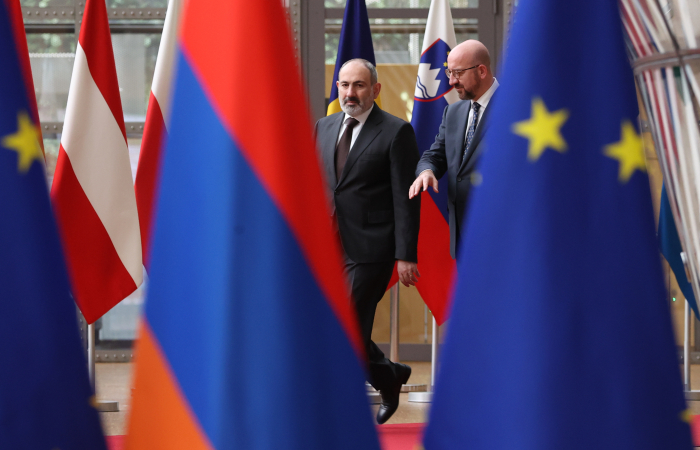
Opinion: Brussels summit has given a new momentum to Armenia-Azerbaijan peace prospects

Opinion: Brussels summit has given a new momentum to Armenia-Azerbaijan peace prospects

"In the days since the Brussels summit of the leaders of Armenia and Azerbaijan on April 6, diplomatic activity around the peace process between the two countries has intensified. In contrast to the first year after the Second Karabakh War, the role of the EU in this context has grown and provides a viable alternative to the Russia-led track in the negotiations", writes Vasif Huseynov in this op-ed. "Against this backdrop, as agreed in Brussels, Armenia and Azerbaijan have launched the preparatory work for a peace treaty which triggered a bilateral phone conversation between the Armenian and Azerbaijani foreign ministers - the first time this happened in recent decades. These developments are not welcome by Russia-aligned revanchist forces in Armenia, separatist groups in Azerbaijani Karabakh, or, to some extent, by Russia."
Editor's choice
News
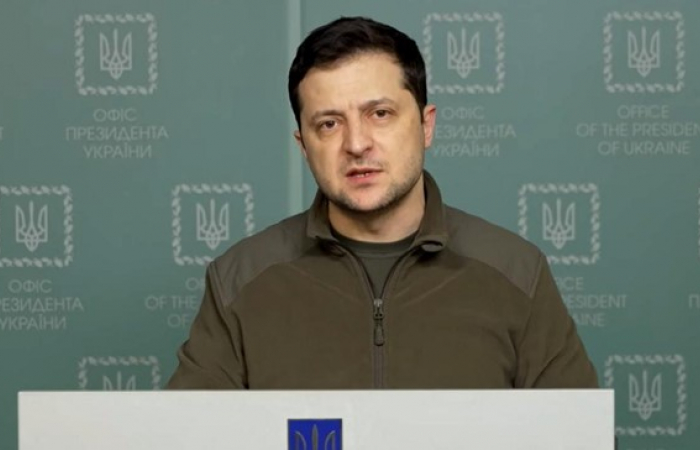
Charles Michel meets Zelensky in Kyiv and visits Borodyanka

Charles Michel meets Zelensky in Kyiv and visits Borodyanka

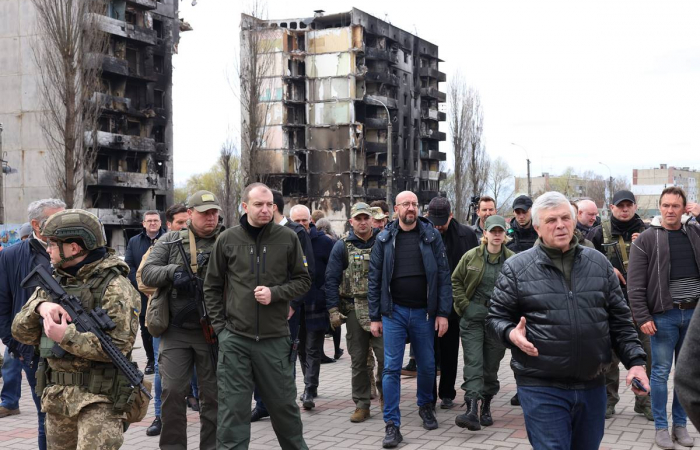
European Council president Charles Michel, who is currently paying a surprise visit to the Ukrainian capital, Kyiv, met on Wednesday with Ukrainian President Volodymyr Zelensky.  Later, Zelensky tweeted: "My valuable friend Charles Michel is in Kyiv today. Sanctions against Russia, defense and financial support for our country, and responses to a survey on compliance with EU criteria have been discussed. I thank for the meaningful meeting and solidarity with the Ukrainian people," said Zelensky. During the course of the day, Michel also visited the town Borodyanka. He said that the situation in the town was the same as in Bucha and many other Ukrainian towns. "History will not forget the war crimes that have been committed here. There can be no peace without justice," he said.
Editor's choice
Opinion
Opinion: Quo Vadis Nagorno-Karabakh?

Opinion: Quo Vadis Nagorno-Karabakh?

Nikol Pashinyan delivered a significant speech to the Armenian parliament last week on the eve of the launch of negotiations on an Armenia-Azerbaijan peace treaty. In this op-ed, Benyamin Poghosyan says that his comments on the future of Nagorno-Karabakh sent shock waves across society in Armenia and in Nagorno-Karabakh itself. Poghosyan argues that if Russia manages to keep its influence in the post-soviet space after the Ukraine war, it will probably come to an agreement with Azerbaijan and keep its troops in Karabakh after 2025, extending “de - jure Azerbaijan de - facto Russia” status for Nagorno Karabakh beyond 2025, and securing the presence of Armenians in Karabakh. However, if the war in Ukraine makes Russia significantly weaker in the post-soviet space, Azerbaijan may use the peace treaty with Armenia to force Russian troops out of Karabakh successfully. In that case, no international guarantees or promises of Azerbaijan will prevent the rapid exodus of Armenians from Karabakh.   
Editor's choice
News
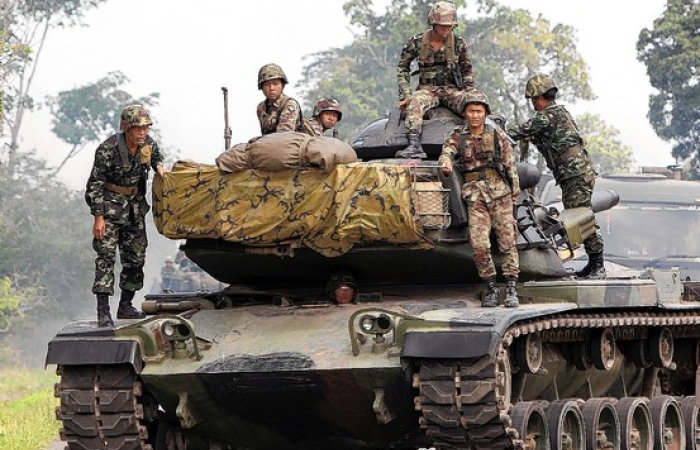
Germany ponders its future role in the Sahel

Germany ponders its future role in the Sahel

Germany’s minister of foreign affairs Annalena Baerbock is visiting the Sahel ahead of a government decision on extending the Bundeswehr’s mission in the region. Amidst renewed political instability and terrorist activity in the Sahel, Baerbock must decide whether German troops will continue their commitment to MINUSMA - the UN peacekeeping mission in the region – and the EUTM, the European Union Training Mission. 300 German soldiers participate in the EUTM mission in Mali, while approximately 1000 soldiers are stationed there as part of MINUSMA. However, beyond the terrorist threat in the region, which has already caused 2.1 million internal displacements in the past 8 years according to the UN, it is the war in Ukraine which could have the most direct repercussions in West Africa. Ukraine, the world’s fifth-largest exporter of wheat, is currently incapable of delivering wheat flour to the Sahel region, causing food insecurity for millions of people.
Editor's choice
News
Pashinyan: "The peace agenda has no alternative for us, despite all the difficulties and hardships"

Pashinyan: "The peace agenda has no alternative for us, despite all the difficulties and hardships"

In a historic speech in front of parliament, Armenian prime minister Nikol Pashinyan on Wednesday (13 April) analysed the options in front of Armenia as it prepares to enter into negotiations with Azerbaijan on the signing of a peace agreement. In his speech Pashinyan spoke at length and in detail about the dilemmas he faced before the 44 day Karabakh war as to whether or not to make concessions and return territories to Azerbaijan. Pashinyan admitted that his mistake was not to recognise the inevitability of doing so, and to having, like previous Armenian leaders, succumbed to the Armenian narrative of the situation around Nagorno-Karabakh. In his speech Pashinyan hinted that Armenia may now be ready to recognise the territorial integrity of Azerbaijan as had been requested by Azerbaijan as a precondition for starting the negotiations on a peace treaty, saying that de jure it had done so in 1992. EU Special Representative for the South Caucasus, Toivo Klaar, in a tweet described the speech of the Armenian prime minister as "forward looking". He added that "many challenges remain on the road to a comprehensive settlement but it is important to move forward". Klaar added that Armenia has the EU's support in the search for just peace.