This problem is one of the items on the agenda of the Russian-EU summit in Brussels today. Russian Representative to the EU Vladimir Chizhov warned the other day that the Israeli or American strike at Iran would result in "catastrophic consequences" and pointed out that these consequences would affect more than the region in question alone, WPS: What the Papers Say writes. (It was actually recently that Russia started putting Europe and the international community in general under diplomatic pressure on the subject of a possible war in Iran and its corollaries. It all started with publication of a report on the Iranian nuclear program by the IAEA in November.)
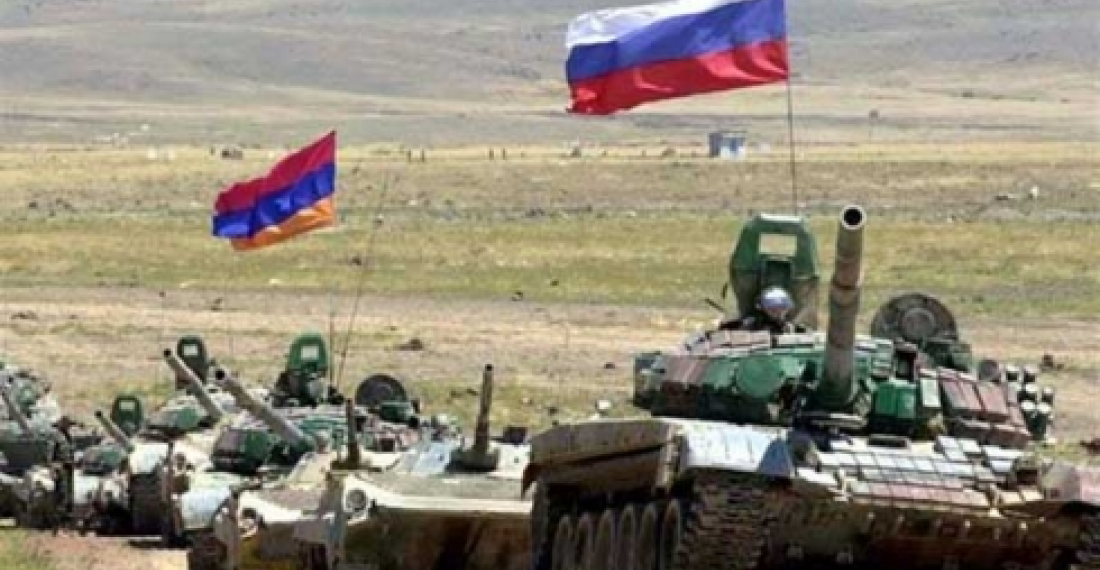
Military preparations for minimization of the damage expected from the hostilities against Iran began in Russia more than a year ago. Fortunately, nearly everything has been done already. Sources within the Defense Ministry claim that the 102nd Military Base in Armenia was optimized in October and November 2011. Families of servicemen were flown to Russia, the garrison posted near Yerevan was reduced and moved to Gyumri closer to the Turkish border. It is from the territory of Turkey that the Americans might pounce. Exactly what tasks the 102nd Base will have to tackle in connection with it is not clear at this point. The Russian troops in South Ossetia and Abkhazia have been on an alert since December 1. Surface combatants of the Black Sea Fleet are on station not far from the coast of Georgia that might side up with the anti-Iranian forces in this conflict.
A battery of Bal-E coast defense missile complexes (their range is 130 kilometers) was put on an alert in Izberbash, Dagestan, right near the Azerbaijani border. All missile boats of the Caspian Flotilla were moved from Astrakhan to Makhachkala and Kaspiisk. It is known that the missiles they carry have the range of up to 200 kilometers.
Ships of the Northern Fleet under the command of the flagship Admiral Kuznetsov, Russia's only aircraft-carrier, are already steaming to the Mediterranean. At least the flagship is scheduled to make a stop in Tartus, Syria. Sources within the Defense Ministry neither confirm nor deny the rumors that nuclear submarine accompany the group of ships on this sortie. No official information is given on the tasks the Army and Navy will have to perform in the event of a war on Iran. The impression is that the Defense Ministry is worried about the 102nd Base in Armenia, Russia's bulwark in the Caucasus. The Kremlin apparently fears that the base might stop being a geopolitical asset. Should the Americans and their Israeli allies go to war on Iran, this loss of a geopolitical asset in the Caucasus will spell a catastrophe for Russia.
This April, Georgia annulled the treaty that permitted Russian military transit to Armenia. The Russian-Armenian military group in the Caucasus is as good as isolated at this point. Fuel, food, and whatever else the Russian contingent needs have to be airlifted there. A war in Iran will make this route unavailable.
Formerly second-in-command of the Russian army group in the Caucasus, Lieutenant General Yuri Netkachev said that a war in Iran would force Russia to start looking for a supply route to its contingent in Armenia via Georgia. "We may even find it necessary to break through the Georgian blockade and have the transport corridors connecting us and Armenia protected by the military," said Netkachev.
The head of the Center of Political forecasts Anatoly Tsyganok said, "Russia is quite suspicious and wary of Azerbaijan these days. This country doubled its military budget in the last three years. It never gives a thought to the concerns of Iran and Armenia that are clearly upset by the Azerbaijani penchant for buying unmanned reconnaissance craft and other sophisticated weapons from Israel... Baku even put Russia under additional pressure insisting on a higher pay for the use of the Gabala radar. And yet, I would not go so far as to suggest with any degree of certainty that Baku will necessarily back a military campaign against Iran... even despite the disputes between Iran and Azerbaijan over oil fields in the southern part of the Caspian Sea. That Azerbaijan will go to war on Armenia is unlikely as well."
Military expert Colonel Vladimir Popov disagreed with Tsyganok. (An expert on the Armenian-Azerbaijani conflict in 1991-1993, Popov is also an authority of the military reforms carried out by President of Azerbaijan Ilham Aliyev.) Popov said, "The Nagorno- Karabakh conflict resolution talks are taking way too long. Revanchist statements are openly made in Baku. I reckon that the Azerbaijanis might strike at Armenia and Nagorno-Karabakh in an attempt to reclaim the runaway province and finally settle the territorial dispute." The expert said that a good deal would depend on Russia's behavior. "Should Azerbaijan backed by Turkey use the war on Iran as a distraction for its own little war on Armenia, Russia and the Armenian antiaircraft forces will provide air cover for all of Armenia. There is no saying at this point whether or not it might be regarded as participation in the hostilities. That the Russian army is not going to participate in the hostilities on the territory of Karabakh need not be said. Still, the Russian military will probably have to fight in Armenia itself, whenever they themselves are threatened."
As a matter of fact, Popov even allowed for the possibility of Russian participation in the conflict in Iran. "Should it come to that... should the fall of the Iranian regime become imminent, Russia will offer it military aid. At least on the military-technical level," said Popov.
Russia Prepares An Adequate Answer To Potential American And Israeli Strikes At Iran
Russia Prepares An Adequate Answer To Potential American And Israeli Strikes At Iran