This is a commentary by the political editor of commonspace.eu
Relations between Azerbaijan and Russia appear to have hit an uncharacteristically low point this week.
On Tuesday (16 May), members of the Azerbaijan parliament lined up to criticise Russia following a decision by a Moscow court to accept a government request to force the closure of VAK (the All-Russia Azerbaijani Congress) - an organisation that represents the Azerbaijani diaspora in Russia, and which often also acts as a lobbying group for Azerbaijan.
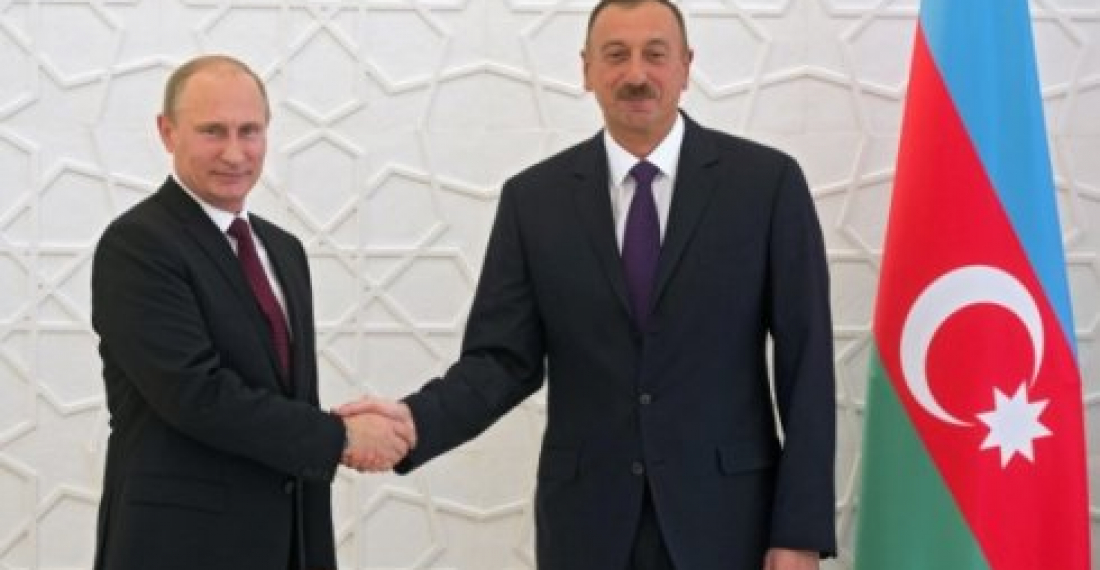
Public criticism of Russia in Azerbaijan since president Ilham Aliyev came to power in 2003 has been rare, and usually limited to issues related to the Karabakh conflict. The two sides claim that they share a strategic relationship, and President Putin has visited Baku several times in recent years in an effort to cement ties. Problems were usually dealt with in private. It seems however that now the gloves are off, and whilst the tone of the criticism of the last days varied, the messages from both government quarters and parliament were equally forceful.
The Azerbaijani foreign ministry described the decision as "a source of great regret and surprise". Hikmat Hadjiev, the Ministry spokesperson, in an uncharacteristically long and detailed comment, said that VAK "took an active part in the socio-political life of Russia, played an effective role in the diversification of Azerbaijan-Russia ties, and in the development of interregional cooperation". Hajiyev recalled that representatives of the Congress were repeatedly awarded by the highest leadership of Russia.
"The All-Russian Azerbaijani Congress existed as an organization uniting other numerous ethnic and national minorities living in Russia. The Congress was established as a non-governmental organization on the basis of the laws of Russia and in accordance with them. Along with the Congress, there are non-governmental organizations-such as the Union of Armenians of Russia-in Russia that unite various ethnic and national groups. As regards non-governmental organizations of national minorities in the political arena, we regard such discrimination against the Congress as an unfriendly step," said Hajiyev.
The spokesman said he believes this approach will not serve the balance of interethnic relations in Russia, the concept of reforms conducted in the country, and the strengthening of intercultural dialogue, and furthermore will not hav a positive impact on Azerbaijan-Russia ties.
"In this step, we see a manifestation of ethnic discrimination and bias towards people who are citizens of Russia. Of course, if we come to the conclusion that the Armenian Diaspora has such a strong influence on Russia's domestic and foreign policy that they can influence Russian policy in this way, then, undoubtedly, this kind of threat to the prospects for the development of Azerbaijan-Russia interstate relations causes us regret," he added.
There was also in Hadjiev's comments a hint of a threat. "The Russian Federation, as one of the main mediators in the negotiation process for a peaceful settlement of the Armenia-Azerbaijan Nagorno-Karabakh conflict for years, has made important commitments. Conscientious fulfillment of these obligations at the same time requires that the balance of relations be maintained over the issue of settling interethnic relations and the principle of justice not be violated. The liquidation of the VAK and full support for the Union of Armenians of Russia can be perceived as a manifestation of an imbalance in relation to Russian citizens of Armenian and Azerbaijani nationalities, which can negatively affect Russia's mediatory role in the settlement of the Armenia-Azerbaijan Nagorno-Karabakh conflict," he concluded.
But whilst Hadjiev stuck to diplomatic nicities, in the Milli Meclis the MPs did not mince their words. The attack was led by Siyavoush Novruzov, a senior MP and one of the top leaders of the ruling YAP party. Speaking at a parliamentary meeting on Tuesday, Novruzov noted with regret that some people in Russia rely more on their personal interests than national interests, the news agency APA reported.
He said that Azerbaijan-Russia relations are already damaged. "Immediate actions must be taken in this regard. We have been pressurized many times by international circles because of Russia. However, we have never acted against Russia's interests," said the MP but he said urged parliament on this occasion to take a position.
"What does this mean? Has Russia no bigger problems to deal with then the All-Russian Azerbaijani Congress? There are a lot of Russian kindergartens, schools and centres in Azerbaijan. As chairman of the parliament's Committee on public unions and religious organizations, I will officially appeal to relevant bodies of Azerbaijan to submit reports on availability of documents of the Russian centres and communities in the country", he added, in a not so subtle threat.
Can the closing down of one NGO spoil a relationship that both sides have on many occasions described as strategic. Some observers think that there is much more to this than simply the closure of the VAK organisation. Whilst speaking on the issue in parliament on Tuesday, Gudrat Hasanguliyev an MP who while officially not part of the ruling party, often delivers important messages from the government, called for "an investigation into Russia's involvement in the activity of a provocative group identified among Azerbaijani military". Hasanguliev was speaking on the case of dozens of mid ranking military officers that last week were arrested on suspicion of espionage. Whilst initially it was thought they were suspected of spying for Armenia, later reports suggested they were in fact working for Russia.
"Now not only Armenian, but also Russian military are against the Azerbaijani army. The presidential election will be held in Azerbaijan next year. As before and this time before the presidential election, Russia is intensifying its pressure and provocations against Azerbaijan," added Hasanguliyev in his address to fellow parliamentarians.
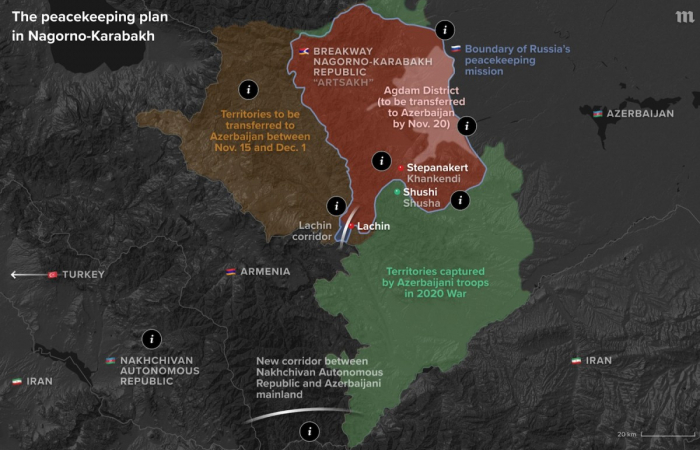
Underlying all this is also widespread Azerbaijani dissapointment that Russia failed in its efforts to deliver progress in the negotiations on Nagorno-Karabakh, as had been widely expected last year.
It is likely that sooner or later President Putin will try to intervene to mend fences with Baku. Over the last years he has invested a lot of time building relations with his Azerbaijani counterpart whilst nurturing relations also with the former communist nomenklatua, many of which remain positive towards Russia.
But some sections of the Azerbaijan ruling elite have traditionally had misgivings on Russia, and the latest developments only re-enforce their concerns. The issue therefore is likely to continue to unfold over the next days and weeks, and in ways that may not be fully predictable.
Source: commonspace.eu