For the last thirty years, the region of the Caucasus has been associated with war and conflict. From the dying days of the USSR, right through the whole post-independence period to the present day, it has seen conflicts that have touched all the countries of the region, and most communities large and small. The conflicts have taken a heavy toll, both in terms of deaths and human suffering, as well as in economic costs resulting both from the destruction of war, and the consequences of closed borders.
The recent Karabakh war is just the latest in a long list of flashpoints, including wars in Chechnya, conflicts in Georgia and between Georgia and Russia, and previous conflicts between Armenians and Azerbaijanis. Peace has been elusive and appears to remain so. Lulls between fighting sometimes offer some respite from the violence, but real peace remains absent. It is now needed more than ever.
The crossroads between peace and the next generation of wars
Despite the fact that peace has been by and large absent for the entire period, the situation has not been static. The post-Soviet order is mutating into a different reality which has been brought about by the use of force rather than through dialogue and negotiations. Thus, the 2008 Georgia-Russia War and the 2020 second Karabakh War created new realities as a result of violent conflict. For some, it is justice restored; for others it’s a forced reality that remains unacceptable. What is clear is that this new reality is not peace.
Frontiers, borders and territorial integrity
Many of the problems of the region are related to violent secession, even if in the North Caucasus that quickly transformed into a jihadist struggle. The Soviet Union may have dissolved peacefully, but in the Caucasus subentities within the Soviet republics also wanted to break off, and in the absence of a political process, did so violently. Peaceful efforts to reverse this have failed. The message from Azerbaijan in the recent conflict with Armenia was that if you want to restore your territorial integrity, you have to fight for it. So far, the current government in Georgia has resisted the temptation to follow suit, perhaps it is still reeling from the unsuccessful attempt of a previous Georgian government to restore territorial integrity in 2008 by force, which ended in disaster. Azerbaijan says that it waited for 28 years for the international community to solve its problem through a political and diplomatic process and only acted militarily as a last resort.
The 10 November declaration
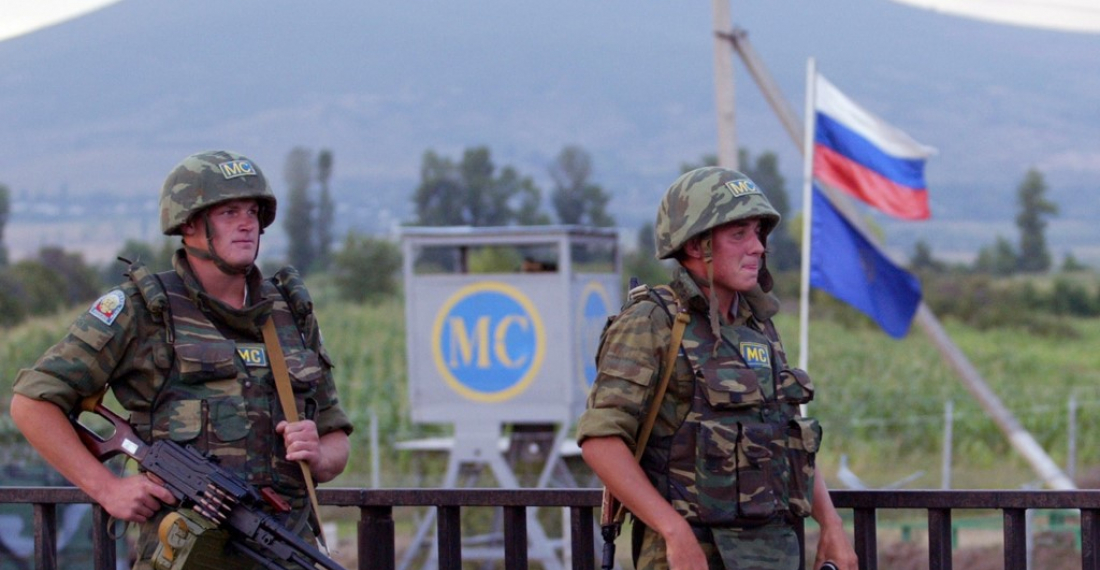
The tripartite declaration signed by the leaders of Armenia, Azerbaijan and Russia on the night 9-10 November 2020 has been rightly described as a game changer in the region. It brought an end to the second Karabakh War and established some parameters for the post-war settlement based on the reality that Armenia had been soundly defeated in the war. It envisaged the opening of transport corridors through what have been up to now war zones. It also brought the Russians back to the centre of the South Caucasus as the protector of the truncated Armenian statelet in Karabakh, and arbiter of last resort on all matters between Armenians and Azerbaijanis. This was very much a Russian solution based on a longstanding Russian assertion that when it comes to the Caucasus, they know best.
Regardless of other considerations one has to recognise the huge effort and resources that the Russians put, and are still putting, into this process. President Vladimir Putin himself has spent a huge amount of time on this issue because he genuinely believes that this is highly important for Russia. He also wanted to make sure that the process will contribute to a central Russian ambition in the Caucasus – the exclusion from the region of the United States and the European Union. “Pax Putin” is, however, far from being a genuine peace on which the future of the Caucasus region can be built. Since the 10 November declaration, Armenia-Azerbaijan relations have remained hostile. Armenia is for the moment in no state to challenge the declaration, and the two sides are currently embroiled in trying to disengage. Two months after the fighting stopped, there are still prisoners of war to be exchanged and bodies to be buried. Defining the border is a laborious process, which is likely to take years and is bound to cause controversy in the future. In the meantime, Baku and Yerevan continue exchanging insults and accusations, making it clear that whatever the current status quo is, it is certainly not peace. Both President Putin and President Aliyev have declared that there is no longer a Karabakh conflict – a view not shared by the Armenians. No one has yet claimed however that there is peace in Karabakh.
Some observers have suggested that after the 10 November declaration, the South Caucasus has now entered another period of no war, no peace; there will continue to be low intensity violence; there will be some co-operation across the different lines of interest, but these will be low intensity too; and the Russians will be there for a long time to oversee this latest iteration of relations in the South Caucasus.
Russian hegemony cannot be mistaken for peace
Russian hegemony now extends across the South Caucasus more than any time since the 1991 collapse of the USSR. The only part spared is Georgia – of course less Abkhazia and South Ossetia, the two break-away entities that are now de facto Russian protectorates. In this scenario Georgia’s position is now starting to appear precarious.
This Russian hegemony, however, will not be unchallenged. In both Armenia and Azerbaijan there are many who share concerns about Russia’s new role in the region. Turkey and Iran, the other two local powers, may have a common language with Moscow, but they too will not want to see the region under Russian hegemony and will in different ways in the future challenge it.
But the big question is whether the West, namely the US and the EU, will accept the “Pax Putin” and the Russian hegemony that ensues from it.
It is likely that they will not, even though their response so far has been muddled, and the reaction to the 10 November declaration muted. Washington has been too busy tied up with its own affairs, and Brussels got into a tangle as to what extent it delegates its responsibilities in the region to Paris – the European co-chair of the OSCE Minsk process. However, going forward we are likely to see a more co-ordinated and robust response as the transatlantic relationship recalibrates after 20 January.
Time for the European Union to step up
The West, and the European Union in particular, needs to step up its political engagement with the South Caucasus.
Going forward, several things need to happen:
- Putin must not be allowed to complete his grand scheme in the Caucasus, and this entails the EU and NATO embracing Georgia, and yes, offering a membership perspective.
- The 10 November arrangements needs to be brought within a multilateral framework – either through a UN Security Council resolution, or through the OSCE. This may mean acquiescing formally to Russia’s new role, but with some level of oversight by the international community.
- Azerbaijan has emerged from the autumn war confidant and emboldened. The West needs to engage with Azerbaijan and not try to isolate it. There are problems in this relationship, but there are also a raft of issues – from security to energy, from radicalisation to connectivity – where a common interest exists and which create the basis for taking the relationship forward. It is time for this relationship to develop and flourish.
- Armenia on the other hand has emerged from the Autumn hostilities weak and defeated. It is in everyone’s interest that Armenia develops into a successful and prosperous country. To do so it needs the international community to support it. However, the basis for doing so must not be the lobbying of diaspora communities and their influence on voting patterns here and there, but on a strategic understanding of what the Caucasus region should look like in the future. The ongoing political crisis within Armenia has risks for all, but so far, the constitutional order has been respected, and this must remain the case. Armenia must be assisted to develop in tandem as it normalises its relations with its neighbours.
- A Western approach to the Caucasus region needs to be ambitious and comprehensive. The Russians will not like it, and will try to make it fail, but in the end, they may also see the benefit of having true peace in the Caucasus, and the region not the centre of conflict, but a commercial and communication hub interconnecting Europe, Eurasia and the Middle East for the benefit of all.
- The West must prepare a major diplomatic initiative to address the future of the Caucasus, working with local partners and regional powers. It will take time to get everyone to agree, but it is only through such a comprehensive political dialogue that the vicious cycle of violence in the Caucasus can be broken.
source: Dennis Sammut is the Director of LINKS Europe and Managing Editor of commonspace.eu
Photo: Russian troops were deployed to the Karabakh conflict zone as a result of the 10 November 2020 trilateral declaration (archive picture)
The views expressed in opinion pieces and commentaries do not necessarily reflect the position of commonspace.eu or its partners