Former Armenian president Robert Kocharyan has emerged as the strongest challenger to prime minister Nikol Pashinyan in Armenian’s forthcoming parliamentary elections. However, as Benyamin Poghosyan argues in this op-ed, most voters are simply motivated by their hate of one or the other.
Armenia is looking forward to the snap parliamentary elections scheduled for June 20, 2021. According to the preliminary agreement between the ruling "My step" faction and the two parliamentary opposition parties, prime minister Nikol Pashinyan will resign at the end of April, beginning of May; Parliament will not elect a new prime minister twice; and will thereafter be automatically dissolved as provided for by the Armenian constitution. The procedure will be identical to what happened in Armenia in autumn 2018. Back then, Pashinyan again resigned, Parliament was dissolved, and as a result of the December 2018 snap parliamentary elections, the Pashinyan team won an absolute majority in the Parliament – 88 MPs from 132. However, the procedure is the only thing that remains the same. Everything else has changed dramatically.
Pashinyan was at the height of his popularity back in October 2018. The absolute majority of the population was still celebrating the demise of corrupted elites following the "Velvet revolution". Many were sure that the Armenian Government would soon implement its promises, return all stolen assets, and pay the entire Armenian state debt – 7 billion USD. The transformation from the soft authoritarian state into the new beacon of democracy in the post–Soviet world would quickly make Armenia the land of dreams for western investors. Everyone anticipated billions of Euros and USDs pouring into Armenia, both as investments and as EU and US support towards a democratising Armenia. This perception was based on the significant Western financial support to Georgia in the aftermath of the "Rose revolution", and a general understanding that Western investors are dreaming about putting money into those states that have a clear reform agenda.
The population had very bright expectations regarding the future of the Karabakh conflict resolution process. Armenia now was a democracy, and the only state which organised a democratic revolution whilst being within the Russian sphere of influence. Thus, the West would never allow authoritarian Azerbaijan to attack democratic Armenia, and in case of such an attack, harsh EU and US sanctions would be imposed on Azerbaijan immediately.
In general, large portions of the Armenian population were in a state of euphoria, living in a dream. A corrupted and criminal regime was destroyed without a single shot, and the new saviour of the nation – Mr. Pashinyan, an opposition journalist turned politician – was going to lead Armenia to a bright future.
As a result of this euphoria, the "My step" faction received 70 percent of the vote during the December 2018 snap parliamentary elections. Voters were not concerned that they knew almost nothing about the absolute majority of the newly elected MPs. They were supporters of Mr. Pashinyan – and that fact was enough for the absolute majority of the population. Thus, starting from January 2019, Pashinyan, who was again elected as Prime Minister by the new Parliament, has enjoyed absolute and uncontested power in Armenia. The new Armenian constitution provides significant authority to the Prime Minister, and the constitutional majority in the Parliament made Pashinyan's power absolute. He was able to appoint and dismiss everyone to and from any position, to change rules, and even to amend the constitution, as was the case in June 2020, when the National Assembly amended the constitution to fire three judges and the chairman of the Constitutional Court and appoint new ones.
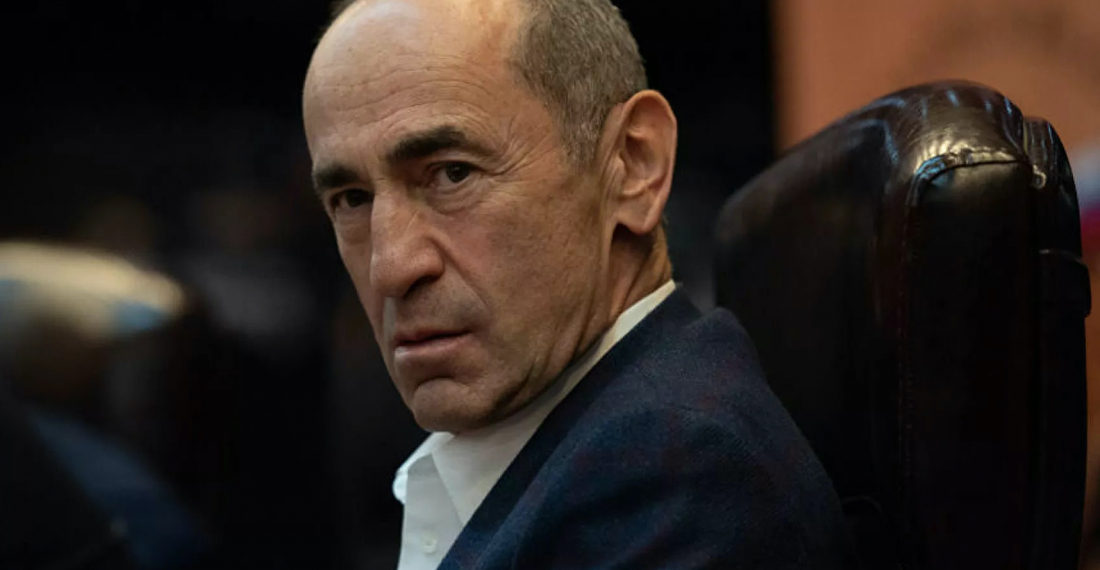
However, Armenia's humiliating defeat during the 2020 Karabakh war; growing concerns about government actions/inactions prior, during, and after the war; a deepening economic crisis with currency depreciation; and a significant increase in food prices, have significantly weakened Pashinyan's positions. According to the recent sociological surveys, Pashinyan's party "Civic Contract" may receive no more than 30 percent of the votes in the upcoming elections, and this number may decrease further. "Civic Contract" may still receive the most votes, since due to the political upheaval of 2018 and the staggering defeat in the war, many have lost any confidence in politics and politicians. Most probably, the key opponent of Pashinyan will be Armenia’s second President, Robert Kocharyan, who may unite all forces who believe that Pashinyan is a traitor. A coalition united around Kocharyan may receive up to 20 percent of votes, while "Prosperous Armenia" and "Bright Armenia" parties may pass the threshold of 5 percent and enter the Parliament.
In this election, the biggest motivation for voters will be not love, but hate. Who hates Pashinyan more than anyone else may vote for Kocharyan, while those who hate Kocharyan more, may vote for Pashinyan.
However, regardless of the final results of the elections, Pashinyan will probably not secure a majority in the Parliament and will not be able to form another one-party government. He has zero chances to have a constitutional majority in the Parliament, as has been the case since the December 2018 elections. It means that he will not enjoy the same level of uncontested, absolute power, which he had in the last two years. The best-case scenario for him is the formation of a one-party government with a thin majority, but even that is unlikely. The more realistic scenario is the formation of a coalition government in which he will keep the prime minister's post. However, this is not good news for Pashinyan's supporters. His opponents will not disappear after the snap elections, and the weakened positions of Pashinyan will make them more eager to attack and finally destroy him.
Thus, the political crisis will not end after the elections; it will only deepen, making a potential new Government led by Pashinyan to appear and feel increasingly beleaguered.
Source: This op-ed was prepared for commonspace.eu by Benyamin Poghosyan, Founder and Chairman of the Center for Political and Economic Strategic Studies in Yerevan.
photo: Robert Kocharyan, former president of Armenia (archive picture)