


Kazakhstan, Central Asia's giant, is stirring and the Russians are not amused

Kazakhstan is exploring its options. The government has embarked on a series of reforms, as yet mainly in the economic sphere, although reforms in the governance sector are also inevitable. They include slimming down the bloated state bureaucracy and also slowly re-calibrating Kazakh foreign policy to make it less dependant on Russia. The Russians are not amused, says Dennis Sammut in this op-ed for commonspace.eu.

If I had to sum up Kazakhstan in one sentence, I would say that it is the most modest, most underestimated country in the world today. It is a country with huge potential, with many talented people, and one which is slowly but surely coming out of the shadow of Russia which has dominated it in different ways and forms over the last centuries.

Kazakhstan has a huge landmass. It covers a land area of 2,724,900 square kilometres and is the world's largest landlocked country and the ninth largest country in the world. However, it has only a small population of 18.94 million according to the latest figures issued in April.

Like the other post-Soviet Republics, Kazakhstan has over the last three decades embarked on a process of state-building after the unexpected collapse of the Soviet Union. For most of this period the man in charge was Nursultan Nazarbayev. He ran the country with a firm grip, but with an amazingly open mind. He kept Kazakhstan close to Russia – he had little choice – but helped forge a national identity. In 2019, he left office to make way for a new generation, keeping some leverages on power, which he has also been gradually handing on to others since. 

Kazakhstan has a lot going for it, but some drawbacks too. Its energy resources have enabled it to build a cushion against unplanned surprises, such as the pandemic. According to Fitch's recent assessment Kazakhstan demonstrated a robust economic performance that enabled its economy to address the 2020 shocks – coronavirus pandemic and the subsequent fall in oil prices.

Kazakhstan is land locked, except for its Caspian Coast, and it is sandwiched between Russia and China, both of which eye it with a certain amount of envy. It has been spared the sort of internal conflicts that bedeviled some other post soviet republics, but relations with the neighbours have at times been awkward.

Kazakhstan is Central Asia's economic motor, generating 60% of the region's GDP. This is due largely to its oil and gas industry and huge reserves of mineral resources. This has enabled Kazakhstan to slowly develop its own identity as a nation, and to manage relations with neighbouring China, and even more importantly with the post imperial power, Russia despite the fact that Moscow sometimes still see it as an adjunct.

Kazakhstan is a member of all of the Russian led post-Soviet structures, created by the Kremlin to maintain its grip on the near abroad: the Commonwealth of Independent States (CIS), the Collective Security Treaty organisation (CSTO) and the Eurasian Economic Union (EAEU). A Treaty on Military Co-operation between Russia and Kazakhstan was signed in Nur-Sultan on 16 October 2020, for 10 years. It is expected to be ratified soon.

Yet, despite this, Russians don't always treat Kazakhstan properly. Some statements by Russian politicians recently have been blatantly condescending, if not rude. President Putin is more careful. He knows he is dealing with a sleeping giant, and the giant now appears to be stirring. Under its new president, Kasym-Jomart Tokaev, Kazakhstan is exploring its options. He has embarked on a series of reforms, as yet mainly in the economic sphere, although reforms in the governance sector are also inevitable. They include slimming down the bloated state bureaucracy. He is also slowly re-calibrating Kazakh foreign policy to make it less dependant on Russia.

The Russians are worried.

In the last days, the influential Russian newspaper Nezavisimaya Gazeta focused on Kazakhstan, and wondered what was going on

Kazakhstan’s policy and its close contacts with the United States might present serious inconsistencies in military cooperation with Russia, Nezavisimaya Gazeta wrote last week.

The newspaper added that the Director of the Russian Foreign Intelligence Service, Sergey Naryshkin, cautioned that Kazakhstan's consent to the deployment of US and NATO troops being pulled out of Afghanistan might be a major surprise for Russia.

Kazakhstan is maintaining active contacts with NATO and even plans to hold regular military exercises on its soil in July 2021 with the participation of US, UK, and Canadian troops. The US armed forces here are not just engaged in instructing and training military personnel, the newspaper wrote.

"I won’t be surprised if the US military soon surfaces in Arys again, and whether there will be only engineers, sappers, and not other specialists, for example, members of intelligence, radio-technical troops, air forces, air defence forces – is a big question," military expert, Colonel Shamil Gareev told Nezavisimaya Gazeta. "It is beneficial for the Americans to have their own units in this region on a long-term basis. And there is a fear that the Kazakh leadership will not strongly oppose this," the expert believes.

"I believe that Russia will be able to compensate for the growing influence of the US and NATO over Kazakhstan by interacting with China. Beijing is interested in boosting its influence in Central Asia," military expert, Colonel Nikolay Shulgin told the newspaper.

This approach appears shortsighted. The biggest mistake the Russians can do is to try to somehow constrain Kazakhstan from coming into its own on the international stage. If they are clever, they should be helpful and supportive. The Russians have plenty of leverages on Kazakhstan and should not overreact if their neighbour is exploring new horizons. Otherwise they will only have themselves to blame if their relationship with Kazakhstan is poisoned going forward.

As for the West, there should be no hurry. Just gentle encouragement. In the end the Kazakhs will find their own place in the world, and I doubt if external forces will be able to stop that, one way or the other.

The European Union has a good relationship with Kazakhstan, at least in the economic sphere. The EU is Kazakhstan's biggest trade partner, accounting for 29.7% of the country’s total trade in goods in 2020. 16.1% of Kazakhstan’s imports came from the EU and 41.0% of its exports went to the EU. Total trade in goods between the EU and Kazakhstan in 2020 amounted to €18.6 billion. 

But the political relations between the EU and Kazakhstan remain rudimentary. Brussels has not spend enough time understanding Nur-Sultan (formerly Astana), and Nur-Sultan has spent little time explaining. There are therefore plenty of misconceptions on all sides. It is time to change this, although it will take time and work to do so. As Kazakhstan emerges on the world stage it must see the EU as a friend, and the EU must see Kazakhstan as a genuine partner. There is potentially a lot of benefit for both from such a relationship.


source: Dr Dennis Sammut is the Director of LINKS Europe and Managing Editor of commonspace.eu. He writes regularly on relations between Europe and neighbouring regions and European security. (director@links-europe.eu).
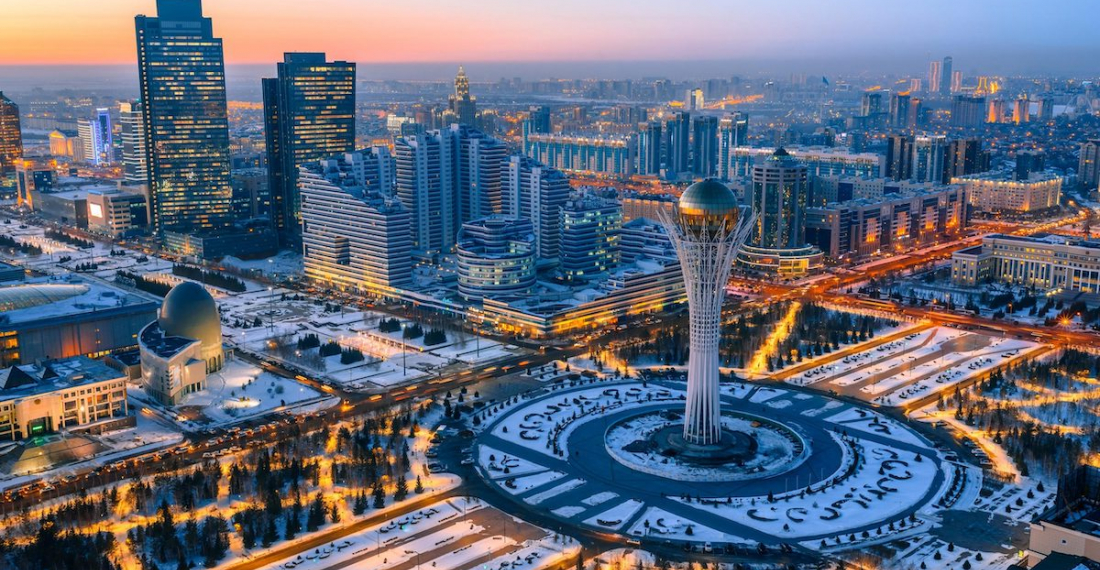
photo: Nur-Sultan, the new, glitzy, capital of Kazakhstan (archive picture)
 

The views expressed in opinion pieces and commentaries do not necessarily reflect the position of commonspace.eu or its partners  

Related articles

Editor's choice
News
Russia adds pressure on Armenia ahead of key elections; recalls Ambassador in Yerevan for consultations

Russia adds pressure on Armenia ahead of key elections; recalls Ambassador in Yerevan for consultations

Ahead of key parliamentary elections,scheduled to be held in Armenia on Sunday, 7 June, Russia continues to attempt to put pressure on the Armenian Government led by prime minister Nikol Pashinyan. On 30 May, Russia recalled its Ambassador to Yerevan for consultations. A terse statement, published on the website of the Russian Foreign Ministry, said, "The Ambassador of the Russian Federation to the Republic of Armenia , S.P. Kopyrkin, has been summoned to Moscow for consultations in connection with the steps taken by the Armenian leadership to move closer to the European Union, which are detrimental to cooperation within the EAEU." This followed a statement issued the day before, by the leaders of the Eurasian Economic Union (EAEU) that challenges the Armenian trajectory towards approximating to the European Union. Vladimir Putin is undertood to have personally pushed the other four EAEU leaders to issue the statement, which said: "Taking into account the significant risks to the economic security of the member states of the Eurasian Economic Union (hereinafter referred to as the Union) arising in connection with the preparation of the Republic of Armenia for accession to the European Union, as well as the need to prevent the associated damage to the member states of the Union: decided that the members of the Eurasian Intergovernmental Council from the Republic of Belarus, the Republic of Kazakhstan, the Kyrgyz Republic and the Russian Federation will report at the next meeting of the Supreme Eurasian Economic Council in December 2026 on the possible consequences of the suspension of the Treaty on the Eurasian Economic Union with respect to the Republic of Armenia. We share the position on the need to hold a national referendum in the Republic of Armenia as soon as possible on joining the European Union or continuing to be part of the Eurasian Economic Union."
Editor's choice
News
The leaders of the states of the Eurasian Economic Union issued a tough statement warning fellow-member state Armenia of the consequences of its desire to join the European Union.

The leaders of the states of the Eurasian Economic Union issued a tough statement warning fellow-member state Armenia of the consequences of its desire to join the European Union.

The leaders of the states of the Eurasian Economic Union (EEAS) issued a tough statement warning fellow-member state Armenia of the consequences of its desire to join the European Union. The stark, sharply worded,  warning, comes days before crucial parliamentary elections in Armenia, scheduled for 7 June. The full statement said, “We, the Presidents of the Republic of Belarus, the Republic of Kazakhstan, the Kyrgyz Republic and the Russian Federation, Taking into account the actions of the Republic of Armenia aimed at joining the European Union, including the approval in 2025 by the National Assembly of the Republic of Armenia and the signing by the President of the Republic of Armenia of the Law of the Republic of Armenia "On the Start of the Process of Accession of the Republic of Armenia to the European Union", as well as the confirmation by the European Union of the European aspirations of the Government of the Republic of Armenia, expressed in the joint declaration following the first Armenia-European Union summit, adopted on 5 May 2026, Taking into account the significant risks to the economic security of the member states of the Eurasian Economic Union (hereinafter referred to as the Union) arising in connection with the preparation of the Republic of Armenia for accession to the European Union, as well as the need to prevent the associated damage to the member states of the Union: decided that the members of the Eurasian Intergovernmental Council from the Republic of Belarus, the Republic of Kazakhstan, the Kyrgyz Republic and the Russian Federation will report at the next meeting of the Supreme Eurasian Economic Council in December 2026 on the possible consequences of the suspension of the Treaty on the Eurasian Economic Union with respect to the Republic of Armenia. We share the position on the need to hold a national referendum in the Republic of Armenia as soon as possible on joining the European Union or continuing to be part of the Eurasian Economic Union. Astana, May 29, 2026” A meeting of the Supreme Eurasian Economic Council was held in Astana, Kazakhstan, on May 29, 2026. The meeting of the Supreme Eurasian Economic Council in a restricted format was attended by Russian President Vladimir Putin, Belarusian President Alexander Lukashenko , Kazakh President Kassym-Jomart Tokayev , Kyrgyz President Sadyr Japarov , Armenian Deputy Prime Minister Mher Grigoryan, and Chairman of the Board of the Eurasian Economic Commission Bakytzhan Sagintayev. From the Russian side, the meeting was also attended by Deputy Prime Minister and member of the Council of the Eurasian Economic Commission Alexey Overchuk and Presidential Aide Yury Ushakov . The heads of delegations from EAEU observer states, including President of Uzbekistan Shavkat Mirziyoyev , Vice President of Cuba Salvador Valdés Mesa, Minister of Industry, Mines, and Trade of Iran Mohammad Atabak, and CIS Secretary General Sergei Lebedev, joined the expanded meeting . Following the meeting of the Supreme Eurasian Economic Council, a number of documents were signed .

Popular

Editor's choice
Interview
Thursday Interview: Murad Muradov

Thursday Interview: Murad Muradov

Today, commonspace.eu starts a new regular weekly series. THURSDAY INTERVIEW, conducted by Lauri Nikulainen, will host  persons who are thinkers, opinion shapers, and implementors in their countries and spheres. We start the series with an interview with Murad Muradov, a leading person in Azerbaijan's think tank community. He is also the first co-chair of the Action Committee for a new Armenian-Azerbaijani Dialogue. Last September he made history by being the first Azerbaijani civil society activist to visit Armenia after the 44 day war, and the start of the peace process. Speaking about this visit Murad Muradov said: "My experience was largely positive. My negative expectations luckily didn’t play out. The discussions were respectful, the panel format bringing together experts from Armenia, Azerbaijan, and Turkey was particularly valuable during the NATO Rose-Roth Seminar in Yerevan, and media coverage, while varied in tone, remained largely constructive. Some media outlets though attempted to represent me as more of a government mouthpiece than an independent expert, which was totally misleading.  Overall, I see these initiatives as important steps in rebuilding trust and normalising professional engagement. The fact that soon a larger Azerbaijani civil society visits to Armenia followed, reinforces the sense that this process is moving in the right direction." (click the image to read the interview in full)

