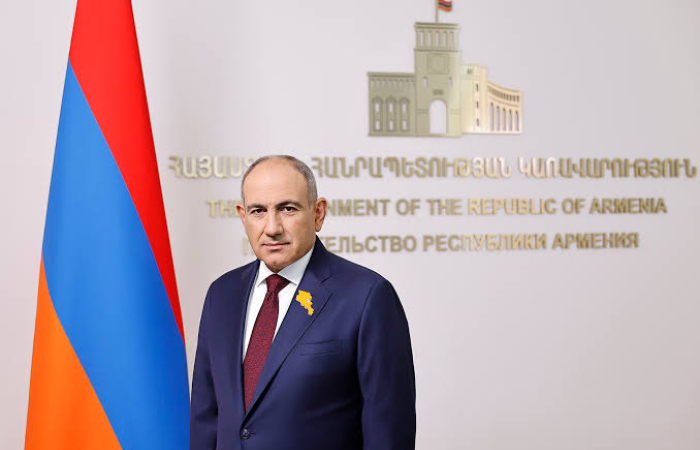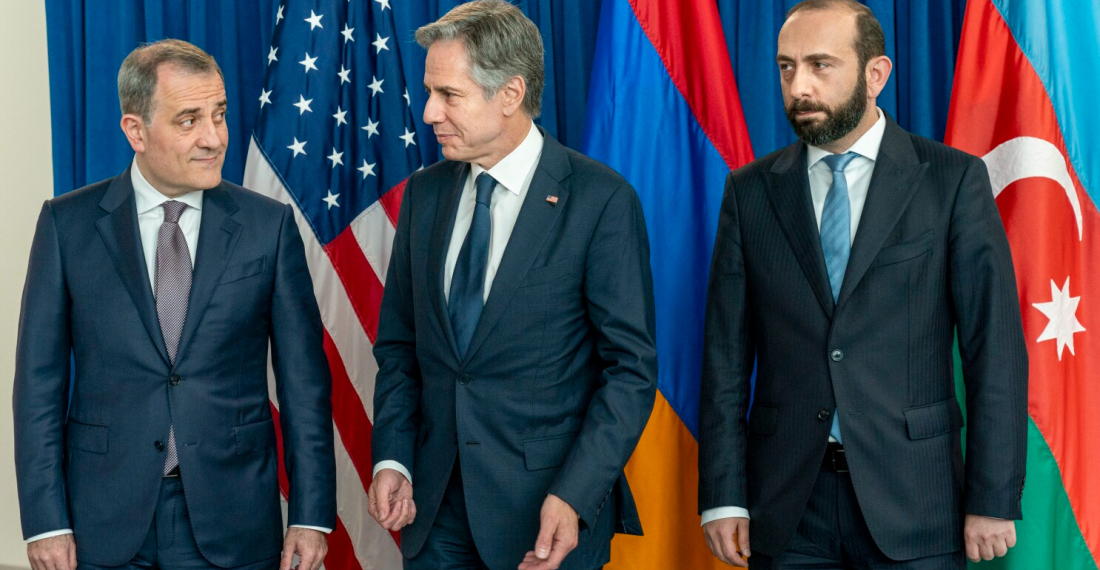
"While the recent expressions of optimism from Azerbaijani President Aliyev and Armenian Prime Minister Pashinyan regarding the potential signing of a peace agreement this year are promising, the path to a comprehensive resolution remains complex and challenging," writes Gulkhanim Mammadova for commonspace.eu. "The issues surrounding the future of Karabakh Armenians, international presence in the region, and the evolving global dynamics are intertwined, making any progress contingent upon careful negotiations and strategic considerations."
Azerbaijani and Armenian leaders Aliyev and Pashinyan have recently expressed optimism about the potential signing of a peace agreement this year. In their interviews for Euronews, both leaders, especially Aliyev, have highlighted steady progress in the peace process, particularly within the framework of the Washington rounds of negotiations. However, amidst this optimistic environment, there are several key issues that continue to pose significant challenges to reaching a peace deal.
One of the foremost issues on the agenda is the ethno-political future of Karabakh Armenians. Armenia's shift towards firmly recognising Nagorno-Karabakh as a part of Azerbaijan, coupled with its emphasis on safeguarding the rights of Armenians in Karabakh within the bounds of international norms, has seemingly absolved Yerevan of direct responsibility for the Armenian population of the region. However, this shift has provoked internal contemplation in Armenia, making the practical abandonment of the kin-state role quite problematic.
While Azerbaijan asserts its willingness to provide equal rights to all ethnic minorities within its borders, the Armenian community leaders in Karabakh remain resistant to (re)integration, staunchly refusing to discuss the process with Azerbaijani authorities. Their resolute maximalist stance is characterized by an unwavering refusal to meet with Azerbaijani representatives without international mediators, as well as acquiesce to Baku’s proposal to supply the region via Aghdam. This viewpoint is underlined by a firm belief that international mediators must withhold support for initiatives like the Aghdam route until the removal of the border checkpoint in Lachin is fully realised - an insistence fueled by the pursuit of substantial international influence.
Intricate international dynamics complicate the situation
Moving up to the global level, what we see is the intricate international dynamics further complicating the situation. On the one hand, we now have a near consensus internationally that Karabakh Armenians’ future should be determined in accordance with Azerbaijan’s sovereignty and territorial integrity. Not only Western powers but also Russia upholds this position. It is worth having a look at the statement by Josep Borrel, the EU High Representative for Foreign Affairs and Security Policy. His assertion that the EU does not intend to coerce Azerbaijan regarding the checkpoint in Lachin reaffirms the prevailing international position. Quite interestingly, Russian FM Sergey Lavrov made some statements avoiding mentioning the Lachin corridor standoff as well as noting the importance of intra-state talks between Baku and the Armenians living in Karabakh.
On the other hand, the Russian peacekeepers’ refusal to accompany some local Armenian activists heading to a rally at the Hakari Bridge - where the checkpoint has been established by Azerbaijan - has been interpreted by the local activists as a “public abandonment” of their safety, potentially fuelling their desire for additional international guarantees for their security. These twists in the events - namely, the growing international acknowledgment of Azerbaijan’s territorial integrity as well as certain changes on the ground - present a multifaceted challenge for the Armenian PM Pashinyan, requiring him to delicately navigate the balance between meeting the expectations of his domestic constituency and responding to the intricate realities shaped by global power dynamics.
Another pivotal facet demanding thorough examination is the future of international presence in Karabakh. As the year 2025 approaches, the question of international presence in Karabakh continues to be a pressing issue. Russia's strategic inclination leans towards maintaining its peacekeeping forces beyond 2025, a move aimed at securing its influence in the South Caucasus. Conversely, Azerbaijan has unequivocally expressed its opposition not only to the extension of the peacekeepers’ term but also to the internationalization of the matter, firmly rejecting the establishment of a framework similar to the OSCE Minsk Group under any conceivable circumstances. This stance from Azerbaijan implies a desire to “internalize” issues concerning the Armenian community in Karabakh.
Could a peace agreement be thwarted due to Russian "disapproval"?
Geopolitical turmoil also has a negative impact on the prospects of international involvement, too. Agreeing on any international presence beyond 2025 requires a delicate interplay between Western powers, Russia, and other regional players, which looks increasingly less realistic due to the growing geopolitical rift caused by the Russian invasion of Ukraine. The extent to which these actors can cooperate and align their goals will inevitably shape the legitimacy of international presence in Karabakh and choices made by Baku and Yerevan.
Furthermore, Russia's stance on the potential signing of the peace agreement this year is less enthusiastic, which is evident in recent statements from Denis Gonchar, the director of the Fourth Department of the CIS countries of the Russian Foreign Ministry. Emphasising the potential risks inherent in rushing the peace talks, Gonchar suggested that hastily pursuing short-term gains might result in a “superficial peace agreement” that fails to comprehensively address the intricate complexities of the conflict. This stance attests to the Russian displeasure with the potential signing of an agreement within the Western-mediated platforms. In such a scenario, a question arises: even with the parties ready to sign the agreement, could its signing be thwarted solely due to Russia's "disapproval"?
Nonetheless, the landscape is far from that straightforward. The dynamics of the peace process are intricately intertwined with the ongoing Russo-Ukrainian war. Following the Russian invasion of Ukraine, the once robust Russian influence mechanisms in the South Caucasus have undergone considerable attenuation. This geopolitical shift has created a power vacuum, which is now being strategically capitalised upon by Azerbaijan. It has also led to a perceivable shift in the balance of power, wherein Russia's influence seems diminished compared to its pre-war levels.
To sum up, while the recent expressions of optimism from Azerbaijani President Aliyev and Armenian Prime Minister Pashinyan regarding the potential signing of a peace agreement this year are promising, the path to a comprehensive resolution remains complex and challenging. The issues surrounding the future of Karabakh Armenians, international presence in the region, and the evolving global dynamics are intertwined, making any progress contingent upon careful negotiations and strategic considerations.