


OPINION: Recognition, engagement or neglect? Hovhannes Nikoghosyan discusses the options facing the international community

The OSCE Astana Summit last December was indeed a missed opportunity for 56 nation-wide community of states to deal with any of long-running conflicts or disputes in the mega-region stretching “from Vancouver to Vladivostok”. The Summit also failed to produce any viable vision to keep the group together, 3.5-page outcome document , negotiated in an extra 11 hours of the summit, was anything  but a visionary piece.


With this baggage in mind, Astana Summit still publicised a completely fresh framework for Nagorno-Karabakh peace talks. Ilham Aliyev of Azerbaijan crashed onto Armenia with common rhetorics once again and warned of emerging desire of waging a war of revenge. Serzh Sargsyan of Armenia announced strictly that “in case [of] military aggression, Armenia will have no other choice but to recognize the Nagorno-Karabakh Republic de jure and to employ all its capabilities to ensure the security of the people of Artsakh”, and re-sent the same message to CSTO Summit in Moscow days later. Successive rounds of talks with Russian hospitality have not produced any rapprochement.


By the way, the deputy PM of Azerbaijan Ali Hassanov went on the record in Ankara last week saying, specifically, that “if things keep going this way, we could declare war.” The reaction of Armenian leadership once more proved that this country is indeed obsessed with “defensive nationalism”, i.e. they are happy with whatever they have, but will fight to get more security as it becomes compromised. While the geopolitical realities in South Caucasus are not friendly towards idealists, Armenia, having two closed borders, in general is pushed to embrace the logics of realism. The same is  true for Azerbaijan, which now increasingly feels its position abandoned by the international community. Hence, Azerbaijan adopts “offensive nationalism” stigma on itself by rejecting pull-back of snipers or other confidence-building measures, relying only on propaganda and bellicosity.


The OSCE Minsk Group co-Chairmanship, which is internationally mandated to find peace in this volatile area, issues statements, which say nothing more but reaffirming a support to peaceful solution (which should have been an unspoken desire by default). Without showing any discomfort with the flourishing language of violence, these statements totally misrepresent the reality. .


Why does Astana Summit matter? Because it was the first ever venue where the issue of “preventive (or belated) recognition” was brought to the international arena by the Armenian authorities – be that as a result of domestic pressure or the pure logics of a so far failed peace process. The irony is that Armenia, Azerbaijan and Nagorno-Karabakh are demonstratively obsessed by the issue of “recognition”, each of the parties understanding the phenomena selfishly. Armenia wants the Nagorno-Karabakh’s right to self-determination to be recognized, the latter wishes to have its self-determined status welcomed (), while Azerbaijan insists on the recognition of its alleged territorial integrity. Minsk Group co-chair countries seem to agree with all these principal positions, trying to craft the most workable solution to accommodate all approaches. However, when the international mediators put the responsibility of positive advancement in the talks on the parties concerned, the expert community on either side produces apocalyptic masterpieces on the fundamental unwillingness of the whole world to have the conflict settled. Ultimately, this is the track that the peace talks have followed since 1994.


Recently I enjoyed an outstanding discussion of Nagorno-Karabakh issue with emerging leaders from across CIS region and Iraq. A fellow colleague from Baghdad, well experienced in peacebuilding in his volatile country, but totally unaware of anything about Karabakh, exclaimed very naively – “Why don’t you ask them (meaning – the people of Nagorno-Karabakh) what they want”? The faces of some participants, who had been energetically supporting their positions before that, went absolutely dark in a moment… Later on a person  from Baku claimed: “…because no civilians live there, just military personnel”. It was hard for me to explain to my Iraqi colleague afterwards that the last decade is almost wasted for bringing the diplomats from Stepanakert back to the table, as Azerbaijan rejects recognizing them in any individual capacity. Of course, the Minsk Group co-chairs regularly visit Stepanakert but that is not what it should be institutionally. 


However, the good news is that the mediators have gradually been coming to a conclusion that neglect of Nagorno-Karabakh voice in substantial discussions is no more feasible, neither sustainable. The European Parliament published a report in early April calling for “engagement without recognition” policies towards unrecognized entities in South Caucasus. It seems  there is an increasing awareness of this gap of neglect..


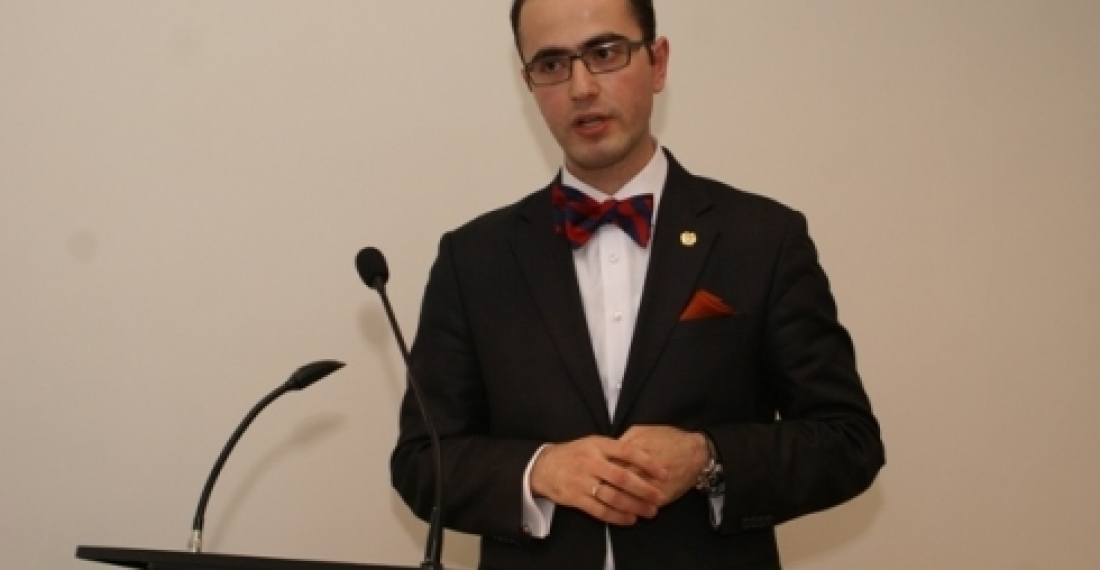
Dr. Hovhannes Nikoghosyan is a research fellow from Yerevan, Armenia. He may be contacted at hnikoghosyan@rau.am.

(c) commonspace.eu

Related articles

Editor's choice
News
Borrell tells the European Parliament that the situation in Afghanistan was critical, but the EU will remain engaged

Borrell tells the European Parliament that the situation in Afghanistan was critical, but the EU will remain engaged

Borrell underlined that the European Union will make every effort to support the peace process and to remain a committed partner to the Afghan people. "Of course, we will have to take into account the evolving situation, but disengagement is not an option.  We are clear on that: there is no alternative to a negotiated political settlement, through inclusive peace talks.
Editor's choice
News
NATO Chief says war is on Europe's doorstep, and warns against complacency

NATO Chief says war is on Europe's doorstep, and warns against complacency

Russia could attack a Nato country within the next five years, the Secretary General of NATO, Mark Rutte, said in a stark new warning. "Nato's own defences can hold for now," Rutte warned in Berlin, but conflict was "next door" to Europe and he feared "too many are quietly complacent, and too many don't feel the urgency, too many believe that time is on our side. "Russia is already escalating its covert campaign against our societies," Rutte said in a speech in Germany. "We must be prepared for the scale of war our grandparents or great-grandparents endured." Earlier this month, Russia's President Vladimir Putin said his country was not planning to go to war with Europe, but it was ready "right now" if Europe wanted to - or started a war. But similar reassurances were given by Moscow in 2022, just before 200,000 Russian troops crossed the border and invaded Ukraine. Putin has accused European countries of hindering US efforts to bring peace in Ukraine - a reference to the role Ukraine's European allies have recently played in trying to change a US peace plan to end the war, whose initial draft was seen as favouring Russia. But Putin was not sincere, Nato's secretary-general said in the German capital, Berlin. Supporting Ukraine, he added, was a guarantee for European security. "Just imagine if Putin got his way; Ukraine under the boot of Russian occupation, his forces pressing against a longer border with Nato, and the significantly increased risk of an armed attack against us." Russia's economy has been on a war footing for more than three years now - its factories churn out ever more supplies of drones, missiles and artillery shells. According to a recent report by the Kiel Institute for the World Economy, Russia has been producing each month around 150 tanks, 550 infantry fighting vehicles, 120 Lancet drones and more than 50 artillery pieces. The UK, and most of its Western allies, are simply not anywhere near this point. Analysts say it would take years for Western Europe's factories to come close to matching Russia's mass-production of weapons. "Allied defence spending and production must rise rapidly, our armed forces must have what they need to keep us safe," the Nato chief said.

Popular

Editor's choice
News
NATO Chief says war is on Europe's doorstep, and warns against complacency

NATO Chief says war is on Europe's doorstep, and warns against complacency

Russia could attack a Nato country within the next five years, the Secretary General of NATO, Mark Rutte, said in a stark new warning. "Nato's own defences can hold for now," Rutte warned in Berlin, but conflict was "next door" to Europe and he feared "too many are quietly complacent, and too many don't feel the urgency, too many believe that time is on our side. "Russia is already escalating its covert campaign against our societies," Rutte said in a speech in Germany. "We must be prepared for the scale of war our grandparents or great-grandparents endured." Earlier this month, Russia's President Vladimir Putin said his country was not planning to go to war with Europe, but it was ready "right now" if Europe wanted to - or started a war. But similar reassurances were given by Moscow in 2022, just before 200,000 Russian troops crossed the border and invaded Ukraine. Putin has accused European countries of hindering US efforts to bring peace in Ukraine - a reference to the role Ukraine's European allies have recently played in trying to change a US peace plan to end the war, whose initial draft was seen as favouring Russia. But Putin was not sincere, Nato's secretary-general said in the German capital, Berlin. Supporting Ukraine, he added, was a guarantee for European security. "Just imagine if Putin got his way; Ukraine under the boot of Russian occupation, his forces pressing against a longer border with Nato, and the significantly increased risk of an armed attack against us." Russia's economy has been on a war footing for more than three years now - its factories churn out ever more supplies of drones, missiles and artillery shells. According to a recent report by the Kiel Institute for the World Economy, Russia has been producing each month around 150 tanks, 550 infantry fighting vehicles, 120 Lancet drones and more than 50 artillery pieces. The UK, and most of its Western allies, are simply not anywhere near this point. Analysts say it would take years for Western Europe's factories to come close to matching Russia's mass-production of weapons. "Allied defence spending and production must rise rapidly, our armed forces must have what they need to keep us safe," the Nato chief said.


