Wang and Putin meet in Moscow as China pushes relations with Russia

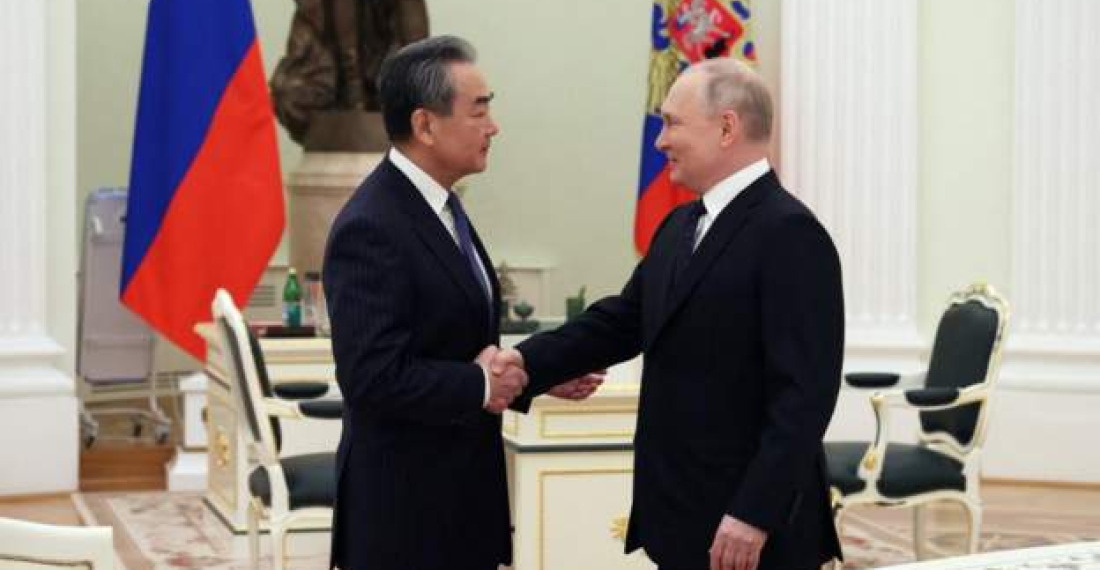
For the first time since the start of Russia’s invasion of Ukraine, a Chinese offical is paying a visit to Russia. Xi Jinping’s new top foreign policy adviser Wang Yi arrived in Moscow on Tuesday to meet with top Russian officials, and on Wednesday (22 February) met the Russian President Vladimir Putin.

On Tuesday, Wang met with Nikolai Patrushev, the head of Russia’s Security Council. In their meeting, Wang and Patrushev agreed to increase their efforts to “improve global governance” and they “exchanged their opinions” on Ukraine, leaving out details about what exactly had been discussed. 

On Wednesday, Wang met with both Russian President Vladimir Putin and Russian Foreign Minister Sergey Lavrov. Speaking with Putin, Wang said that bilateral trade between China and Russia turned out more positive than expected and could reach up to $200 billion annually. Meanwhile, Putin said that he awaits a "visit of the President of the People's Republic of China to Russia", adding that they have "agreed on this".

Regarding Ukraine, Putin said that Beijing could provide material support to the Kremlin’s invasion of Ukraine, which could lead to a potential escalation of the conflict internationally.

From China’s side, Wang told Putin that the relationship between China and Russia would not succumb to pressure from third parties, and that China supports “democratisation in international relations”, impliciting both countries’ desire to position themselves alongside the US on the world stage. In their meeting, Lavrov and Wang reportedly also closed new agreements, though details were not revealed.

Wang Yi’s visit follows Monday’s suprise trip by US President Joe Biden to Kyiv, who again demonstrated his support for Ukraine. Whereas the US had hoped for China to condemn Russia over its invasion of Ukraine, it now seems China is increasingly taking Russia’s side.

The BBC's Tessa Wong has also suggested that China may be wooing the rest of the world - including Russia - watching how the West handles the war as Beijing sets its sights on South-East Asia, Africa and South America.

source: commonspace.eu with agencies
photo: Reuters
 

Related articles

Editor's choice
News
Aden under curfew, as problem in Yemen's south deepens

Aden under curfew, as problem in Yemen's south deepens

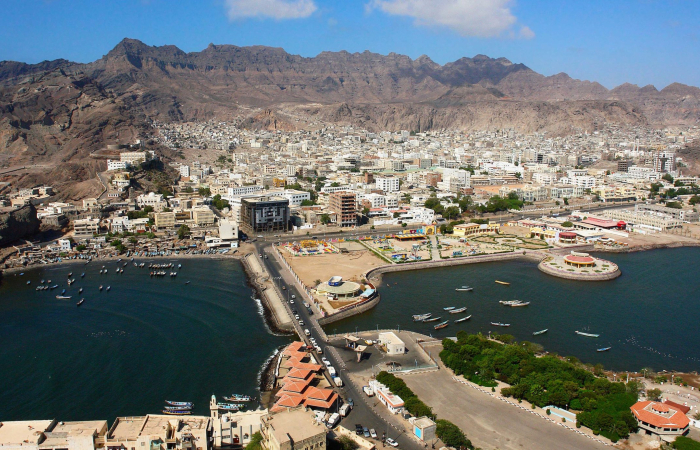
The port city of Aden, in Yemen's south, has been put under curfew, as the rift in the country between  the Saudi led coalition which  backs Yemen's presidential governing council, and the southern forces led by the Southern Transitional Council (STC), deepens. Abdul Rahman al-Mahrami, a member of the Yemeni Presidential Governing Council and commander of the al-Amalik brigades, has ordered a curfew in the temporary capital, Aden, "to maintain security". "A curfew has been imposed throughout Aden Governorate from 9:00 p.m. to 6:00 a.m., in accordance with the instructions of Commander Abdul Rahman al-Mahrami, a member of the Presidential Management Council," the statement said. It states that only security and military personnel, as well as medical and technical teams with approved permits, will be allowed to move in the area during these hours. Yemen's presidential council, which is backed by Saudi Arabia and which already is in a struggle with the Houthi Movement in the north of the country who also occupy the capital Sanaa, two days ago issued an order for the arrest of the head of the Southern Transitional Council (STC),, Aidarous al Zubaidi. The STC have wide support among people in the South, and advocate that South Yemen restores its independence. The coalition warned of further escalation in Aden, long regarded as an STC stronghold, as the Presidential Leadership Council (PLC) chief accused STC leader Aidarous Al Zubaidi of “high treason” and announced the revocation of his membership in the governing body. The moves mark a sharp escalation in tensions within the anti-Houthi camp, despite National Shield Forces, rivals of the STC and former allies, having recently retaken control of Hadhramaut and Mahra from southern fighters. The STC’s takeover of the two regions last month angered Saudi Arabia and contributed to igniting the current internal conflict. (click the picture to read more)

Popular

Editor's choice
News
Aden under curfew, as problem in Yemen's south deepens

Aden under curfew, as problem in Yemen's south deepens

The port city of Aden, in Yemen's south, has been put under curfew, as the rift in the country between  the Saudi led coalition which  backs Yemen's presidential governing council, and the southern forces led by the Southern Transitional Council (STC), deepens. Abdul Rahman al-Mahrami, a member of the Yemeni Presidential Governing Council and commander of the al-Amalik brigades, has ordered a curfew in the temporary capital, Aden, "to maintain security". "A curfew has been imposed throughout Aden Governorate from 9:00 p.m. to 6:00 a.m., in accordance with the instructions of Commander Abdul Rahman al-Mahrami, a member of the Presidential Management Council," the statement said. It states that only security and military personnel, as well as medical and technical teams with approved permits, will be allowed to move in the area during these hours. Yemen's presidential council, which is backed by Saudi Arabia and which already is in a struggle with the Houthi Movement in the north of the country who also occupy the capital Sanaa, two days ago issued an order for the arrest of the head of the Southern Transitional Council (STC),, Aidarous al Zubaidi. The STC have wide support among people in the South, and advocate that South Yemen restores its independence. The coalition warned of further escalation in Aden, long regarded as an STC stronghold, as the Presidential Leadership Council (PLC) chief accused STC leader Aidarous Al Zubaidi of “high treason” and announced the revocation of his membership in the governing body. The moves mark a sharp escalation in tensions within the anti-Houthi camp, despite National Shield Forces, rivals of the STC and former allies, having recently retaken control of Hadhramaut and Mahra from southern fighters. The STC’s takeover of the two regions last month angered Saudi Arabia and contributed to igniting the current internal conflict. (click the picture to read more)