


Wagner Group accused of ploy to discredit French Army in Mali

The French army says it has filmed Russian mercenaries from the paramilitary group Wagner burying bodies near a Malian military base, in an attempt to falsely accuse France’s departing troops of leaving behind mass graves.

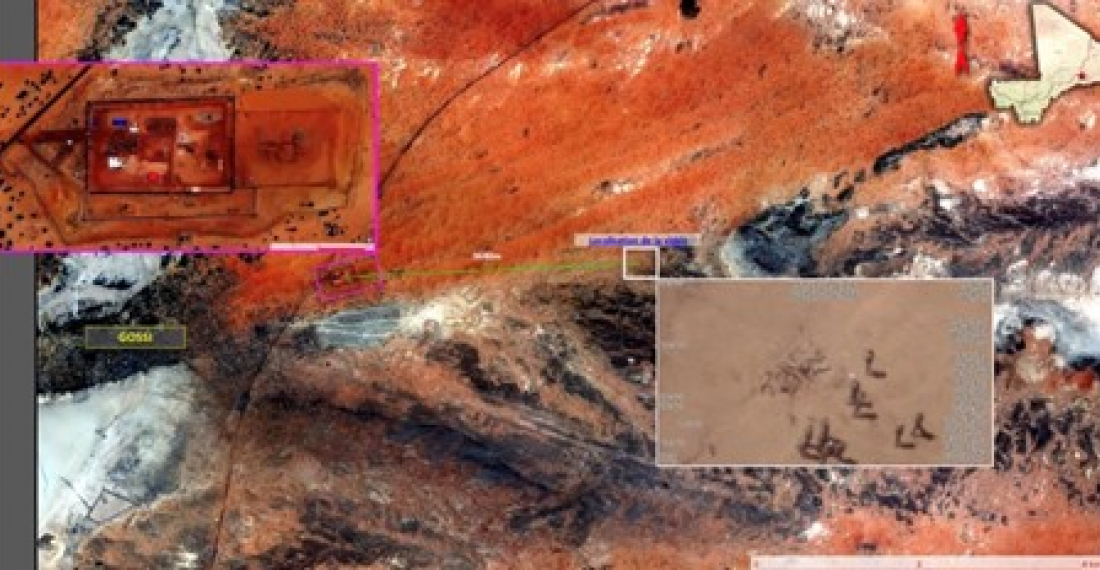
The video shot from a French drone, which shows the behind-the-scenes making of an infox, features white men near the Gossi military base in northern Mali. This military base was returned to the Malian military on Tuesday 19th April.

In a move to discredit the French army and its anti-terrorist operations on the ground, a tweet wrote, "this is what the French left behind when they left the base in Gossi… We cannot keep silent!" accompanied by pixelated images of corpses buried in sand, was published on Thursday 21st April by a certain Dia Diarra. According to the French general staff, this Twitter account is a fake created by Wagner, as it can also be found on a Russian platform.

Unfortunately for the mercenaries of the Wagner group, the French army had positioned a drone in the last 24 hours overlooking the Gossi camp.

In this video, which was made available to the international media, a dozen  soldiers with Caucasian features are seen shovelling sand over the bodies, which are in the same position as the ones in the tweet. Dongfeng vehicles used by Wagner and two men filming the mass grave are also visible. According to the French army, comparing the photos published on Twitter and those taken by the drone allows us to grasp the construction of the infox created by Wagner.

If the presence of the drone washes the discredit off the French army this time, the upcoming accusations will certainly reinforce an anti-French sentiment that has been growing in West Africa since 2013.

Even though France responded to Mali's call for help in 2013 by launching Operation Serval, which was initially militarily successful in pushing jihadist forces out of the north of the country, popular support did not last.

A persistent feeling of insecurity and a public opinion hostile to the presence of the French army for so many years on its territory provided the Malian junta with an ideal scapegoat, and Bamako clearly expressed its wish to see the French troops leave.

Furthermore, the successive appearance of new heads of state due to the recent coups in Mali, Chad, and Burkina Faso, have weakened French alliances throughout West Africa. This lack of cooperation and of trust has allowed the jihadists to conquer several swathes of territory and has opened the door to Russia in the region, through the paramilitary Wagner group.

The Malian transitional authorities have denied the accusations and said that the Russians in the country were military instructors.

The French general army staff warned about information warfare following the pullout from the base, which hosted 300 French soldiers.
Sources: CommonSpace.eu with the Guardian (London), RFI (Paris) and other media outlets
Picture: Aerial view of Gossi and Caucasian individuals observed burying bodies 3.5 kilometres from the military base; Twitter: @EyeonMali

Related articles

Editor's choice
News
Council of Europe launches new International Claims Commission for Ukraine

Council of Europe launches new International Claims Commission for Ukraine

Thirty-four countries and the European Union have signed a new convention establishing an International Claims Commission for Ukraine at a diplomatic conference co-hosted by the 46-nation Council of Europe and the Netherlands in the Hague. The diplomatic conference was attended by leaders and high-level representatives from over 50 states, including the President of Ukraine, Volodymyr Zelenskyy, the President of the Republic of Moldova, Maia Sandu, and the Prime Minister of the Netherlands, Dick Schoof.  “Today marks a major step forward in ensuring accountability for Ukraine. The International Claims Commission represents justice and hope for tens of thousands of victims—our determination that those who have suffered will not be forgotten. I call for quick ratifications so we can get the commission rapidly up and running for the people of Ukraine,” said Council of Europe Secretary General Alain Berset. Ukrainian President Volodymyr Zelenskyy said: “We expect that every mechanism for compensation from the Register of Damage and Claims Commission to the actual payments – will start working and receive strong and sufficient international support, so that people can truly feel that any kind of damage caused by the war can be compensated. This war, and Russia’s responsibility for it, MUST become a clear example – so that others learn not to choose aggression.” “Accountability is about creating the conditions for peace that endures. And therefore, accountability is a condition of security – today and for the future. But accountability is not only about Ukraine. And it is not only about one aggressor and one victim. Accountability is about Europe. About every country in Europe. It is about whether Europe, as a whole, is willing to defend its peace,” said Maia Sandu, President of the Republic of Moldova, which currently holds the Presidency of the Council of Europe’s Committee of Ministers. The Prime Minister of the Netherlands, Dick Schoof, said: “Every day Russia is deliberately bombarding homes, destroying businesses and damaging infrastructure in Ukraine. Russia must compensate Ukraine for the damage caused. That is why we have launched the International Claims Commission for Ukraine and we are honoured to host it.” The International Claims Commission will be the second part of a comprehensive compensation mechanism related to Russia’s war of aggression, building on the existing Register of Damage for Ukraine. The claims commission will be established within the framework of the Council of Europe and will also be open to other countries. The Register of Damage for Ukraine, created in 2023, collects and records compensation claims submitted by individuals, organisations and public bodies in Ukraine. Forty-four states and the European Union have so far joined the Register, which has already received 86,000 claims. The International Claims Commission will review, assess and decide upon claims submitted to the Register of Damage for Ukraine and determine the amount of compensation, if any, which is due in each case. The convention establishing the commission will enter into force once it has been ratified by 25 signatories, as long as sufficient funds have been secured to support its initial work.

Popular

Editor's choice
News
Council of Europe launches new International Claims Commission for Ukraine

Council of Europe launches new International Claims Commission for Ukraine

Thirty-four countries and the European Union have signed a new convention establishing an International Claims Commission for Ukraine at a diplomatic conference co-hosted by the 46-nation Council of Europe and the Netherlands in the Hague. The diplomatic conference was attended by leaders and high-level representatives from over 50 states, including the President of Ukraine, Volodymyr Zelenskyy, the President of the Republic of Moldova, Maia Sandu, and the Prime Minister of the Netherlands, Dick Schoof.  “Today marks a major step forward in ensuring accountability for Ukraine. The International Claims Commission represents justice and hope for tens of thousands of victims—our determination that those who have suffered will not be forgotten. I call for quick ratifications so we can get the commission rapidly up and running for the people of Ukraine,” said Council of Europe Secretary General Alain Berset. Ukrainian President Volodymyr Zelenskyy said: “We expect that every mechanism for compensation from the Register of Damage and Claims Commission to the actual payments – will start working and receive strong and sufficient international support, so that people can truly feel that any kind of damage caused by the war can be compensated. This war, and Russia’s responsibility for it, MUST become a clear example – so that others learn not to choose aggression.” “Accountability is about creating the conditions for peace that endures. And therefore, accountability is a condition of security – today and for the future. But accountability is not only about Ukraine. And it is not only about one aggressor and one victim. Accountability is about Europe. About every country in Europe. It is about whether Europe, as a whole, is willing to defend its peace,” said Maia Sandu, President of the Republic of Moldova, which currently holds the Presidency of the Council of Europe’s Committee of Ministers. The Prime Minister of the Netherlands, Dick Schoof, said: “Every day Russia is deliberately bombarding homes, destroying businesses and damaging infrastructure in Ukraine. Russia must compensate Ukraine for the damage caused. That is why we have launched the International Claims Commission for Ukraine and we are honoured to host it.” The International Claims Commission will be the second part of a comprehensive compensation mechanism related to Russia’s war of aggression, building on the existing Register of Damage for Ukraine. The claims commission will be established within the framework of the Council of Europe and will also be open to other countries. The Register of Damage for Ukraine, created in 2023, collects and records compensation claims submitted by individuals, organisations and public bodies in Ukraine. Forty-four states and the European Union have so far joined the Register, which has already received 86,000 claims. The International Claims Commission will review, assess and decide upon claims submitted to the Register of Damage for Ukraine and determine the amount of compensation, if any, which is due in each case. The convention establishing the commission will enter into force once it has been ratified by 25 signatories, as long as sufficient funds have been secured to support its initial work.

