


Echoes of Afghanistan resonate in the Sahel

The Taliban's victory in Afghanistan risks blowing a wave of hope among jihadists around the world. Islamist groups currently involved in insurgencies across Africa have saluted the Taliban's success.

"God is great," a media outlet linked to Somalia's al-Shabab wrote in response to the takeover.

Elsewhere, while he had not spoken since 2019, the jihadist leader of Jama'a Nusrat ul-Islam wa al-Muslimin' (JNIM), the Sahelian branch of Al-Qaida, paid tribute to "[their] Islamic emirate of Afghanistan, on the occasion of the withdrawal of the invading American forces and their allies", in an audio message before the fall of Kabul on Tuesday (10 August). A reversal which, he added, "is the result of two decades of patience".

It is no coincidence that the irresistible Taliban offensive resonates even in the far reaches of the Sahel. When JNIM was created in 2017, Iyad Ag Ghali pledged allegiance to Al-Qaida, but also to Afghan Islamists. The Taliban, like the Sahel fighters, are part of the same nebula. "They have a real common insurrectional know-how, which is the product of the Al-Qaida matrix," underlines Yvan Guichaoua, researcher at the School of International Studies at the University of Kent in Brussels.  They also share a common goal: the application of Sharia law."

The jihadists were not the only ones in the Sahel to closely follow the tipping of Afghanistan into the Taliban fold. Voices are being raised in the Sahel countries, hoping that lessons of American failure will be learned. Here too, as in Afghanistan, Western interventionism fails to counter the jihadist insurgency.

"US troops cannot and must not fight and die in a war that Afghan forces are not prepared to wage for themselves."

This statement by US president Joe Biden echoes the many reactions of African Internet users who fear such a catastrophic scenario if ever the foreign forces deployed on the continent were to withdraw in a similar fashion.

For the most part, they call for the strengthening of African national armies to avoid such a scenario on the continent.

In the meantime, the current US predicament in Afghanistan does not mean that events will unfold in a similar fashion in the Sahel region, where European countries, notably France, have been engaged actively in the fight against jihadism for almost a decade.

Doctor Sampala Balima, a political scientist from Thomas Sankara University in Burkina Faso, told the BBC that “contexts of emergence of dissent in the Sahel and Afghanistan differ, apart from Islamist ideology. In addition, violent extremism in the Sahel does not concern a single state territory and the armed terrorist groups (GAT) are still today the object of incessant decomposition and recomposition”.

"This is an important dimension or even an advantage to be considered quickly in the structuring of the fight, because the Afghan case can galvanize and even consolidate the strategies in the Sahel. The Afghan case is a particular invitation for the Sahel countries to invent their own response to the security threat, especially when taking into account the insurgency in the peripheries that it secretes”, she added.

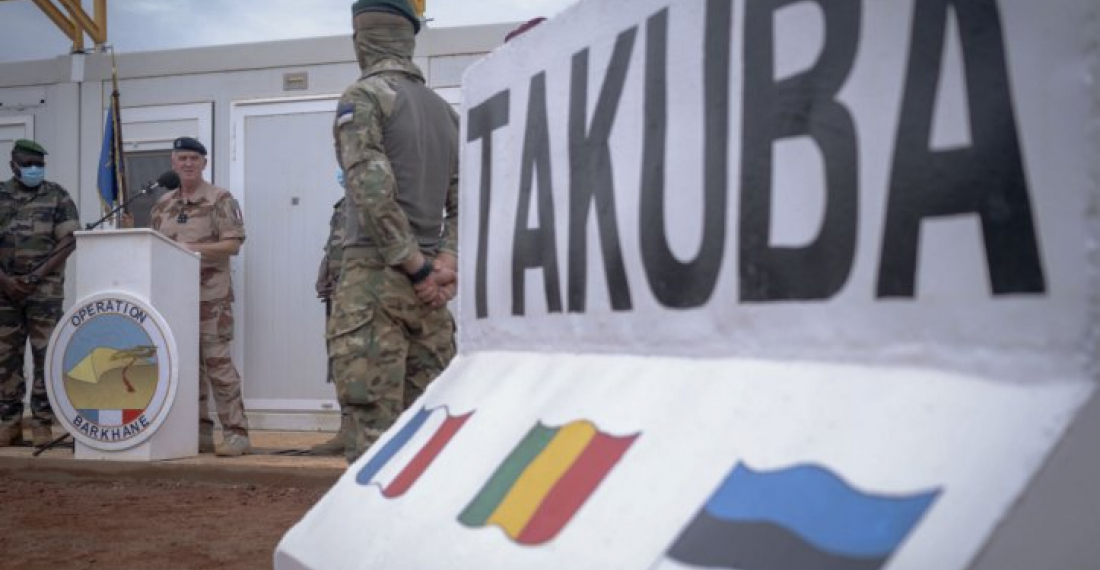
Additionally, although parallels have been made between the withdrawal of foreign troops in Afghanistan and France's decision to reduce its military presence in the Sahel, by the JNIM leader for instance, France remains committed to fight jihadism in the region alongside regional armies. Moreover, troops are to be reduced, not withdrawn, as part of a plan to involve more European powers in the region within the new Takuba task force.


 

source: commonspace.eu with BBC (London), Le Monde (Paris), RTS info (Geneva) and agencies.
photo: The EU's Takuba Task Force is expected to replace French troops in the Sahel (archive picture)

Related articles

Editor's choice
News
Council of Europe launches new International Claims Commission for Ukraine

Council of Europe launches new International Claims Commission for Ukraine

Thirty-four countries and the European Union have signed a new convention establishing an International Claims Commission for Ukraine at a diplomatic conference co-hosted by the 46-nation Council of Europe and the Netherlands in the Hague. The diplomatic conference was attended by leaders and high-level representatives from over 50 states, including the President of Ukraine, Volodymyr Zelenskyy, the President of the Republic of Moldova, Maia Sandu, and the Prime Minister of the Netherlands, Dick Schoof.  “Today marks a major step forward in ensuring accountability for Ukraine. The International Claims Commission represents justice and hope for tens of thousands of victims—our determination that those who have suffered will not be forgotten. I call for quick ratifications so we can get the commission rapidly up and running for the people of Ukraine,” said Council of Europe Secretary General Alain Berset. Ukrainian President Volodymyr Zelenskyy said: “We expect that every mechanism for compensation from the Register of Damage and Claims Commission to the actual payments – will start working and receive strong and sufficient international support, so that people can truly feel that any kind of damage caused by the war can be compensated. This war, and Russia’s responsibility for it, MUST become a clear example – so that others learn not to choose aggression.” “Accountability is about creating the conditions for peace that endures. And therefore, accountability is a condition of security – today and for the future. But accountability is not only about Ukraine. And it is not only about one aggressor and one victim. Accountability is about Europe. About every country in Europe. It is about whether Europe, as a whole, is willing to defend its peace,” said Maia Sandu, President of the Republic of Moldova, which currently holds the Presidency of the Council of Europe’s Committee of Ministers. The Prime Minister of the Netherlands, Dick Schoof, said: “Every day Russia is deliberately bombarding homes, destroying businesses and damaging infrastructure in Ukraine. Russia must compensate Ukraine for the damage caused. That is why we have launched the International Claims Commission for Ukraine and we are honoured to host it.” The International Claims Commission will be the second part of a comprehensive compensation mechanism related to Russia’s war of aggression, building on the existing Register of Damage for Ukraine. The claims commission will be established within the framework of the Council of Europe and will also be open to other countries. The Register of Damage for Ukraine, created in 2023, collects and records compensation claims submitted by individuals, organisations and public bodies in Ukraine. Forty-four states and the European Union have so far joined the Register, which has already received 86,000 claims. The International Claims Commission will review, assess and decide upon claims submitted to the Register of Damage for Ukraine and determine the amount of compensation, if any, which is due in each case. The convention establishing the commission will enter into force once it has been ratified by 25 signatories, as long as sufficient funds have been secured to support its initial work.

Popular

Editor's choice
News
Council of Europe launches new International Claims Commission for Ukraine

Council of Europe launches new International Claims Commission for Ukraine

Thirty-four countries and the European Union have signed a new convention establishing an International Claims Commission for Ukraine at a diplomatic conference co-hosted by the 46-nation Council of Europe and the Netherlands in the Hague. The diplomatic conference was attended by leaders and high-level representatives from over 50 states, including the President of Ukraine, Volodymyr Zelenskyy, the President of the Republic of Moldova, Maia Sandu, and the Prime Minister of the Netherlands, Dick Schoof.  “Today marks a major step forward in ensuring accountability for Ukraine. The International Claims Commission represents justice and hope for tens of thousands of victims—our determination that those who have suffered will not be forgotten. I call for quick ratifications so we can get the commission rapidly up and running for the people of Ukraine,” said Council of Europe Secretary General Alain Berset. Ukrainian President Volodymyr Zelenskyy said: “We expect that every mechanism for compensation from the Register of Damage and Claims Commission to the actual payments – will start working and receive strong and sufficient international support, so that people can truly feel that any kind of damage caused by the war can be compensated. This war, and Russia’s responsibility for it, MUST become a clear example – so that others learn not to choose aggression.” “Accountability is about creating the conditions for peace that endures. And therefore, accountability is a condition of security – today and for the future. But accountability is not only about Ukraine. And it is not only about one aggressor and one victim. Accountability is about Europe. About every country in Europe. It is about whether Europe, as a whole, is willing to defend its peace,” said Maia Sandu, President of the Republic of Moldova, which currently holds the Presidency of the Council of Europe’s Committee of Ministers. The Prime Minister of the Netherlands, Dick Schoof, said: “Every day Russia is deliberately bombarding homes, destroying businesses and damaging infrastructure in Ukraine. Russia must compensate Ukraine for the damage caused. That is why we have launched the International Claims Commission for Ukraine and we are honoured to host it.” The International Claims Commission will be the second part of a comprehensive compensation mechanism related to Russia’s war of aggression, building on the existing Register of Damage for Ukraine. The claims commission will be established within the framework of the Council of Europe and will also be open to other countries. The Register of Damage for Ukraine, created in 2023, collects and records compensation claims submitted by individuals, organisations and public bodies in Ukraine. Forty-four states and the European Union have so far joined the Register, which has already received 86,000 claims. The International Claims Commission will review, assess and decide upon claims submitted to the Register of Damage for Ukraine and determine the amount of compensation, if any, which is due in each case. The convention establishing the commission will enter into force once it has been ratified by 25 signatories, as long as sufficient funds have been secured to support its initial work.

