US Department of State lists Houthis as a foreign terrorist organisation

In a late statement on Sunday night, the US State Department declared the Houthi group in Yemen a terrorist organisation. The State Department also designated Abdul-Malik Al-Houthi, Abdul-Khaliq Al-Houthi, and Abdullah Al-Hakim as Specially Designated Global Terrorist (SDGT). All three are in high leadership positions within the organisation. 

US Secretary of State Pompeo said that designating the Houthis as a terrorist organization aims to hold them accountable for their acts, including cross-border attacks that threaten the civilian population, infrastructure and commercial shipping."

Pompeo indicated that there is a plan to reduce the impact of the classification on some humanitarian activities.

"The United States recognizes concerns that these designations will have an impact on the humanitarian situation in Yemen. We are planning to put in place measures to reduce their impact on certain humanitarian activity and imports into Yemen. We have expressed our readiness to work with relevant officials at the United Nations, with international and non-governmental organizations, and other international donors to address these implications."

The announcement on Sunday could complicate the new US administration’s efforts to restart diplomacy with Iran, which has ties to the Houthis. 

The move has not been entirely welcomed by some former officials and researchers. 

“This serves no interest at all,” Ryan Crocker, a retired US ambassador who served in the Middle East, said of the designation.

“Are there elements among the Houthis who have been involved in terrorist acts? Sure. Just as with other groups in the Middle East. The Houthis are an integral part of Yemeni society. They always have been. This is making a strategic enemy out of a local force that has been part of Yemen for generations. They are not Iranian pawns.”

The United Nations is trying to restart political talks to end the war and the US designation could create legal impediments for negotiations with the Houthis, who control the capital Sanaa and most urban centres.

“It is significant move because it will undermine any future peace efforts, because if you designate someone as a terrorist organisation you won’t be able to negotiate with it anymore,” Marwan Kabalan, director of policy analysis at the Arab Centre for Research and Policy Studies, told Al Jazeera.

“Nobody recognises the Houthis as a legitimate government of Yemen but they are a very important party to the conflict in the country, so if there are no talks with the Houthis peace will be very difficult to achieve in the country.”

Aid groups, as well as members of Biden’s Democratic Party, have also warned the move will severely impede efforts to address what the UN calls the world’s largest humanitarian crisis.

Read the US State Department announcement here


Source: commonspace.eu with Al Jazeera (Doha) and agencies.
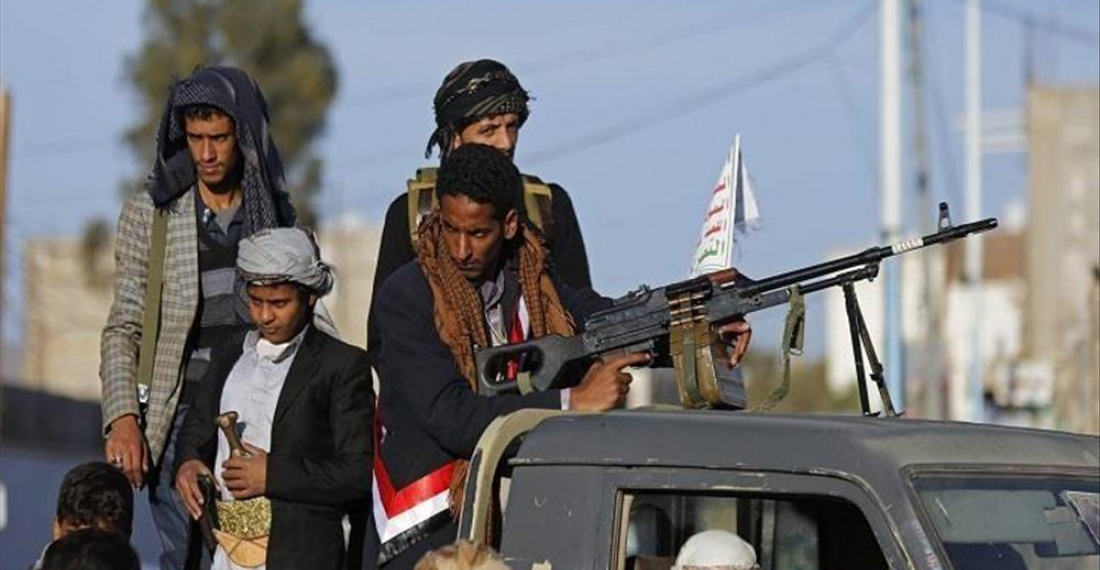
Photo: Houthis militias in patrol. 
 

Related articles

Editor's choice
News
Borrell tells the European Parliament that the situation in Afghanistan was critical, but the EU will remain engaged

Borrell tells the European Parliament that the situation in Afghanistan was critical, but the EU will remain engaged

Borrell underlined that the European Union will make every effort to support the peace process and to remain a committed partner to the Afghan people. "Of course, we will have to take into account the evolving situation, but disengagement is not an option.  We are clear on that: there is no alternative to a negotiated political settlement, through inclusive peace talks.
Editor's choice
News
NATO Chief says war is on Europe's doorstep, and warns against complacency

NATO Chief says war is on Europe's doorstep, and warns against complacency

Russia could attack a Nato country within the next five years, the Secretary General of NATO, Mark Rutte, said in a stark new warning. "Nato's own defences can hold for now," Rutte warned in Berlin, but conflict was "next door" to Europe and he feared "too many are quietly complacent, and too many don't feel the urgency, too many believe that time is on our side. "Russia is already escalating its covert campaign against our societies," Rutte said in a speech in Germany. "We must be prepared for the scale of war our grandparents or great-grandparents endured." Earlier this month, Russia's President Vladimir Putin said his country was not planning to go to war with Europe, but it was ready "right now" if Europe wanted to - or started a war. But similar reassurances were given by Moscow in 2022, just before 200,000 Russian troops crossed the border and invaded Ukraine. Putin has accused European countries of hindering US efforts to bring peace in Ukraine - a reference to the role Ukraine's European allies have recently played in trying to change a US peace plan to end the war, whose initial draft was seen as favouring Russia. But Putin was not sincere, Nato's secretary-general said in the German capital, Berlin. Supporting Ukraine, he added, was a guarantee for European security. "Just imagine if Putin got his way; Ukraine under the boot of Russian occupation, his forces pressing against a longer border with Nato, and the significantly increased risk of an armed attack against us." Russia's economy has been on a war footing for more than three years now - its factories churn out ever more supplies of drones, missiles and artillery shells. According to a recent report by the Kiel Institute for the World Economy, Russia has been producing each month around 150 tanks, 550 infantry fighting vehicles, 120 Lancet drones and more than 50 artillery pieces. The UK, and most of its Western allies, are simply not anywhere near this point. Analysts say it would take years for Western Europe's factories to come close to matching Russia's mass-production of weapons. "Allied defence spending and production must rise rapidly, our armed forces must have what they need to keep us safe," the Nato chief said.

Popular

Editor's choice
News
NATO Chief says war is on Europe's doorstep, and warns against complacency

NATO Chief says war is on Europe's doorstep, and warns against complacency

Russia could attack a Nato country within the next five years, the Secretary General of NATO, Mark Rutte, said in a stark new warning. "Nato's own defences can hold for now," Rutte warned in Berlin, but conflict was "next door" to Europe and he feared "too many are quietly complacent, and too many don't feel the urgency, too many believe that time is on our side. "Russia is already escalating its covert campaign against our societies," Rutte said in a speech in Germany. "We must be prepared for the scale of war our grandparents or great-grandparents endured." Earlier this month, Russia's President Vladimir Putin said his country was not planning to go to war with Europe, but it was ready "right now" if Europe wanted to - or started a war. But similar reassurances were given by Moscow in 2022, just before 200,000 Russian troops crossed the border and invaded Ukraine. Putin has accused European countries of hindering US efforts to bring peace in Ukraine - a reference to the role Ukraine's European allies have recently played in trying to change a US peace plan to end the war, whose initial draft was seen as favouring Russia. But Putin was not sincere, Nato's secretary-general said in the German capital, Berlin. Supporting Ukraine, he added, was a guarantee for European security. "Just imagine if Putin got his way; Ukraine under the boot of Russian occupation, his forces pressing against a longer border with Nato, and the significantly increased risk of an armed attack against us." Russia's economy has been on a war footing for more than three years now - its factories churn out ever more supplies of drones, missiles and artillery shells. According to a recent report by the Kiel Institute for the World Economy, Russia has been producing each month around 150 tanks, 550 infantry fighting vehicles, 120 Lancet drones and more than 50 artillery pieces. The UK, and most of its Western allies, are simply not anywhere near this point. Analysts say it would take years for Western Europe's factories to come close to matching Russia's mass-production of weapons. "Allied defence spending and production must rise rapidly, our armed forces must have what they need to keep us safe," the Nato chief said.