


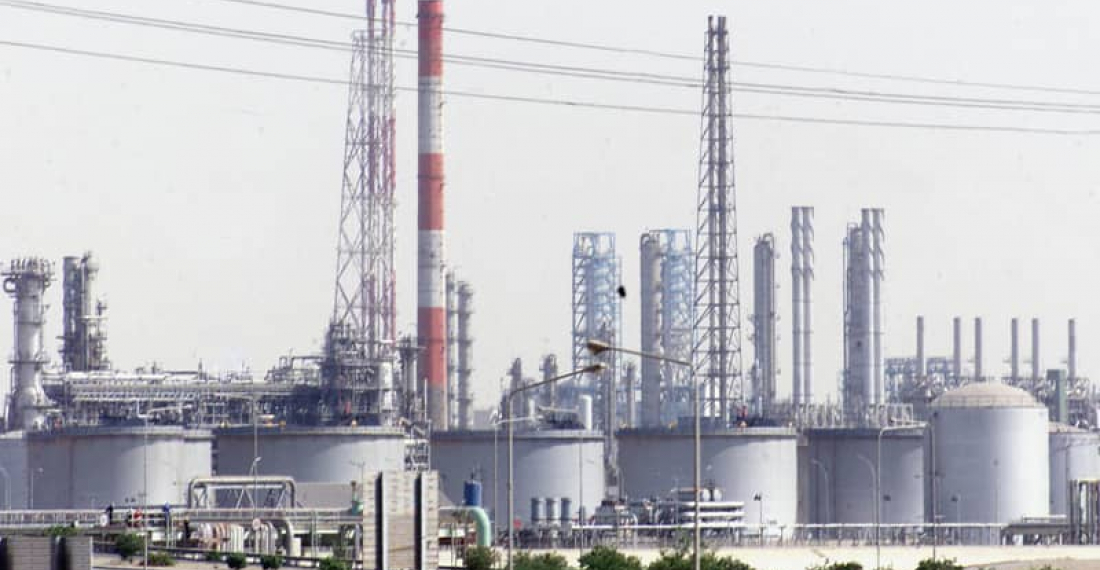
Saudi oil facility in Jizan attacked by Houthis

A strategic oil facility in Saudi Arabia was attacked by Yemeni Houthi rebels on Thursday (25 March) evening, starting a fire.  

A spokesman for the Saudi Ministry of Energy said the attack took place at about 21:00 local time in Jizan. As a result of shelling, a fire broke out at one of the fuel storage facilities, no one was injured. "We condemn this cowardly sabotage directed against vital facilities and aimed not only against the kingdom, but also against safe oil exports, stability of energy supplies to the world, freedom of global trade, as well as the entire world economy," the ministry said. It also noted that such actions have an impact on shipping and lead to serious environmental disasters in coastal areas and territorial waters.

Also on Thursday evening, Saudi air defence crews intercepted eight mined drones launched by the rebel Houthi movement from Yemen.

Two of the other drones intercepted were targeting the southwestern city of Khamis Mushait, while another targeted Najran near the Yemeni border. The rest targeted civilians and residential areas in other parts of southern Saudi Arabia.

A spokesman for the Saudi led coalition currently supporting the legitimate Yemeni government in its conflict with the Houthi rebels said that the militia tried to target universities in Jazan and Najran. 

The attacks come only days after Saudi Arabia announced a new peace plan to end the crisis in Yemen, which included a comprehensive ceasefire, the reopening of Sanaa airport, easing restrictions on Hodeidah port, and restarting the political process in the country. 

The conflict, which has lasted for more than five years, has created the largest humanitarian crisis in the world. According to the UN, over 24 million Yemenis - roughly 80% of the country's population - are in need of humanitarian assistance, and the number of internally displaced persons exceeds 3 million.
 

source: commonspace.eu with agencies
photo: Jizan Oil  refinery and terminal (archive picture).

Related articles

Editor's choice
News
Aden under curfew, as problem in Yemen's south deepens

Aden under curfew, as problem in Yemen's south deepens

The port city of Aden, in Yemen's south, has been put under curfew, as the rift in the country between  the Saudi led coalition which  backs Yemen's presidential governing council, and the southern forces led by the Southern Transitional Council (STC), deepens. Abdul Rahman al-Mahrami, a member of the Yemeni Presidential Governing Council and commander of the al-Amalik brigades, has ordered a curfew in the temporary capital, Aden, "to maintain security". "A curfew has been imposed throughout Aden Governorate from 9:00 p.m. to 6:00 a.m., in accordance with the instructions of Commander Abdul Rahman al-Mahrami, a member of the Presidential Management Council," the statement said. It states that only security and military personnel, as well as medical and technical teams with approved permits, will be allowed to move in the area during these hours. Yemen's presidential council, which is backed by Saudi Arabia and which already is in a struggle with the Houthi Movement in the north of the country who also occupy the capital Sanaa, two days ago issued an order for the arrest of the head of the Southern Transitional Council (STC),, Aidarous al Zubaidi. The STC have wide support among people in the South, and advocate that South Yemen restores its independence. The coalition warned of further escalation in Aden, long regarded as an STC stronghold, as the Presidential Leadership Council (PLC) chief accused STC leader Aidarous Al Zubaidi of “high treason” and announced the revocation of his membership in the governing body. The moves mark a sharp escalation in tensions within the anti-Houthi camp, despite National Shield Forces, rivals of the STC and former allies, having recently retaken control of Hadhramaut and Mahra from southern fighters. The STC’s takeover of the two regions last month angered Saudi Arabia and contributed to igniting the current internal conflict. (click the picture to read more)

Popular

Editor's choice
Analysis
Analysis: Why what happens in Greenland matters

Analysis: Why what happens in Greenland matters

The snap elections for the parliament of Greenland last Tuesday (6 April 2021) attracted unusual interest from major powers who have been watching the political and economic impact of the election results on their interests in the Arctic region. Among them, the Chinese, who have invested in the Kvanefjeld mine on the island. Maximiliaan van Lange analyses the background to the recent Greenlandic general elections, and the Island's geostrategic position in the Arctic in this article for commonspace.eu.

