Michel and Erdogan discuss EU-Turkey relations

European Council president Charles Michel and Turkish president Recip Tayip Erdogan on Tuesday (15 December) held a telephone conversation to discuss EU-Turkey relations in view of recent decisions by EU leaders to maintain pressure on Ankara over its energy exploration policy in the East Mediterranean.

On Tuesday, European Council president Charles Michel  spoke to Turkish president, Recip Tayip Erdogan over the phone to inform him of the decisions taken by the European leaders. The Turkish Communications Directorate in a read out of the conversation quoted the Turkish president as saying that “while Turkey hopes to turn a new page with the EU, some ceaselessly try to provoke crises". EU-Turkey relations should get rid of this vicious cycle as soon as possible, Erdogan said during their conversation.

The Turkish president also noted that Turkey evaluates every positive step taken in Turkey-EU relations as “a new window of opportunity.” The president said the 2016 deal aimed at curbing migration through Turkey to Europe in return for billions of euros in funds could be a starting point to create a more “positive” climate.

Turkey reiterated its readiness for exploratory talks with Greece, the president said, adding that the Greek side has constantly avoided negotiations by making excuses and has taken provocative steps in recent weeks. Emphasizing that Turkey’s eastern Mediterranean policy is based on fairness and justice, he said the Turkish side always makes necessary efforts for a fair, permanent and sustainable solution in the region.

Ankara wishes that the EU will adopt a sensible and constructive attitude towards Turkey, he added.

An EU leaders’ meeting in Brussels last week decided to draw up a list of Turkish targets for sanctions over Ankara’s “unilateral actions and provocations” in the eastern Mediterranean, believed to be rich in energy resources.

Turkey, which has the longest continental coastline in the eastern Mediterranean, has rejected maritime boundary claims of Greece and Cyprus, and stressed that these excessive claims violate the sovereign rights of both Turkey and the Turkish Cypriots.

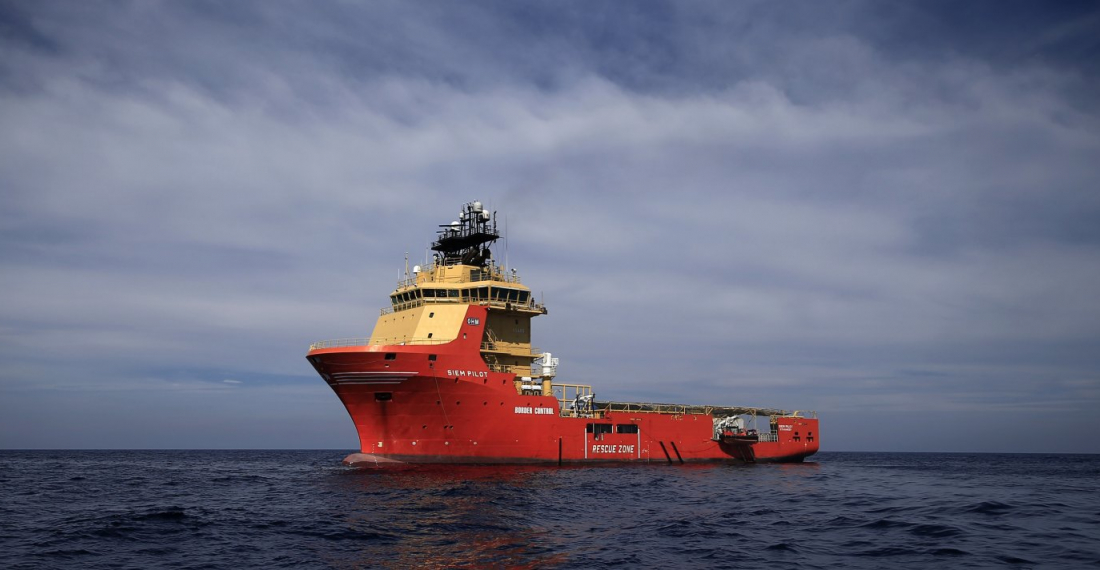
Ankara has sent several drilling ships in recent months to explore energy resources. The Oruç Reis vessel returned to the port in Antalya ahead of last week’s EU summit.

Amid continued tensions between Turkey and other East Mediterranean countries over energy exploration rights, and supplies security, on Tuesday a formal last step was taken for the establishment of the new East Mediterranean Gas Forum which is to have its headquarters in Cairo. Egypt, Greece, Cyprus, Italy, Jordan, Israel and the Palestinian Authority are members of the new Eastern Mediterranean Gas Forum.

On Tuesday (15 December) Egyptian MPs endorsed the charter of the Eastern Mediterranean Gas Forum. The charter, which had been signed by President Abdel-Fattah El-Sisi on 22 September 2020.

Parliament speaker Ali Abdel-Aal told MPs that the forum aims to bring the major producers and exporters of natural gas in the Eastern Mediterranean region into one forum.

"It is a very important step for the Eastern Mediterranean countries and a big win for Egypt in particular," said Abdel-Aal, also noting that "the fact that Cairo was selected to host the headquarters of the forum will turn Egypt into the region's major hub for natural gas producers and exporters."

According to the charter, the major objectives of the forum are to preserve the natural gas resources of members and guarantee that they will be used for achieving the public interest of their countries.

"The charter also seeks to kick off an organised dialogue between the forum's members on natural gas issues and lay out the policies and programmes necessary in this respect," said a report by the legislative and constitutional affairs committee, adding that "the charter will also make sure that there is a good investment of the natural gas reserves in the Eastern Mediterranean region at the present and in the future."

The charter aims to create a kind of sustainable partnership between the forum's members and help create an international market for natural gas in way that will guarantee meeting the needs of consumers.

The Forum is seen as a counterweight to Turkey and its activities in the Eastern Mediterranean.  Last week European leaders decided to extend existing restrictive measures against Turkey for a further twelve months, until 12 November 2021, a move that has angered Ankara.

source: commonspace.eu with the press service of the European Union, Hurriyet Daily News (Istanbul) and Al Ahram (Cairo).

Photo: The Turkish energy exploration ship Oruc Reis has been at the centre of copntroversy in the East Mediterranean (archive picture) 
Related articles

Editor's choice
News
Council of Europe launches new International Claims Commission for Ukraine

Council of Europe launches new International Claims Commission for Ukraine

Thirty-four countries and the European Union have signed a new convention establishing an International Claims Commission for Ukraine at a diplomatic conference co-hosted by the 46-nation Council of Europe and the Netherlands in the Hague. The diplomatic conference was attended by leaders and high-level representatives from over 50 states, including the President of Ukraine, Volodymyr Zelenskyy, the President of the Republic of Moldova, Maia Sandu, and the Prime Minister of the Netherlands, Dick Schoof.  “Today marks a major step forward in ensuring accountability for Ukraine. The International Claims Commission represents justice and hope for tens of thousands of victims—our determination that those who have suffered will not be forgotten. I call for quick ratifications so we can get the commission rapidly up and running for the people of Ukraine,” said Council of Europe Secretary General Alain Berset. Ukrainian President Volodymyr Zelenskyy said: “We expect that every mechanism for compensation from the Register of Damage and Claims Commission to the actual payments – will start working and receive strong and sufficient international support, so that people can truly feel that any kind of damage caused by the war can be compensated. This war, and Russia’s responsibility for it, MUST become a clear example – so that others learn not to choose aggression.” “Accountability is about creating the conditions for peace that endures. And therefore, accountability is a condition of security – today and for the future. But accountability is not only about Ukraine. And it is not only about one aggressor and one victim. Accountability is about Europe. About every country in Europe. It is about whether Europe, as a whole, is willing to defend its peace,” said Maia Sandu, President of the Republic of Moldova, which currently holds the Presidency of the Council of Europe’s Committee of Ministers. The Prime Minister of the Netherlands, Dick Schoof, said: “Every day Russia is deliberately bombarding homes, destroying businesses and damaging infrastructure in Ukraine. Russia must compensate Ukraine for the damage caused. That is why we have launched the International Claims Commission for Ukraine and we are honoured to host it.” The International Claims Commission will be the second part of a comprehensive compensation mechanism related to Russia’s war of aggression, building on the existing Register of Damage for Ukraine. The claims commission will be established within the framework of the Council of Europe and will also be open to other countries. The Register of Damage for Ukraine, created in 2023, collects and records compensation claims submitted by individuals, organisations and public bodies in Ukraine. Forty-four states and the European Union have so far joined the Register, which has already received 86,000 claims. The International Claims Commission will review, assess and decide upon claims submitted to the Register of Damage for Ukraine and determine the amount of compensation, if any, which is due in each case. The convention establishing the commission will enter into force once it has been ratified by 25 signatories, as long as sufficient funds have been secured to support its initial work.

Popular

Editor's choice
News
Council of Europe launches new International Claims Commission for Ukraine

Council of Europe launches new International Claims Commission for Ukraine

Thirty-four countries and the European Union have signed a new convention establishing an International Claims Commission for Ukraine at a diplomatic conference co-hosted by the 46-nation Council of Europe and the Netherlands in the Hague. The diplomatic conference was attended by leaders and high-level representatives from over 50 states, including the President of Ukraine, Volodymyr Zelenskyy, the President of the Republic of Moldova, Maia Sandu, and the Prime Minister of the Netherlands, Dick Schoof.  “Today marks a major step forward in ensuring accountability for Ukraine. The International Claims Commission represents justice and hope for tens of thousands of victims—our determination that those who have suffered will not be forgotten. I call for quick ratifications so we can get the commission rapidly up and running for the people of Ukraine,” said Council of Europe Secretary General Alain Berset. Ukrainian President Volodymyr Zelenskyy said: “We expect that every mechanism for compensation from the Register of Damage and Claims Commission to the actual payments – will start working and receive strong and sufficient international support, so that people can truly feel that any kind of damage caused by the war can be compensated. This war, and Russia’s responsibility for it, MUST become a clear example – so that others learn not to choose aggression.” “Accountability is about creating the conditions for peace that endures. And therefore, accountability is a condition of security – today and for the future. But accountability is not only about Ukraine. And it is not only about one aggressor and one victim. Accountability is about Europe. About every country in Europe. It is about whether Europe, as a whole, is willing to defend its peace,” said Maia Sandu, President of the Republic of Moldova, which currently holds the Presidency of the Council of Europe’s Committee of Ministers. The Prime Minister of the Netherlands, Dick Schoof, said: “Every day Russia is deliberately bombarding homes, destroying businesses and damaging infrastructure in Ukraine. Russia must compensate Ukraine for the damage caused. That is why we have launched the International Claims Commission for Ukraine and we are honoured to host it.” The International Claims Commission will be the second part of a comprehensive compensation mechanism related to Russia’s war of aggression, building on the existing Register of Damage for Ukraine. The claims commission will be established within the framework of the Council of Europe and will also be open to other countries. The Register of Damage for Ukraine, created in 2023, collects and records compensation claims submitted by individuals, organisations and public bodies in Ukraine. Forty-four states and the European Union have so far joined the Register, which has already received 86,000 claims. The International Claims Commission will review, assess and decide upon claims submitted to the Register of Damage for Ukraine and determine the amount of compensation, if any, which is due in each case. The convention establishing the commission will enter into force once it has been ratified by 25 signatories, as long as sufficient funds have been secured to support its initial work.