


Iran prepares to start process to join the Shanghai Co-operation Organisation

During the upcoming summit of the Shanghai Cooperation Organisation (SCO) in Tajikistan, it will be announced that Iran is launching the procedure on joining the organisation. The Russian newspaper Kommersant wrote on 9 September that earlier, the process was hindered by international sanctions, and later, by the objections of one of the members.

The newspaper reminded that currently the organisation numbers eight countries, with India and Pakistan joining Kazakhstan, Kyrgyzstan, China, Russia, Tajikistan and Uzbekistan in 2017. The process of Iran joining the SCO may take some time, but the fact that it will be officially launched is already a breakthrough. That being said, Iran has spent more than ten years in the "waiting room". Tehran received observer status in 2005, and then applied for full-fledged membership in 2008. Yet, due to the array of international sanctions against it and until they were lifted in 2015, it couldn’t join. Also, Iran’s application was blocked by Tajikistan who accused Tehran of supporting the outlawed Islamic Renaissance Party of Tajikistan and being indirectly involved in organising terrorist attacks. However, some experts think that the conflict was caused by financial and geopolitical factors. Nevertheless, the conflict has been settled and Iran’s new president Ebrahim Raisi will personally come to Dushanbe which will become his first foreign trip since assuming office this June.

Kommersant adds that Russia fully supports Iran joining the SCO, and believes that this will add to the organisation’s authority on the global arena. "The SCO is a venue where regional problems are discussed. Iran is also a country of the region for which it is important to discuss these problems and seek solutions together. Much like for the other countries in the region it is to sit at the same table with Iran without calling it a guest from the outside," analyst Adlan Margoyev from the Institute of International Studies at the Moscow State Institute of International Relations told the newspaper. "Both for Iran and for SCO members today, it is particularly pressing to discuss the security issues in and around Afghanistan on an equal footing. Tehran’s full-fledged membership in the organization will emphasize that Iran is an important participant of the discussion on regional security and the SCO is the main venue for this discussion. Reputation-and organization-wise, everyone will win from this expansion," he explained.

In addition to Iran, the SCO has three more observer countries – Afghanistan, Belarus and Mongolia – and six dialogue partners – Azerbaijan, Armenia, Cambodia, Nepal, Turkey and Sri Lanka. Another 12 countries are applying for observer or partner status – Bangladesh, Saudi Arabia, Syria, Egypt, Israel, the Maldives, Ukraine, Iraq, Vietnam, Bahrain, the UAE, and Qatar. "The SCO is a structure that naturally should unite all the countries interested in interaction. So, we treat the issue of expansion very seriously," Russian Special Presidential Envoy for SCO Affairs Bakhtiyer Khakimov said earlier.
 

source: commonspace.eu with Kommersant (Moscow) and TASS (Moscow)
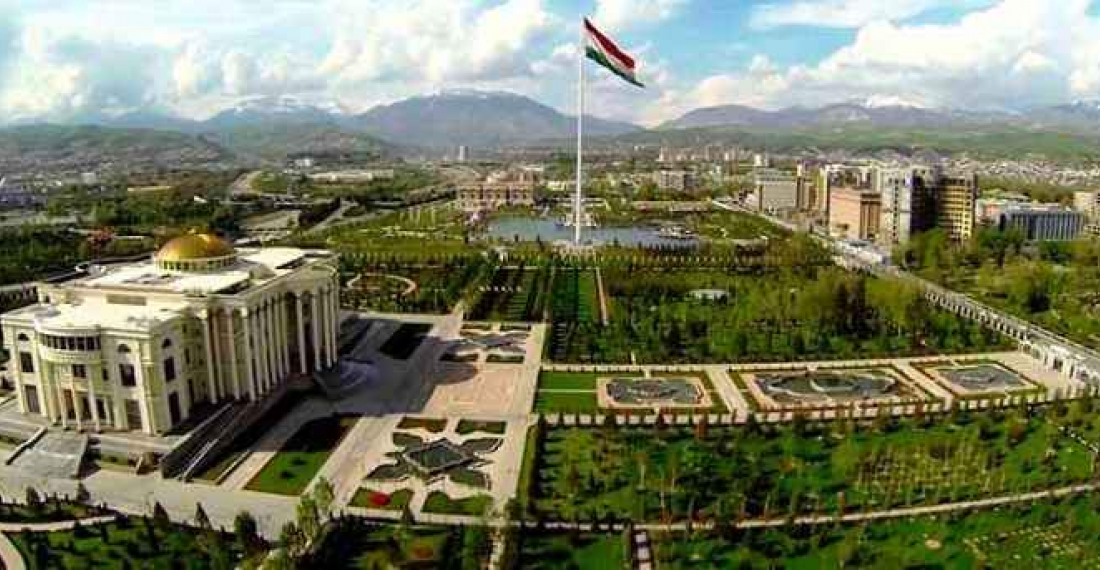
photo: Dushambe will shortly host the summit of the Shanghai Co-operation Organisation (archive picture)

Related articles

Editor's choice
News
Borrell tells the European Parliament that the situation in Afghanistan was critical, but the EU will remain engaged

Borrell tells the European Parliament that the situation in Afghanistan was critical, but the EU will remain engaged

Borrell underlined that the European Union will make every effort to support the peace process and to remain a committed partner to the Afghan people. "Of course, we will have to take into account the evolving situation, but disengagement is not an option.  We are clear on that: there is no alternative to a negotiated political settlement, through inclusive peace talks.
Editor's choice
News
NATO Chief says war is on Europe's doorstep, and warns against complacency

NATO Chief says war is on Europe's doorstep, and warns against complacency

Russia could attack a Nato country within the next five years, the Secretary General of NATO, Mark Rutte, said in a stark new warning. "Nato's own defences can hold for now," Rutte warned in Berlin, but conflict was "next door" to Europe and he feared "too many are quietly complacent, and too many don't feel the urgency, too many believe that time is on our side. "Russia is already escalating its covert campaign against our societies," Rutte said in a speech in Germany. "We must be prepared for the scale of war our grandparents or great-grandparents endured." Earlier this month, Russia's President Vladimir Putin said his country was not planning to go to war with Europe, but it was ready "right now" if Europe wanted to - or started a war. But similar reassurances were given by Moscow in 2022, just before 200,000 Russian troops crossed the border and invaded Ukraine. Putin has accused European countries of hindering US efforts to bring peace in Ukraine - a reference to the role Ukraine's European allies have recently played in trying to change a US peace plan to end the war, whose initial draft was seen as favouring Russia. But Putin was not sincere, Nato's secretary-general said in the German capital, Berlin. Supporting Ukraine, he added, was a guarantee for European security. "Just imagine if Putin got his way; Ukraine under the boot of Russian occupation, his forces pressing against a longer border with Nato, and the significantly increased risk of an armed attack against us." Russia's economy has been on a war footing for more than three years now - its factories churn out ever more supplies of drones, missiles and artillery shells. According to a recent report by the Kiel Institute for the World Economy, Russia has been producing each month around 150 tanks, 550 infantry fighting vehicles, 120 Lancet drones and more than 50 artillery pieces. The UK, and most of its Western allies, are simply not anywhere near this point. Analysts say it would take years for Western Europe's factories to come close to matching Russia's mass-production of weapons. "Allied defence spending and production must rise rapidly, our armed forces must have what they need to keep us safe," the Nato chief said.

Popular

Editor's choice
News
NATO Chief says war is on Europe's doorstep, and warns against complacency

NATO Chief says war is on Europe's doorstep, and warns against complacency

Russia could attack a Nato country within the next five years, the Secretary General of NATO, Mark Rutte, said in a stark new warning. "Nato's own defences can hold for now," Rutte warned in Berlin, but conflict was "next door" to Europe and he feared "too many are quietly complacent, and too many don't feel the urgency, too many believe that time is on our side. "Russia is already escalating its covert campaign against our societies," Rutte said in a speech in Germany. "We must be prepared for the scale of war our grandparents or great-grandparents endured." Earlier this month, Russia's President Vladimir Putin said his country was not planning to go to war with Europe, but it was ready "right now" if Europe wanted to - or started a war. But similar reassurances were given by Moscow in 2022, just before 200,000 Russian troops crossed the border and invaded Ukraine. Putin has accused European countries of hindering US efforts to bring peace in Ukraine - a reference to the role Ukraine's European allies have recently played in trying to change a US peace plan to end the war, whose initial draft was seen as favouring Russia. But Putin was not sincere, Nato's secretary-general said in the German capital, Berlin. Supporting Ukraine, he added, was a guarantee for European security. "Just imagine if Putin got his way; Ukraine under the boot of Russian occupation, his forces pressing against a longer border with Nato, and the significantly increased risk of an armed attack against us." Russia's economy has been on a war footing for more than three years now - its factories churn out ever more supplies of drones, missiles and artillery shells. According to a recent report by the Kiel Institute for the World Economy, Russia has been producing each month around 150 tanks, 550 infantry fighting vehicles, 120 Lancet drones and more than 50 artillery pieces. The UK, and most of its Western allies, are simply not anywhere near this point. Analysts say it would take years for Western Europe's factories to come close to matching Russia's mass-production of weapons. "Allied defence spending and production must rise rapidly, our armed forces must have what they need to keep us safe," the Nato chief said.

