Incident in the Mediterranean further increases tensions

It was reported early on Tuesday morning (8 December) that a Turkish ship transporting medicine to the Libyan port of Misrata was detained by forces loyal to Khalifa Haftar. 

Haftar’s forces detained the vessel and its 17 crew members, including nine Turkish citizens, claiming they did not comply with instructions.

Ahmed Al-Mismari, Haftar’s spokesman, said on his social media account that the Jamaican-flagged commercial cargo ship Mebruka, whose owner is stated to be a Turk, was caught by Haftar’s militia. The militia claims the ship entered a prohibited area and did not respond to calls and withdrew to the port of Ras al-Hilal.

Al-Mismari added that the ship was "investigated and inspected because it violated maritime rules and laws.”

He also told the Al-Hadath television channel that the ship was loaded with drugs to be taken to Misrata but entered the forbidden area.

Claiming they made a call to the ship but did not receive a response, Mismari said: "We approached the ship with boats and boarded it”

The captain did not follow the procedures and the ship entered the prohibited area without permission, he said, adding there were no weapons on board.

According to information obtained by Anadolu Agency, the crew are in good health.

The incident is likely to increase tensions in the Central Mediterranean and a firm response by Turkey is likely. Libya has been caught in a civil war for nearly a decade, with a UN recognised government based in Tripoli, and an opposing authority, lead my military strongman Khalifa Haftar, based in the east of the country. Turkey has been a strong supporter of the Tripoli based government and provides it with military assistance. Talks are ongoing between the two opposing sides in the Libyan civil war with a view to ending the crisis.

source: commonspace.eu with Anadolu Agency (Ankara), Hurriyet Daily News (Istanbul) and agencies

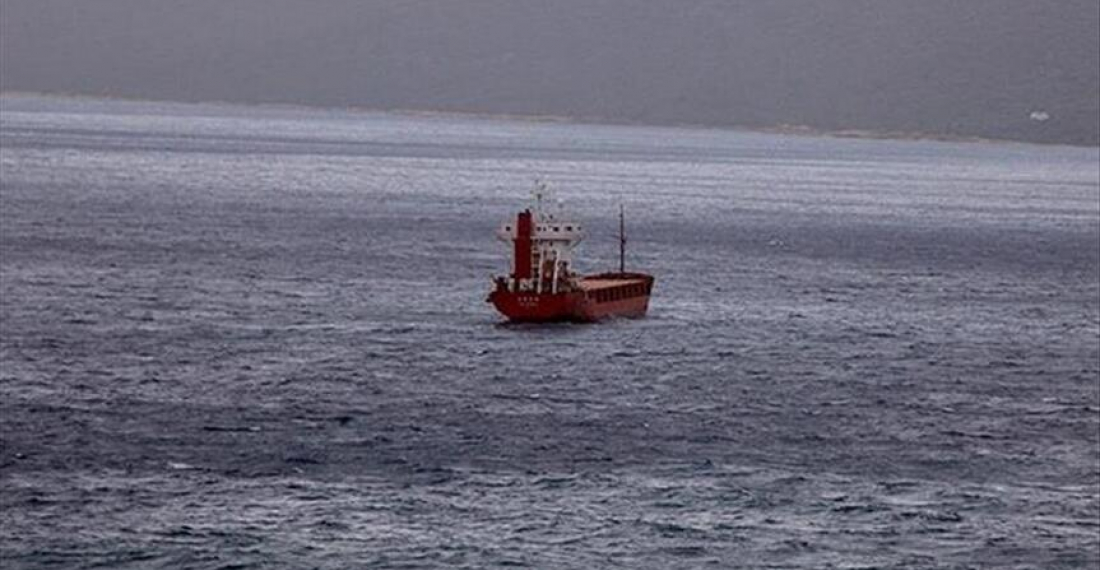
photo: A Turkish ship close to Libyan waters (archive picture)

Related articles

Editor's choice
News
Situation in South Yemen strains relations between Saudi Arabia and UAE

Situation in South Yemen strains relations between Saudi Arabia and UAE

The relations between Saudi Arabia and the United Arab Emirates (UAE) are increasingly strained as a result of the different approach of the two countries towards Yemen. Whilst both countries were initially together in resisting the Houthi take over in Yemen, the UAE subsequently focused on the South of the country, backing the Southern Movement (STC), which seeks to restore the independence of South Yemen. South Yemen became an independent country in 1967, at the end of British rule, and only unified with the north in 1990. The Saudi-led “Coalition to Support Legitimacy in Yemen” on Tuesday, 30 December, said it conducted a “limited” airstrike targeting two ships “that smuggled weapons and other military hardware into Mukalla in southern Yemen”. The ships originated in the UAE port of Furjeirah. In a statement carried by the Saudi Press Agency (SPA), the Coalition Forces spokesman, Major General Turki Al-Maliki, said that two ships coming from the port of Fujairah in the United Arab Emirates entered the Port of Mukalla in Hadramaut without obtaining official permits from the Joint Forces Command of the Coalition. He stressed the Coalition's "continued commitment to de-escalation and enforcing calm in the governorates of Hadramawt and Al-Mahra, and to prevent any military support from any country to any Yemeni faction without coordination with the legitimate Yemeni government and the Coalition. The Southern Transitional Council (STC), launched a sweeping military campaign early in December, seizing the governorates of Hadramaut along the Saudi border and the eastern governorate of Al-Mahra in Yemen’s border with Oman. The UAE-backed STC forces captured the city of Seiyun, including its international airport and the presidential palace. They also took control of the strategic PetroMasila oilfields, which account for a massive portion of Yemen’s remaining oil wealth. (click the image to read the article in full).

Popular