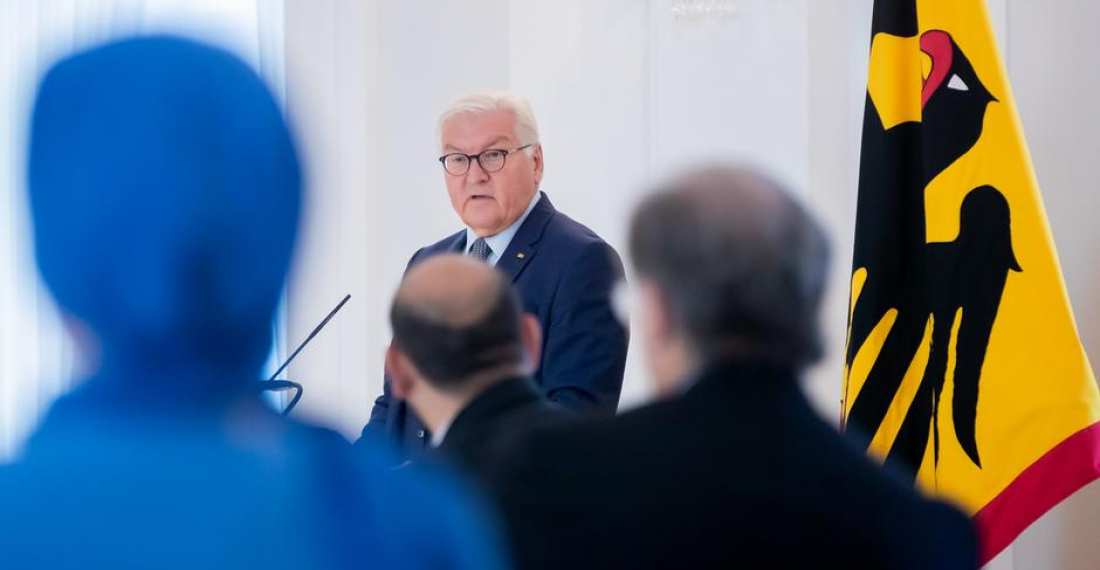
German President Frank-Walter Steinmeier praised immigrants on Friday (17 September) for helping build up Germany's economy and society. His comments came on the 60th anniversary of the day Berlin signed a migration deal with Ankara that allowed tens of thousands of Turkish citizens to find jobs in Germany. At the time, the European country desperately needed workers to power its post-war economic reconstruction.
That deal led to what is now a 2.7 million-strong Turkish German population, the largest ethnic minority community in the country.
"The people who came back then, the so-called 'guest workers': They, their children, grandchildren and great-grandchildren, they are now Germany," Steinmeier said in a speech to immigrants at the Bellevue Palace in Berlin. "A Germany without them is simply unimaginable."
The German "economic miracle" would not have happened without Turks, Italians, Greeks, and Spaniards, the German president said.
But the contribution was more than just economic, the president added, nothing that German society had been enriched as well.
"This country has a lot to thank you for," Steinmeier said, addressing immigrants and their descendants.
The president also touched on the discrimination and racism immigrant communities have faced in the past and still grappling with today. Steinmeier specifically mentioned the body searches workers faced at the hands of police when they first arrived decades ago.
"There were no language courses, no support, no integration policy, and in fact for the simple reason that integration was not desired," he told the audience.
He also referenced the "vile" murders by the far-right National Socialist Underground (NSU) in the 2000s and the xenophobic attacks over the past decades in the towns of Mölln, Solingen, and Hanau.
"It's the duty of the state to protect every human being," Steinmeier said. "Xenophobia is the hatred of human beings. And we will never tolerate this hatred in Germany!"
The president then turned to former East Germany, where immigrants from Mozambique, Cuba, and Vietnam had also contributed to making Germany "a more open, diverse...and prosperous society today."
Steinmeier called for an end to the well-documented housing and educational discrimination immigrant communities are still subjected to.
The German president said the term "German" has changed due to immigration from Turkey. "Being German today can mean having grandparents from Cologne or Königsberg as well as from Istanbul and Diyarbakir," he said, referencing German and Turkish cities. He said that German identity now includes "all those who want to live peacefully in this land of law and freedom."