EU, Arab states and Turkey welcome formation of interim executive authority in Libya

After a series of talks and extended negotiations, various Libyan political and armed factions have agreed to form a new interim leadership that will act as a unified executive authority until elections on 24 December. 

During a meeting in Geneva last week, the 74 members of the Libyan Political Dialogue Forum (LPDF) chose a slate of four candidates. The list included Misrata-based politician and businessman Mohammed Dbeibah as Prime Minister and other three politicians as members of the Presidential Council. These include and Mohammed Younes Menfi from eastern Libya, Moussa Al-Koni from the south of the country, and Abdallah Hussein Al-Lafi from the western city of Zuwara.

The list triumphed over candidates on a rival lists led by Fathi Bashagha, the security chief of the UN-recognised Government of National Accord (GNA), and Aguila Saleh, the head of the eastern-based parliament.

The members of the interim authority will not be eligible to stand as candidates in December’s elections. It is only tasked with preparing to unify the state's economic and financial institutions, tackling the dire living conditions many Libyans have been forced to endure, and enacting economic reforms needed to ensure a more equitable distribution of oil revenues in the country, which is a member of OPEC.

In remarks by the High Representative, Josep Borrell, the European Union pledged to fully support the interim authority. 

"We are ready to work with the new President of the Presidency Council, Mohammad Younes Menfi, and the new Prime Minister, Abdul Hamid Mohammed Dbeibah, and stress the need for the swift formation of a new, inclusive government that will work for national reconciliation and unification of the country. We encourage the House of Representatives to vote on the LPDF outcomes according to the timeline agreed in the Road Map adopted by the LPDF in Tunis in November 2020." 

Read the statement by High Representative Josep Borrell on behalf of the EU here

Stephanie Williams, the UN’s acting special representative for Libya, reminded that the work is still at its early phases and that more work needs to be done in preparation for the elections. 

“Let’s be clear: the goal here is national elections,” she stressed as she urged the winners to respect agreed deadlines, including the endorsement of a new government by the parliament within 42 days. Until then, the GNA remains the caretaker government. After that date, all parallel institutions will be considered “null and void.”

UN Secretary-General Antonio Guterres hailed the selection of the interim leadership as a breakthrough that followed a long process of negotiation that began to bear fruit when the 5+5 Joint Military Commission agreed on a ceasefire in October last year.

Jan Kubis, who was appointed the UN’s special envoy to Libya last month, will now take over from Williams. 

Arab countries have welcomed the agreement of a new interim executive authority in Libya. Secretary-General of the Gulf Cooperation Council Nayef Falah Al-Hajraf said the decision was an important step to reach a permanent and comprehensive solution that achieved security, stability and development in Libya. 

Egypt, UAE, Bahrain, Kuwait and Jordan have also expressed their hopes for stability and supported the transition to an elected and unified government. 

Turkey has been one of the countries to welcome recent developments

“We welcome the designation of the President and members of the Presidency Council and the Prime Minister who will serve until the general elections that are scheduled to be held on 24 December 2021 in Libya, as a result of the elections held in the Libyan Political Dialogue Forum (LPDF),” the Turkish Foreign Ministry said in a statement. “We hope that the new Government of National Unity will be formed and take office as soon as possible on the basis of the Road Map adopted by the LPDF,” the ministry noted.

In Libya itself, there is a mix of slight optimism and relief. No controversial figures made it to the lists and various political factions have generally agreed to cooperate. Whilst uncertainly is always present, the Libyan street feels optimistic about its progress and what lies ahead. 
Source: commonspace.eu with Arab News (Riyadh) and Anadolu Agency (Ankara) and agencies. 
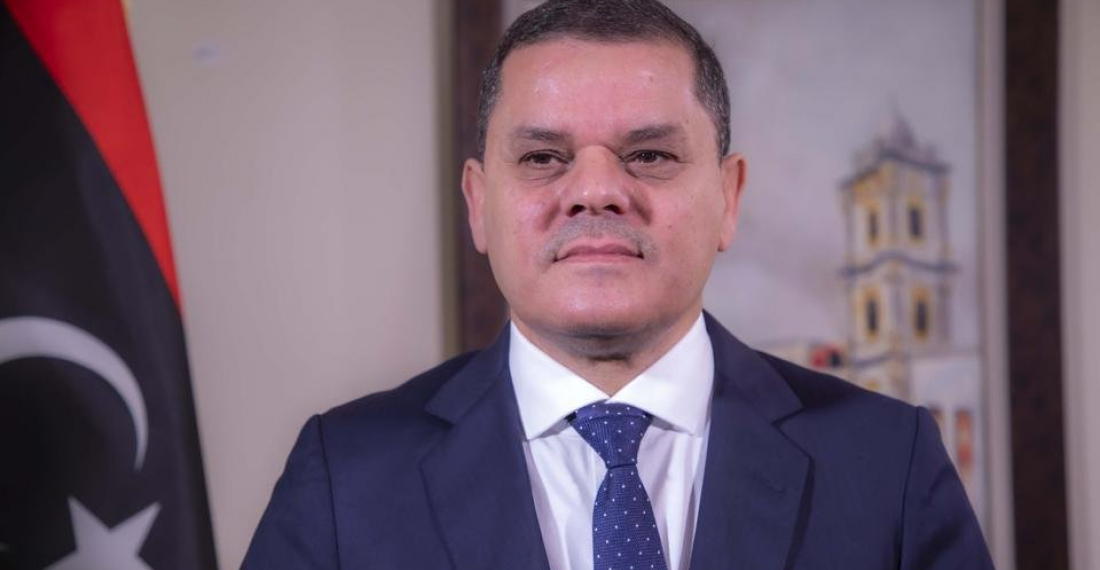
Picture: Libya's new PM Abdul Hamid Dbeibeh (Twitter: @eha_news). 

Related articles

Editor's choice
News
Finland hosts European Arctic Summit

Finland hosts European Arctic Summit

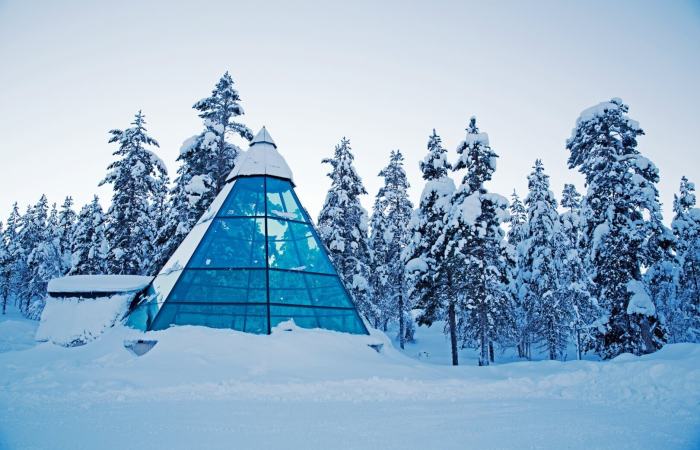
The Arctic summit of European leaders will be held in Rovaniemi, a municipality in Northern Finland on 13–14 September. Prime Minister Petteri Orpo has invited a group of EU leaders to the summit. The aim of the summit is to strengthen the EU’s common strategic approach to the Arctic region as its geopolitical significance continues to grow rapidly. “The Arctic region is an increasingly important part of Europe's security environment. The European Union has direct interests in its stability, security and sustainable development. It is very valuable to be able to discuss these issues together with a comprehensive group of EU leaders,” said Orpo. The summit will be attended by German Chancellor Friedrich Merz, Prime Minister of Poland Donald Tusk, Prime Minister of Denmark Mette Frederiksen, Prime Minister of Estonia Kristen Michal, Prime Minister of Latvia Andris Kulbergs, President of Lithuania Gitanas Nausėda and President of Romania Nicușor Dan. President of the European Council António Costa and High Representative of the Union for Foreign Affairs and Security Policy Kaja Kallas will also take part in the summit. The summit is taking place against an extremely dynamic backdrop. In the face of accelerating climate change and geopolitical tensions in the Strait of Hormuz, the economic importance of the northeast passage is growing. For 2026, more than forty million tonnes of freight are expected to pass through the Northern Sea Route for the first time, primarily due to expanded trade between Russia and China. Furthermore, in August, China launched its first regular container service through the Arctic. Finally, the EU’s Arctic policy itself is set for a reorientation: the Commission intends to present an updated Arctic strategy this autumn, in which security is to play a central role for the first time. Kaja Kallas had already advocated for this at the Arctic Frontiers conference in Tromsø earlier this year, stating that the Arctic needed more attention, more resources, and more hard power. The summit in Rovaniemi can therefore also be seen as a dress rehearsal for the new strategy. Finland brings a unique perspective to this debate: over 95 per cent of Finland’s foreign trade in goods is conducted by sea, and its ports freeze over almost every winter. This structural peculiarity has given rise to a strong export sector in the field of icebreakers: Finnish companies have designed around 80 per cent of all icebreakers worldwide and built around 60 per cent; even the US Coast Guard is having the first vessels of its new Arctic Security Cutter class built in Finland because the domestic alternative could not meet the schedule. The fact that this leverage can also be utilised geopolitically has already been successfully demonstrated. At the end of September 2022, the Finnish Ministry of Foreign Affairs refused to grant an export licence for an LNG icebreaker ordered by the Russian mining group Norilsk Nickel, thereby bringing to an end a project that would have created around 2,100 person-years of employment. (click the image to read more).

Popular

Editor's choice
Interview
Thursday Interview: Murad Muradov

Thursday Interview: Murad Muradov

Today, commonspace.eu starts a new regular weekly series. THURSDAY INTERVIEW, conducted by Lauri Nikulainen, will host  persons who are thinkers, opinion shapers, and implementors in their countries and spheres. We start the series with an interview with Murad Muradov, a leading person in Azerbaijan's think tank community. He is also the first co-chair of the Action Committee for a new Armenian-Azerbaijani Dialogue. Last September he made history by being the first Azerbaijani civil society activist to visit Armenia after the 44 day war, and the start of the peace process. Speaking about this visit Murad Muradov said: "My experience was largely positive. My negative expectations luckily didn’t play out. The discussions were respectful, the panel format bringing together experts from Armenia, Azerbaijan, and Turkey was particularly valuable during the NATO Rose-Roth Seminar in Yerevan, and media coverage, while varied in tone, remained largely constructive. Some media outlets though attempted to represent me as more of a government mouthpiece than an independent expert, which was totally misleading.  Overall, I see these initiatives as important steps in rebuilding trust and normalising professional engagement. The fact that soon a larger Azerbaijani civil society visits to Armenia followed, reinforces the sense that this process is moving in the right direction." (click the image to read the interview in full)