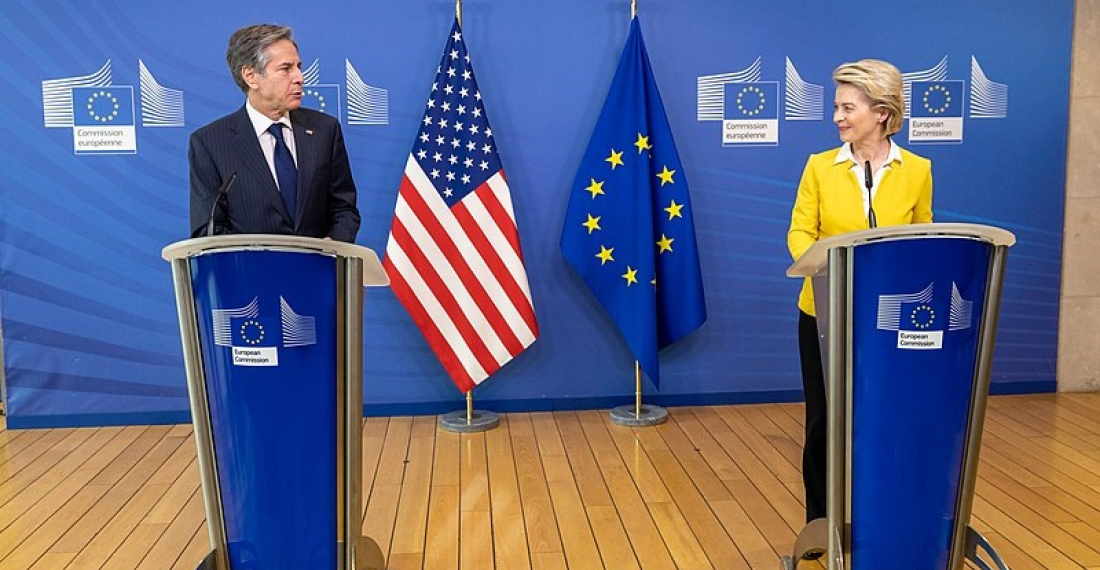
Armenian prime minister, Nikol Pashinyan, is in Brussels, where he is expected to meet on Friday afternoon (5 April) with US Secretary of State, Antony Blinken and European Commission president, Ursula von der Leyen. The unusual format of the tripartite meeting is being billed as "the joint EU-US-Armenia high-level meeting in support of Armenia’s resilience".
There has been intense speculation about the purpose of the meeting, and the likely outcomes. Azerbaijan has seen it as an attempt to encourage Armenia to take a more hardline position in its dealings with it, including in the current negotiations of an Armenia-Azerbaijan peace treaty. Russia has been vocal in criticising the meeting, seeing it as yet another western attempt at snatching Armenia away from the Russian orbit. Other countries, such as Turkey and Iran have also been critical of the three way meeting.
Behind the scenes there have been a lot of work going on in order to calm down neves, especially in Baku, and ahead of the meeting, both Secretary of State Blinken and President von der Leyen, spoke to Azerbaijani president Ilham Aliyev.
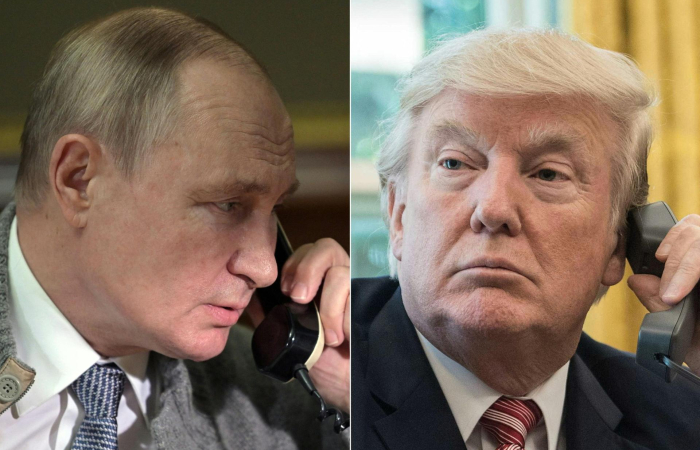
Aliyev-Blinken telephone conversation
In a read out of the Blinken-Aliyev telephone conversation, the State Department Spokesperson Matthew Miller said:
Secretary of State Antony J. Blinken spoke today with Azerbaijani President Ilham Aliyev. The Secretary reinforced the importance of the U.S.-Azerbaijan bilateral relationship and highlighted a growing number of partnership initiatives, including energy and climate priorities. Secretary Blinken and President Aliyev discussed the importance of advancing the peace process between Azerbaijan and Armenia, which would bring economic benefits to the entire region. The Secretary underscored that there is no justification for increased tension on the border and cautioned that aggressive actions and rhetoric from any side would undermine prospects for peace. The Secretary reiterated the need for Azerbaijan to adhere to its international obligations and commitments regarding human rights and fundamental freedoms and urged the release of those unjustly detained.
There was a much longer readout published on the website of the Azerbaijani presidential administration:
On April 3, U.S. Secretary of State Antony Blinken made a phone call to the President of the Republic of Azerbaijan Ilham Aliyev.
Antony Blinken said he had received reports that the trilateral meeting between the U.S., the European Union, and Armenia to be held on April 5 had caused concern with the Azerbaijani side and stressed the importance of clarifying the issue by speaking with President Ilham Aliyev regarding this matter. The Secretary of State pointed out that the primary focus of the said meeting would be on Armenia’s economic development issues.
President Ilham Aliyev highlighted that, based on the information he received, discussions preceding the trilateral meeting included topics such as military support for Armenia, joint military exercises, the establishment of military infrastructure along border areas with Azerbaijan, and Armenia's arming through the EU's European Peace Facility funded through the U.S. budget. The head of state emphasized that such steps carry an anti-Azerbaijan nature, including the policy of arming Armenia by France, which will escalate the arms race in the region and cause provocations.
During the telephone conversation, Antony Blinken underlined that the meeting on April 5 was not aimed against Azerbaijan.
Discussions were also held regarding peace negotiations between Armenia and Azerbaijan. President Ilham Aliyev said that the negotiations held in Berlin by the foreign ministers regarding the text of the peace agreement were beneficial in terms of advancing the process and emphasized the need to accelerate the negotiations. In addition, the head of state emphasized that the accusations voiced in the West about Azerbaijan intending to attack Armenia are completely baseless. President Ilham Aliyev asserted that the French Minister of Foreign Affairs lied during a press conference alongside Antony Blinken in Paris on April 2 by accusing Azerbaijan of not recognizing Armenia's territorial integrity and posing a threat to Armenia. The head of state highlighted Azerbaijan's adherence to the statement adopted during the Prague meeting in 2022 and the Almaty Declaration.
President Ilham Aliyev stated that non-transparent preparation, lack of inclusivity, and refusal to postpone the trilateral meeting scheduled for April 5 between the United States, the European Union, and Armenia, despite Azerbaijan's valid concerns, would ultimately escalate tensions and create new dividing lines instead of fostering peace and cooperation in the South Caucasus.
During the conversation, they also touched upon bilateral cooperation between Azerbaijan and the United States. Antony Blinken referenced his previous discussions with President Ilham Aliyev during the Munich Security Conference in February this year, affirming the U.S.'s intention to expand cooperation with Azerbaijan across various sectors. He also mentioned the contacts between the delegations of the two countries within the framework of COP29.
President Ilham Aliyev reiterated Azerbaijan's keen interest in advancing bilateral relations with the United States in the areas previously discussed during the Munich Security Conference, noting that COP29 presents excellent opportunities for cooperation between the two nations in the field of climate change and green technologies.
Aliyev - von der Leyen telephone conversation
The following day, it was Ursula von der Leyen's turn. No read out of the telephone conversation between her and President Aliyev has been so far issued by the EU, but the website of the president of Azerbaijan published the following:
On April 4, Ursula von der Leyen, President of the European Commission, made a phone call to Ilham Aliyev, President of the Republic of Azerbaijan.
During the telephone conversation, the parties discussed the prospects for the development of cooperation between Azerbaijan and the European Union, particularly highlighting such areas of cooperation as renewable energy, transportation connections, energy security, and others.
They underscored the importance of the Memorandum of Understanding on Strategic Partnership in the field of energy, signed between Azerbaijan and the European Union in 2022.
They noted that COP29 to be held in Baku under Azerbaijan's presidency provides favorable opportunities for cooperation in climate action and the green transition.
The President of the European Commission emphasized the readiness of the European Union to support Azerbaijan in the humanitarian demining efforts.
The issue related to the trilateral meeting to be held in Brussels on April 5 was raised during the phone conversation. President Ilham Aliyev reiterated Azerbaijan's standpoint on this meeting, similar to the discussions with U.S. Secretary of State Antony Blinken, and emphasized the need for regional inclusivity.