Batumi - The new playground in the Caucasus

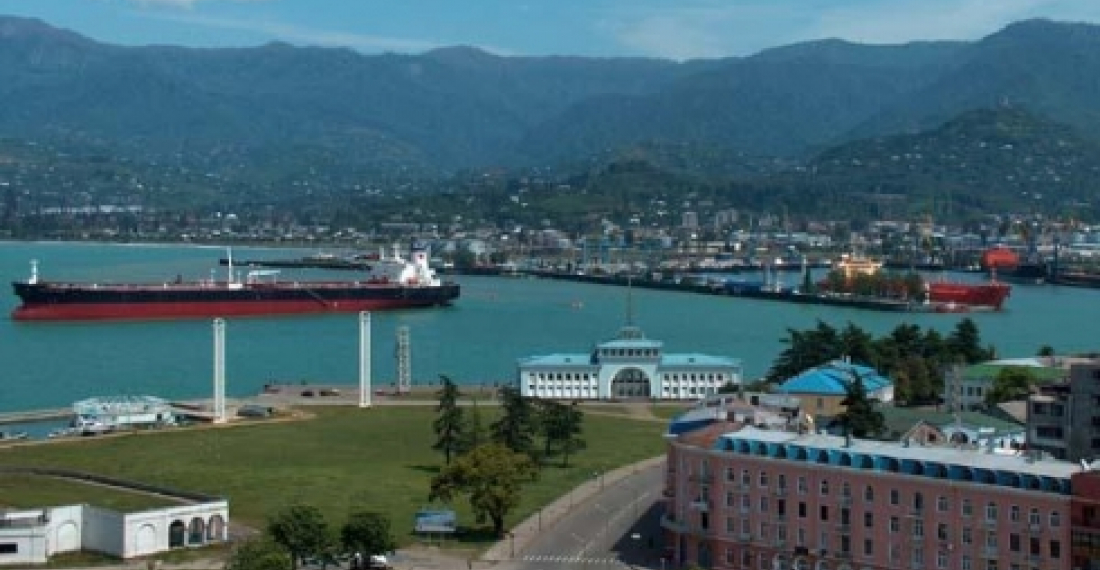
The policy of the Georgian government to turn Adjara into a prime tourist destination in the Caucasus seems to be bearing fruit. 130,483 tourists visited the region in July, an increase of 78% over the number of visitors last year. Visitors came from Turkey, Iran, Azerbaijan, Armenia and beyond. Apart from overseas tourists thousands of Georgians are flocking to Adjara this summer, escaping the Tbilisi heatwave and enjoying the new facilities.

After ousting the former Russian backed strongman, Aslan Abashidze, in 2004, the Georgian government put considerable investment in the region, and new facilities, including a number of five star hotels have been opened in the last two years. There has also been considerable foreign investment, particularly from Turkey.

In Soviet times Adjara was less popular as a tourist destination than the Abkhaz resorts of Gagra, Pitsunda and Sukhumi. These places are still visited by Russian tourists but for most others Batumi is nowadays an easier, more attractive option. There are daily flights connecting Batumi Airport to Istanbul and beyond, and visitors from Azerbaijan , Armenia and Turkey can also drive to Batumi. Adjara is now not only popular as a family holiday destination but is increasingly popular with young people who enjoy the region's night life.

Adjara remains an Autonomous Republic inside Georgia, but the autonomy status has been very weakened since the expulsion of Abashidze. A large part of the population of Adjara is made up of Georgian Muslims, although religion plays little part in daily life except in the mountain villages outside Batumi. Adjara was part of the Othoman Empire until the 1st World War when it was occupied by the British, and eventually integrated in Georgia. Its autonomy status was granted by the Soviet government in response to Turkish concerns regarding the religious sensibilities of the population.

These days the Georgian government looks at Batumi as its summer capital, and President Saakashvili often receives foreign dignitaries visiting Georgia in Batumi. The most recent visitor was the Polish President Stansilaw Bomorowski who was there last week.


source: commonspace.eu newsroom

Related articles

Editor's choice
News
European leaders set out their plan for Ukraine

European leaders set out their plan for Ukraine

The leaders of Germany, Denmark, Finland, France, Italy, Netherlands, Norway, Poland, Sweden, and United Kingdom, together with the President of the European Council, and the President of the European Commission, o  Monday (15 December) issued a statement, outlining their plan for Ukraine. In their statement, Chancellor Merz, Prime Minister Frederiksen, President Stubb, President Macron, Prime Minister Meloni, Prime Minister Schoof, Prime Minister Støre, Prime Minister Tusk, Prime Minister Kristersson, Prime Minister Starmer, as well as President Costa and President von der Leyen spoke about "Peace for Ukraine". The Leaders welcomed significant progress on President Trump’s efforts to secure a just and lasting peace in Ukraine. They also welcomed the close work between President Zelenskyy’s and President Trump’s teams as well as European teams over the recent days and weeks. They agreed to work together with President Trump and President Zelenskyy to get to a lasting peace which preserves Ukrainian sovereignty and European security. Leaders appreciated the strong convergence between the United States, Ukraine and Europe. Leaders agreed that ensuring the security, sovereignty, and prosperity of Ukraine was integral for wider Euro-Atlantic security. They were clear that Ukraine and its people deserved a prosperous, independent, and sovereign future, free from fear of future Russian aggression. Both the US and European leaders committed to work together to provide robust security guarantees and economic recovery support measures for Ukraine in the context of an agreement on ending the war. This would include commitments to: Provide sustained and significant support to Ukraine to build its armed forces, which should remain at a peacetime level of 800,000 to be able to deter conflict and defend Ukraine’s territory. A European-led ‘multinational force Ukraine’ made up from contributions from willing nations within the framework of the Coalition of the Willing and supported by the US. It will assist in the regeneration of Ukraine’s forces, in securing Ukraine’s skies, and in supporting safer seas, including through operating inside Ukraine. (Click the image to read the statement in full).

Popular