Monday Commentary: NATO’s new sense of purpose well reflected during last week’s Bucharest Ministerial Meeting

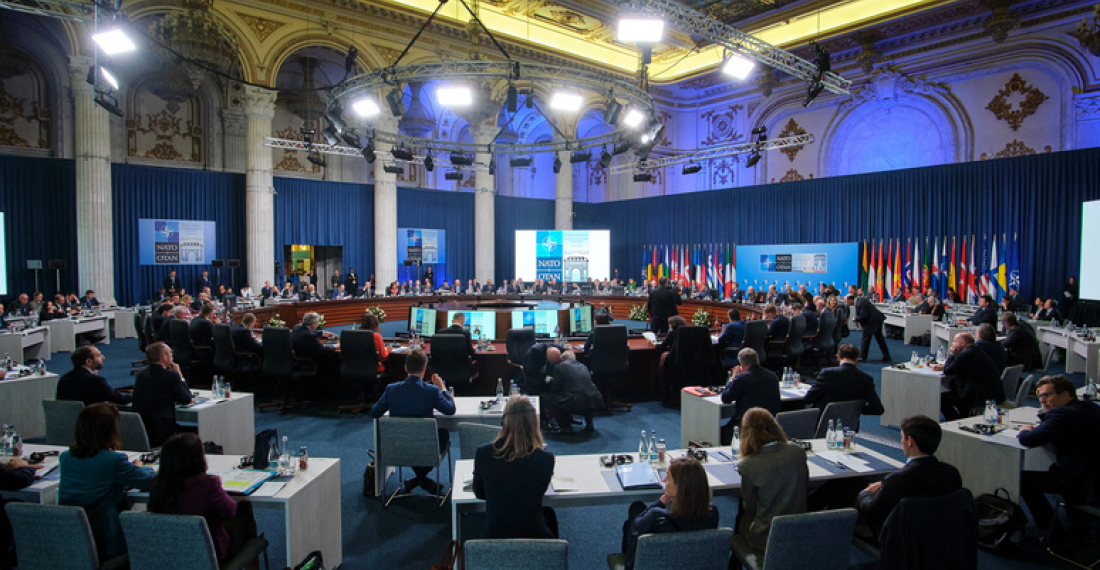
The Foreign ministers of NATO member states met in Bucharest on Tuesday and Wednesday,  (29 – 30 November), at a time when, as a result of the Russian invasion of Ukraine, Europe faces one of the most serious security challenges since the alliance came into being in 1949.

The invasion tore up Europe’s security order, and NATO members have had to respond quickly and in a determined fashion to the invasion.

The big NATO Family gathered in Bucharest, cousins and all

First, it is interesting to note the participants in Bucharest Ministerial. Apart from the thirty member states, Sweden and Finland participated in the Ministerial Council invitees, although their membership of the organisation, already agreed, has yet to be fully formalised through a laborious ratification process in all of the member states. Also present was Ukraine – the country that has been the victim of Russian aggression. Ukraine wants to join NATO, but before February that prospect seemed distant. Now, the question is only when. Three other partner countries were also present in Bucharest for the second part of the meeting. These were Georgia, Moldova and Bosnia-Herzegovina, countries that NATO recognises as special partners.

This is NATO’s new configuration, and despite the different nuances between members, invitees and aspirants, this was one family meeting together and sending a signal that all stand together.

The sense of unity that has prevailed in the alliance since the Russian invasion could not be taken for granted. Indeed miscalculation of possible rifts within the alliance may have inspired Vladimir Putin to pursue his aggressive policy in Ukraine. If that was the case, the actual response from the NATO members would have come to him as a shock.

Ukraine is a test that NATO must win

It was not NATO that triggered the Ukraine crisis. Indeed NATO, in its’ past quest not to alienate Russia, is sometimes accused of being overcautious in its relations with Ukraine prior to February. The Russian invasion has tested the alliance in many ways – the political will and unity of the member states; the capability of the alliance to support an ally who is not a member through a hybrid response; and the speed with which it could bolster its military capability on its Eastern flank to reassure member states. So far one can say that NATO has performed well. This resolute response however needs to be sustained.

As Secretary General Jens Stoltenberg underlined in a speech to a think tank, on the margins of the Bucharest Ministerial meeting, NATO is determined to support Ukraine and defend all Allies. He said that Allies will continue to stand by Ukraine as it defends against Russia's illegal war of aggression. ''There can be no lasting peace if the aggressor wins,'' he said. ''There can be no lasting peace if oppression and autocracy prevail over freedom and democracy.''

In their final statement, the foreign ministers were equally clear:

“We will continue and further step up political and practical support to Ukraine as it continues to defend its sovereignty and territorial integrity and our shared values against Russian aggression and will maintain our support for as long as necessary.  In this context, NATO will continue to coordinate closely with relevant stakeholders, including international organisations, in particular the EU, as well as like-minded countries.  Building on the support provided so far, we will help Ukraine now to strengthen its resilience, protect its people, and counter Russia’s disinformation campaigns and lies.  Allies will assist Ukraine as it repairs its energy infrastructure and protects its people from missile attacks. We also remain resolute in supporting Ukraine’s long-term efforts on its path of post-war reconstruction and reforms, so that Ukraine can secure its free and democratic future, modernise its defence sector, strengthen long-term interoperability and deter future aggression.  We will continue to strengthen our partnership with Ukraine as it advances its Euro-Atlantic aspirations.”

The statement also had words of support for Turkey in the light of the recent terrorist attack in Istanbul, and reassurance of continued support to partners in the Western Balkans, Moldova and Georgia. Some member states are ittitated that Turkey has dragged its feet on the issue of admission of Sweden and Finland, but all allies recognise the value of Turkey as member of the alliance.

China, and NATO’s future

The NATO ministerial meeting in Bucharest also addressed one other issue as a priority – China.

According to the NATO website, “Foreign ministers considered China’s ambitious military developments, its technological advances, and its growing cyber and hybrid activities. They also stressed the importance of meeting NATO’s resilience guidelines, maintaining NATO’s technological edge, and continuing to strengthen cooperation with partners in the Indo-Pacific region and with the European Union.” Speaking in Bucharest, Secretary General Stoltenberg said that the war in Ukraine demonstrated a dangerous dependency on Russian gas, and that "this should also lead us to assess our dependencies on other authoritarian regimes, not least China, for our supply chains, technology, or infrastructure." He added: we will continue, of course, to trade and engage economically with China, but we have to be aware of our dependencies, reduce our vulnerabilities, and manage the risks."

China is likely to feature more prominently in NATO's thinking going forward.

An alliance that is focused, and, on the move, but that remains rooted in its principles.

NATO comes out from the Bucharest Ministerial meeting strengthened and resolute. It is an alliance that is on the move as it responds to new challenges. But NATO also remains rooted in its principles. As the foreign ministers declared in their final statement, NATO is a defensive alliance. “We will continue to strive for peace, security and stability in the whole of the Euro-Atlantic area”, they declared.

These principles need to be constantly re-affirmed. NATO needs to work with friendly countries and governments across the world if it is to succeed in its task. This requires sensitivity, tactful diplomacy and respect for friends and partners.

There is a lot of work to be done in the coming weeks and months. The foreign ministers will meet informally in Norway in the first half of 2023 to prepare for NATO’s next leader summit scheduled to be held in Vilnius, Lithuania in July 2023. By then Sweden and Finland should be full members of the alliance, the situation in Ukraine clearer, and NATO’s role in future global security, at a time of increased uncertainty, better defined.
Source: Dr Dennis Sammut is Managing Editor of commonspace.eu and Director of LINKS Europe based in The Hague. He writes regularly on European and international security issues, the EU’s policy and strategy towards its neighbourhood and Gulf affairs. (director@links-europe.eu)
Photo: The NATO Ministerial Meeting held in Brussels on 27-28 November 2022 (picture courtesy of the press service of NATO, Brussels).
Monday Commentary is a personal opinion, and does not necessarily reflect the views of commonspace.eu or its partners and supporters

Related articles

Editor's choice
News
Key European countries back Denmark in the face of Trump's continuing insistence on taking over Greenland

Key European countries back Denmark in the face of Trump's continuing insistence on taking over Greenland

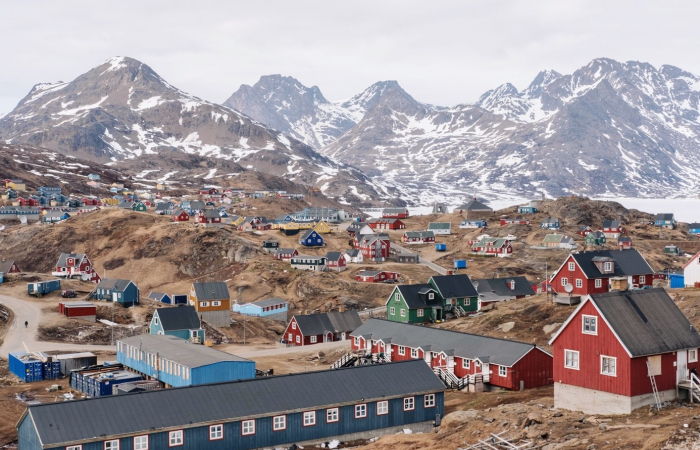
 Six major European countries have declared their support to Denmark following renewed insistence by the US that it must have control over Greenland. "Greenland belongs to its people, and only Denmark and Greenland can decide on matters concerning their relations," said the leaders of the UK, France, Germany, Italy, Poland, and Spain, in a joint statement, issued on Tuesday (6 January), together with Denmark. On Sunday, Donald Trump said the US "needed" Greenland - a semi-autonomous region of fellow Nato member Denmark - for security reasons. He has refused to rule out the use of force to take control of the territory, and Danish Prime Minister Mette Frederiksen warned on Monday that an attack by the US would spell the end of Nato. The issue of Greenland's future resurfaced in the wake of the US military intervention in Venezuela, during which elite troops went in to seize the country's President Nicolás Maduro and take him to face drugs and weapons charges in New York. Following the raid, Trump said the US would "run" Venezuela for an unspecified period of time. He also said the US was returning to an 1823 policy of US supremacy in its sphere of influence in the Western hemisphere - and he warned a number of countries the US could turn its attention to them. The US military raid in Venezuela has reignited fears that the US may consider using force to secure control of Greenland. A day after the raid, Katie Miller - the wife of one of Trump's senior aides - posted on social media a map of Greenland in the colours of the American flag, alongside the word "SOON". On Monday, her husband Stephen Miller said it was "the formal position of the US government that Greenland should be part of the US". In an interview with CNN, he also said the US "is the power of Nato. For the US to secure the Arctic region, to protect and defend Nato and Nato interests, obviously Greenland should be part of the US." Asked repeatedly whether the US would rule out using force to annex it, Miller responded: "Nobody's going to fight the US over the future of Greenland." Stressing they were as keen as the US in Arctic security, the seven European signatories of Tuesday's joint statement said this must be achieved by Nato allies, including the US "collectively" - whilst "upholding the principles of the UN Charter, including sovereignty, territorial integrity and the inviolability of borders". Greenland's Prime Minister Jens-Frederik Nielsen welcomed the statement and called for "respectful dialogue". "The dialogue must take place with respect for the fact that Greenland's status is rooted in international law and the principle of territorial integrity," Nielsen said. Trump has claimed that making Greenland part of the US would serve American security interests due to its strategic location and its abundance of minerals critical to high-tech sectors. Greenland, which has a population of 57,000 people, has had extensive self-government since 1979, though defence and foreign policy remain in Danish hands. While most Greenlanders favour eventual independence from Denmark, opinion polls show overwhelming opposition to becoming part of the US.
Editor's choice
News
Donald Tusk: "One for all, and all for one! Otherwise we are finished."

Donald Tusk: "One for all, and all for one! Otherwise we are finished."

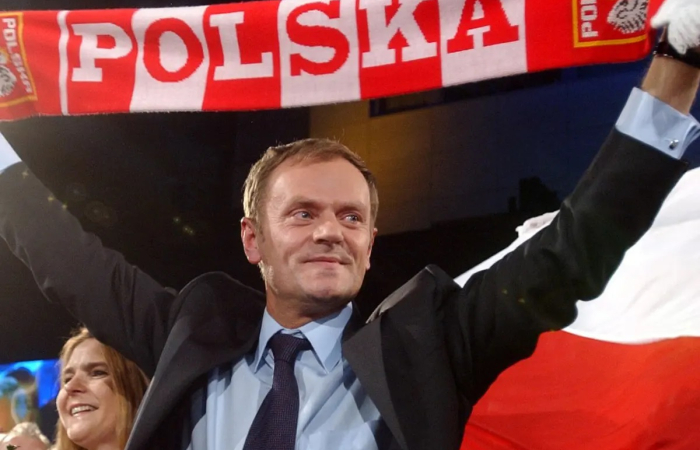
Europe is rattled by events in Venezuela, and there are serious concerns that US disregard for international law may have consequences close to home.  The BBC diplomatic correspondent, James Landale, said, the question is how Europe may respond in the longer term to America's military operation in Venezuela. Will it provide a catalyst for the continent to take greater responsibility for its own security in the face of so much instability from what many see as an unreliable ally? Polish prime minister, Donald Tusk, appears to have answered the question, saying on social media: "No-one will take seriously a weak and divided Europe: neither enemy nor ally. It is already clear now. "We must finally believe in our own strength, we must continue to arm ourselves, we must stay united like never before. One for all, and all for one. Otherwise, we are finished." The US seizing of Venezuela's leader has faced strong criticism from both America's friends and foes at an emergency meeting of the United Nations Security Council, held on Monday, 5 January. Many member states agreed with the US that Nicolás Maduro had been an illegitimate and repressive leader. But many also condemned the US military action as a breach of international law and the UN Charter, and they demanded a democratic transition that reflected the will of the Venezuelan people. (click the image to read the full article).

Popular

Editor's choice
News
Key European countries back Denmark in the face of Trump's continuing insistence on taking over Greenland

Key European countries back Denmark in the face of Trump's continuing insistence on taking over Greenland

 Six major European countries have declared their support to Denmark following renewed insistence by the US that it must have control over Greenland. "Greenland belongs to its people, and only Denmark and Greenland can decide on matters concerning their relations," said the leaders of the UK, France, Germany, Italy, Poland, and Spain, in a joint statement, issued on Tuesday (6 January), together with Denmark. On Sunday, Donald Trump said the US "needed" Greenland - a semi-autonomous region of fellow Nato member Denmark - for security reasons. He has refused to rule out the use of force to take control of the territory, and Danish Prime Minister Mette Frederiksen warned on Monday that an attack by the US would spell the end of Nato. The issue of Greenland's future resurfaced in the wake of the US military intervention in Venezuela, during which elite troops went in to seize the country's President Nicolás Maduro and take him to face drugs and weapons charges in New York. Following the raid, Trump said the US would "run" Venezuela for an unspecified period of time. He also said the US was returning to an 1823 policy of US supremacy in its sphere of influence in the Western hemisphere - and he warned a number of countries the US could turn its attention to them. The US military raid in Venezuela has reignited fears that the US may consider using force to secure control of Greenland. A day after the raid, Katie Miller - the wife of one of Trump's senior aides - posted on social media a map of Greenland in the colours of the American flag, alongside the word "SOON". On Monday, her husband Stephen Miller said it was "the formal position of the US government that Greenland should be part of the US". In an interview with CNN, he also said the US "is the power of Nato. For the US to secure the Arctic region, to protect and defend Nato and Nato interests, obviously Greenland should be part of the US." Asked repeatedly whether the US would rule out using force to annex it, Miller responded: "Nobody's going to fight the US over the future of Greenland." Stressing they were as keen as the US in Arctic security, the seven European signatories of Tuesday's joint statement said this must be achieved by Nato allies, including the US "collectively" - whilst "upholding the principles of the UN Charter, including sovereignty, territorial integrity and the inviolability of borders". Greenland's Prime Minister Jens-Frederik Nielsen welcomed the statement and called for "respectful dialogue". "The dialogue must take place with respect for the fact that Greenland's status is rooted in international law and the principle of territorial integrity," Nielsen said. Trump has claimed that making Greenland part of the US would serve American security interests due to its strategic location and its abundance of minerals critical to high-tech sectors. Greenland, which has a population of 57,000 people, has had extensive self-government since 1979, though defence and foreign policy remain in Danish hands. While most Greenlanders favour eventual independence from Denmark, opinion polls show overwhelming opposition to becoming part of the US.