

MEDVEDEV: The region "is a zone of Russian interests".

"I fully agree with opinion of President Ilham Aliyev that Russia and Azerbaijan are tied with warm and friendly relations of two strategic partners".

The statement came from President of Russia Dmitriy Medvedev. He was commenting to a special edition of The Business Year magazine on 20th anniversary of Azerbaijan – The Business Year Azerbaijan 2011.

'The essence of these relations are manifested in different spheres of cooperation including economic, humanitarian and the sphere of provision of security. These close ties were openly manifested in the support Russia received from Azerbaijan during the recent natural disaster when fires covered the Russian territory. Looking into the future, I see bright perspectives for cooperation', he said.

According to the Russian president, energy is among the main sector, but not the only sphere of cooperation between the two states. He believes that energy summit in the future will help check watches on all main issues, particularly, cooperation in gas sector.

'Regional issues are constantly the center of our attention and we are discussing them with Azerbaijan. We would like to preserve the positive experience we got in issues related to Caspian Sea, which is common for our states', Medvedev said.

He said humanitarian cooperation is also very important.

'A very symbolic event occurred in 2010, when Baku transferred us icons, confiscated in the attempt of their smuggle to Azerbaijan. Such cooperation between the law enforcement bodies of the two countries is encouraging. Additionally, it was a gesture of friendship and we appreciate such relations', the Russian president said.

He said that it is necessary to be very attentive when bilateral economic interests are involved.

"We must understand that every country has its own, quite pragmatic interests. Here, unlike humanitarian sector, the main goal is to make a profit, and it is normal. We need to match our desires with our capabilities in this matter, and this is the main task.

Secondly, as I and Azerbaijani president pointed out earlier, our two countries are major players in the energy sector, and we have many common interests, as we produce and supply energy resources. Therefore, it is necessary to reach an agreement and establish even closer cooperation in this sector," Medvedev noted.

The Russian president also stressed the importance of maintaining stability in the Caucasus.

"Preserving stability in the Caucasus, of course, is also a very important issue for Russia. This is the basic concept which we adhere to when building a relationship with Azerbaijan, our closest neighbor and friend.

Therefore, we are interested in maintaining peace and order in the region. A decision to extend presence of the Russian military base in Armenia, adopted in the course of my visit to Yerevan, should be viewed in this context. The military base is designed to ensure peace and order, maintain stability and reduce the complexity that we have today," Russian President said.

He also stressed Moscow’s mediation in settlement of Armenian-Azerbaijani Nagorno-Karabakh conflict.

"The frequency of meetings between the presidents of Armenia and Azerbaijan held with my participation has reached a historic high. Speaking on the issue not so long ago I noted that I am not ashamed of our work. These were important discussions, during which the parties noted presence of a number of difficulties in this process.

But in any case, these efforts produce certain result and negotiations are going on. In my opinion, intensity of these contacts should not be reduced. Russia is ready to be responsible for its commitments within the OSCE Minsk Group. Its moral duty towards the neighboring countries is to continue dialogue on this issue between them.

Personally, I am ready to contribute to these contacts and bring up the most complicated issues on the agenda of negotiations for discussion. I hope that in near future we will continue similar consultations involving me and our foreign ministers. Russia will adhere to its obligations seriously and will take appropriate steps to help achieve the necessary result. This result is indeed a vital, since it is able to bring lasting peace and security to the region, which, no doubt, is a zone of Russian interests," Medvedev noted.

Source: 1news.az

picture courtesy of www.kremlin.ru
Related articles

Editor's choice
News
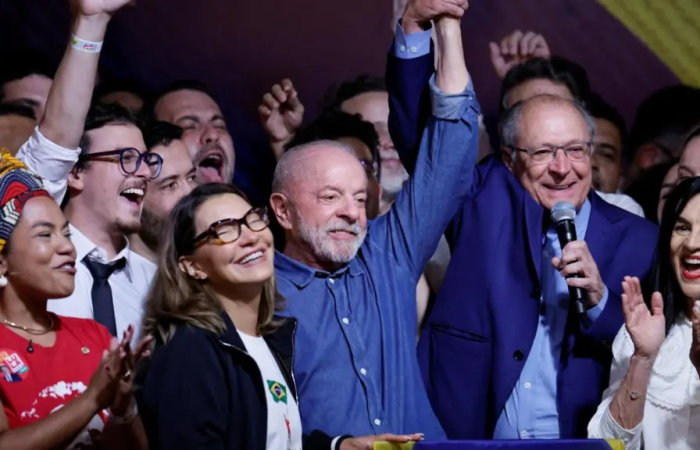
Lula wins fourth term in Brazil, Vucic loses in Serbia

Lula wins fourth term in Brazil, Vucic loses in Serbia

In elections on both sides of the Atlantic, that are likely to have deep implications for their respective regions, one incumbent won, another lost. In Brazil, Latin America's biggest country, left-wing President Lula won a fourth term in office, defeating his right-wing challenger Flávio Bolsonaro. The 80-year-old, took just under 52% of the vote in a run-off on Sunday. Lula thanked cheering supporters in São Paulo and said he had defended Brazil's democracy. His opponent, Flavio Bolsonaro - who won the first round - says the result is "inexplicable" and called for it to be annulled. His father, ex-president Jair Bolsonaro, is currently serving a jail sentence under house arrest for plotting a coup after losing the last election. This election was bitterly fought - and it bucks a wider regional trend towards right-wing leaders. On the other side of the Atlantic, in Serbia, long-standing leader Aleksandar Vučić has admitted defeat to the student-led protest movement in snap parliamentary elections. "We still do not have final results... it is clear that we have lost these elections," the right-wing populist leader said as he conceded late on Sunday. Preliminary figures from Serbia's election commission indicated a record high turnout, which commentators had suggested would favour the student movement. Celebrations erupted after Vučić conceded. Vučić called the snap elections after two years of protests triggered by the collapse of a train station canopy in the city of Novi Sad, which killed 16 and was seen as emblematic of corruption and negligence. Both election results are going to have a deep impact on their respective regions.
Editor's choice
News
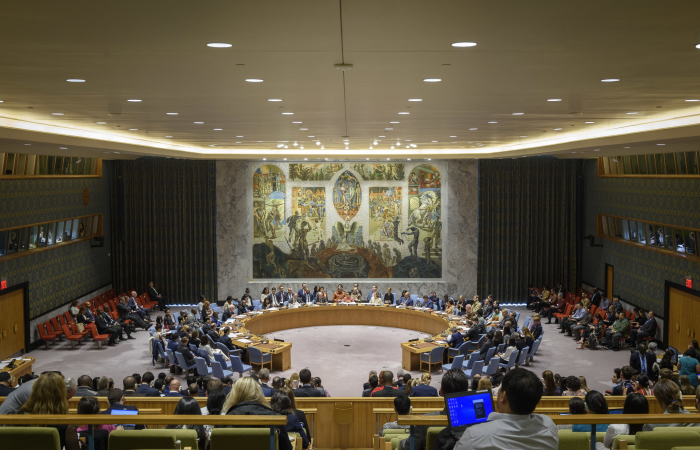
UN Security Council will discuss "Children and Armed Conflict" on Monday

UN Security Council will discuss "Children and Armed Conflict" on Monday

On Monday (26 October), the United Nations Security Council will hold an open briefing to mark the 30th anniversary of the establishment of the children and armed conflict mandate by the General Assembly. Greek Minister of Foreign Affairs Giorgos Gerapetritis is expected to chair the meeting, which is a signature event of Greece’s October Council presidency. The anticipated briefers are Special Representative of the Secretary-General for Children and Armed Conflict Vanessa Frazier; UNICEF Executive Director Catherine Russell; the Special Envoy for Children Affected by Armed Conflict of the African Union (AU), Jainaba Jagne; and the Director of Watchlist on Children and Armed Conflict, Bethany Ellis. Greece served as the chair of the Working Group on Children and Armed Conflict in 2025, but has yet to be reappointed this year due to the ongoing delays in the allocation of subsidiary body chairs. It has nonetheless continued to prioritise the agenda, including by promoting a resolution addressing the impact of digital technologies on the perpetration of violations and abuses against children, which was adopted unanimously on 19 October as resolution 2832 and was co-sponsored by 93 member states. (For more information, see our 18 October What’s in Blue story.) In addition to organising tomorrow’s signature event, Greece invited civil society briefers focusing on the protection of children to two Council meetings—on Yemen and Syria, on 9 and 12 October, respectively—and chaired a meeting of the Working Group on Children and Armed Conflict on 13 October. Greece has circulated a concept note ahead of tomorrow’s meeting, which says that the briefing aims to assess the progress achieved in the 30 years since the children and armed conflict agenda was established as well as the challenges it faces. (click image to read more)

Popular

Editor's choice
Interview
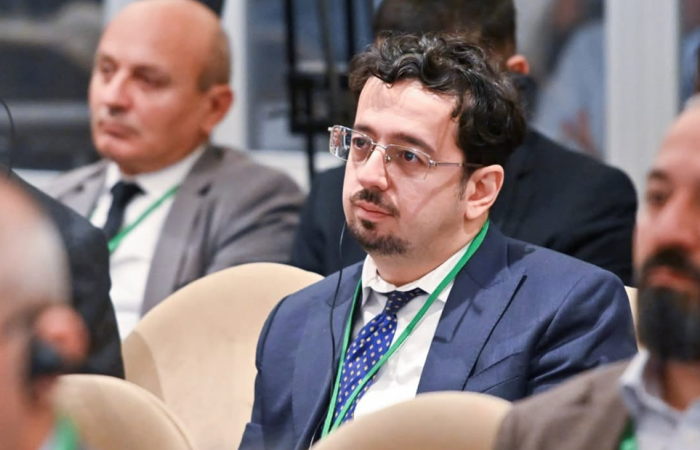
Thursday Interview: Murad Muradov

Thursday Interview: Murad Muradov

Today, commonspace.eu starts a new regular weekly series. THURSDAY INTERVIEW, conducted by Lauri Nikulainen, will host  persons who are thinkers, opinion shapers, and implementors in their countries and spheres. We start the series with an interview with Murad Muradov, a leading person in Azerbaijan's think tank community. He is also the first co-chair of the Action Committee for a new Armenian-Azerbaijani Dialogue. Last September he made history by being the first Azerbaijani civil society activist to visit Armenia after the 44 day war, and the start of the peace process. Speaking about this visit Murad Muradov said: "My experience was largely positive. My negative expectations luckily didn’t play out. The discussions were respectful, the panel format bringing together experts from Armenia, Azerbaijan, and Turkey was particularly valuable during the NATO Rose-Roth Seminar in Yerevan, and media coverage, while varied in tone, remained largely constructive. Some media outlets though attempted to represent me as more of a government mouthpiece than an independent expert, which was totally misleading.  Overall, I see these initiatives as important steps in rebuilding trust and normalising professional engagement. The fact that soon a larger Azerbaijani civil society visits to Armenia followed, reinforces the sense that this process is moving in the right direction." (click the image to read the interview in full)