


Iranian FM:

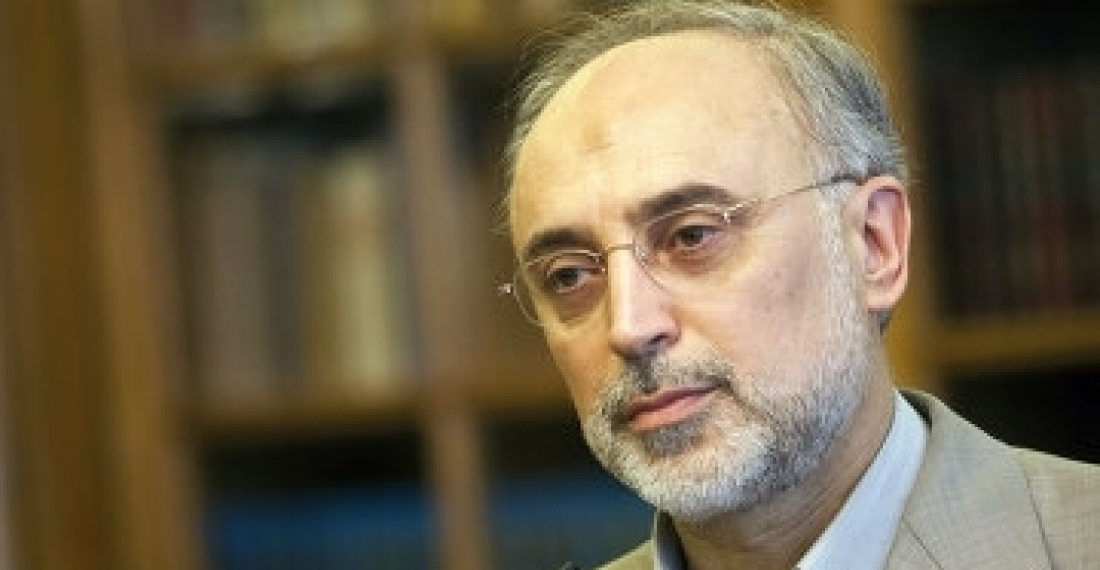
Iran has implemented its nuclear program for ten years already and the world community's charges that it is not peaceful are groundless, Iranian Foreign Minister Ali Akbar Salehi said during a joint press-conference with his Armenian counterpart Edward Nalbandyan on Tuesday.

Salehi said that he has been Iran's representative to the IAEA and perfectly knows that this is a political rather than technical or legal matter.

"Were it a technical or legal matter, we would respond," Salehi said.

He said that a few years ago the IAEA asked Iran six questions. Iran answered all of them in a special report. But the West found another pretext and started accusing the country of trying to create a nuclear weapon.

Salehi said that the IAEA is the only international organization that has the right to opine on nuclear programs, but, on the other hand, it has no authority to interfere in non-nuclear affairs. The charge
of an effort to create a nuclear weapon is an attempt to suspect of a crime based on a supposition only.

Salehi said that Iran is certain of what it does. Its position is clear and well grounded. Both the religious and political leaders of the country have repeatedly said that they are not going to create a nuclear weapon, which is proved by the country's military policy.

Salehi said that if the Iranian authorities actually wanted to create a nuclear weapon, they would say it. But their reason and experience tell them that nuclear weapon is not a means of prevention for them.

And so, the IAEA's charges are just an attempt to exert pressure on Iran.

Salehi said that the United States' charges that Iran was privy to the murder of the ambassador of Saudi Arabia to Washington are just a funny Hollywood script. They in Iran have been aware of it for 30
years already but are still firm and consolidated while such approaches question the IAEA's impartiality.
Related articles

Editor's choice
News
Borrell tells the European Parliament that the situation in Afghanistan was critical, but the EU will remain engaged

Borrell tells the European Parliament that the situation in Afghanistan was critical, but the EU will remain engaged

Borrell underlined that the European Union will make every effort to support the peace process and to remain a committed partner to the Afghan people. "Of course, we will have to take into account the evolving situation, but disengagement is not an option.  We are clear on that: there is no alternative to a negotiated political settlement, through inclusive peace talks.
Editor's choice
News
Syrian president al Sharaa at the White House

Syrian president al Sharaa at the White House

Syrian president, Mohammed al Sharaa met with US President Donald Trump at the White House on Monday (10 November). Trump met with Sharaa in the first-ever visit by a Syrian president to the White House, six months after the two first met in Saudi Arabia, and just days after Washington said that the Syrian leader, who once led an Al-Qaeda affiliate group, was no longer a "Specially Designated Global Terrorist." Washington suspended the imposition of Caesar Act sanctions on Syria in part for 180 days, the Treasury Department said as the meeting took place. The move replaces a previous waiver enacted on 23 May, it said On Friday, the US lifted sanctions on Sharaa and Interior Minister Anas Khattab, a day after the UN Security Council took the same step. Sharaa, 42, took power last year after his fighters launched a lightning offensive from their Idlib and overthrew longtime Syrian President Bashar al-Assad just days later on December 8. Syria's regional realignment has since moved  away from key allies of the former regime, Iran and Russia, and toward Turkey, the Gulf - and Washington. Syria's presidency said that Sharaa and Trump discussed the bilateral relationship, "the ways to strengthen and develop it, as well as a number of regional and international issues of common interest." After al Sharaa and Trump met in Riyadh in May, Trump announced he would lift all sanctions on Syria.

Popular

Editor's choice
News
Syrian president al Sharaa at the White House

Syrian president al Sharaa at the White House

Syrian president, Mohammed al Sharaa met with US President Donald Trump at the White House on Monday (10 November). Trump met with Sharaa in the first-ever visit by a Syrian president to the White House, six months after the two first met in Saudi Arabia, and just days after Washington said that the Syrian leader, who once led an Al-Qaeda affiliate group, was no longer a "Specially Designated Global Terrorist." Washington suspended the imposition of Caesar Act sanctions on Syria in part for 180 days, the Treasury Department said as the meeting took place. The move replaces a previous waiver enacted on 23 May, it said On Friday, the US lifted sanctions on Sharaa and Interior Minister Anas Khattab, a day after the UN Security Council took the same step. Sharaa, 42, took power last year after his fighters launched a lightning offensive from their Idlib and overthrew longtime Syrian President Bashar al-Assad just days later on December 8. Syria's regional realignment has since moved  away from key allies of the former regime, Iran and Russia, and toward Turkey, the Gulf - and Washington. Syria's presidency said that Sharaa and Trump discussed the bilateral relationship, "the ways to strengthen and develop it, as well as a number of regional and international issues of common interest." After al Sharaa and Trump met in Riyadh in May, Trump announced he would lift all sanctions on Syria.


