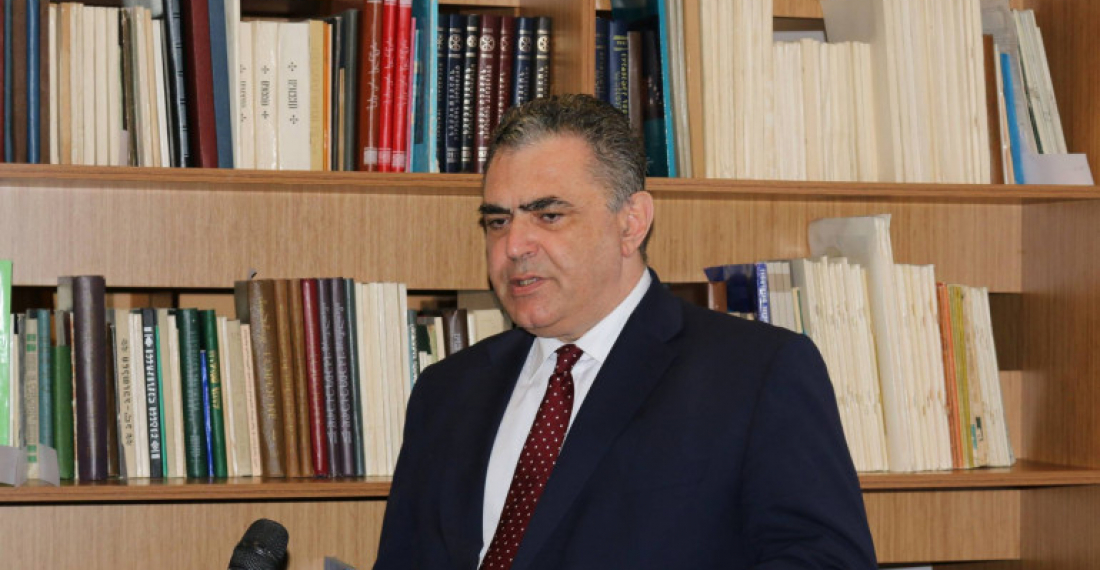
New Year Message from Dennis Sammut, Managing Editor of commonspace.eu
Dear readers, contributors, subscribers and supporters of commonspace.eu,
The year 2020 will shortly come to an end. It will surely be remembered as the year of the coronavirus pandemic, when overnight humanity had to change the way it conducted itself. It was a difficult year for all of us. Many have lost their loved ones; many more have been negatively impacted by the economic fallout from the lockdowns and restrictions; and all of us have had to suffer the absence in our lives of those dear to us.
The pandemic has, however, also provided plenty of examples of human resilience and solidarity. The sum of human knowledge and scientific experience was mobilised to fight back against the deadly virus and we are now seeing the fruits of these co-operative labours as vaccines are rolled out globally.
For us at commonspace.eu, 2020 has been a challenging year in many other ways too as we implemented a long-intended transition in our work. After a decade focusing primarily on the Caucasus Region, this year we expanded our remit to cover the wider European neighbourhood to the east and south, and to focus on how a Global Europe can be a force for good in the world. Our small team worked tirelessly, despite the constraints imposed by the pandemic, as we upgraded our website, developed new products and expanded the scope of our work.
The 44-day war in Nagorno-Karabakh this autumn provided a sad but spectacular backdrop as we made the transition. The fighting may have stopped, but the consequences have only just started being felt. commonspace.eu remains committed to the future of the Caucasus Region and of its people. For this reason, from February 2021 we are launching a new section on our website KarabakhSpace.eu, which will accompany the ongoing processes in the region, offering a space for analysis, debate and fresh ideas regarding how to move forward.
We will also be adding two newsletters to our Concise series: from February, Karabakh Concise will alternate fortnightly with our Caucasus Concise newsletter; and we will shortly be launching Arabia Concise to cover the Gulf and Red Sea region. Other Concise newsletters may be added later in the year.
In 2020 we launched our podcast series, Global Europe Unpacked, to focus on Europe’s role in the world. This series will continue in 2021 and other podcast series will be launched later in the year.
commonspace.eu remains committed to providing a space for diverse opinions on many issues connected with peace and security in Europe, the European neighbourhood, and around the world. We continue to support multilateralism as the way forward in the conduct of foreign relations.
We live in a world where disinformation has become widespread, and where open societies find themselves vulnerable to malicious attacks from dark forces wrapped in religious bigotry or false nationalism. Disinformation and Radicalisation have now become the biggest enemies of the values we cherish and our way of life. European civil society and think tank communities need to step up in the face of the current challenges. In 2021, working with partners in a number of countries, commonspace.eu will engage actively in the debate about the future of Europe, and especially about Europe’s place in an ever-changing world.
We thank our readers, subscribers and supporters for their loyalty and engagement during this difficult year. After the darkness of 2020 we are sure that 2021 is going to be a year of renaissance, and we will work together to contribute to this process.
On behalf of our team in The Hague and Tbilisi, I wish you all a happy, healthy and prosperous new year 2021.
Dennis Sammut
Managing Editor, commonspace.eu and Director LINKS Europe